
Hamsa Tattoo Meaning: Protection, Blessings & Good Fortune
What a hamsa tattoo really means: protection from the evil eye, blessings, strength and good fortune, plus styles, placements, upward vs. downward hands and design tips.
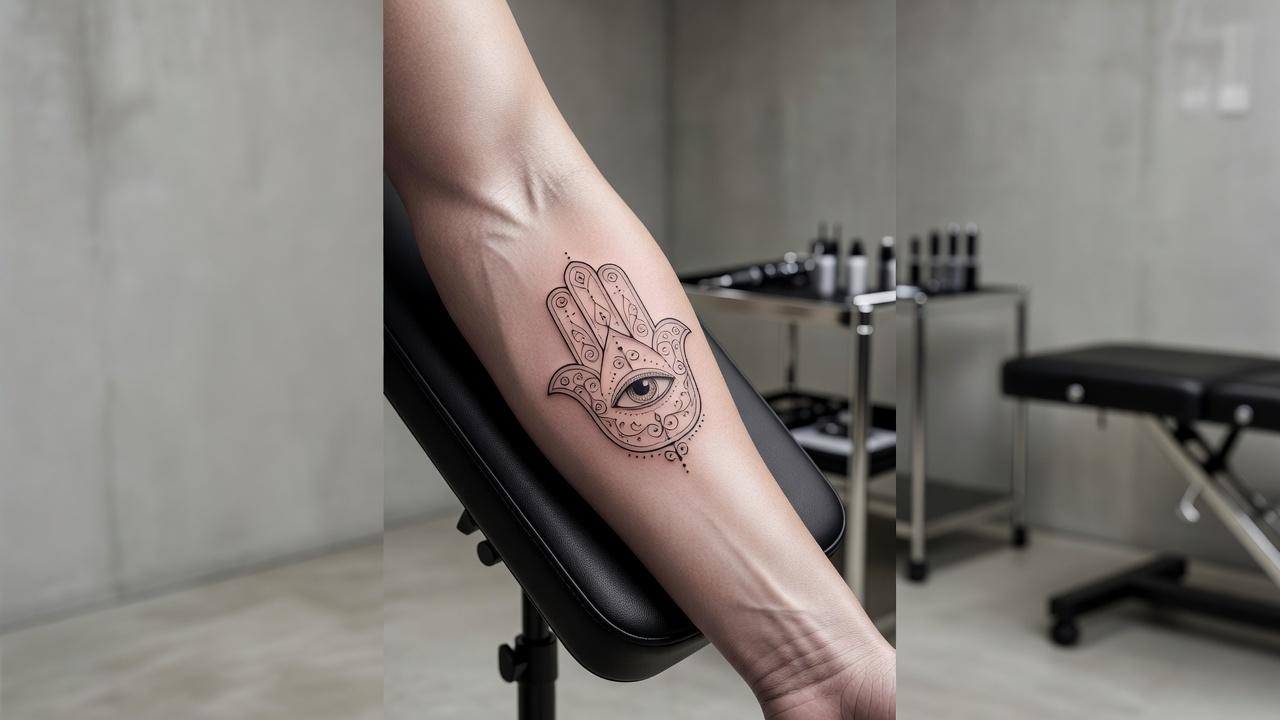
The hamsa tattoo meaning centers on protection, blessings, strength and good fortune. The symbol is an open hand, usually with an eye in the palm, that has been worn for centuries to turn away harm and invite happiness, which is why it remains one of the most popular protective tattoos today.
This guide explains what a hamsa tattoo symbolizes, where the symbol comes from, what changes when the hand points up or down, how the eye, fingers and floral details add meaning, which styles and placements work best, and how to preview your design before it becomes permanent.
What Does a Hamsa Tattoo Mean?
A hamsa tattoo most often means protection from harm and the evil eye, along with blessings, strength, happiness and good luck. The open hand acts as a shield, the eye in the palm watches over you, and the five fingers are linked to balance and the senses. Wearing it is a way of asking for safety and peace for yourself and the people you love.
Hamsa Tattoo Symbolism: The Core Meanings
Most hamsa tattoos draw on a few overlapping ideas. Deciding which one matters most to you makes it much easier to brief an artist or a design tool.
Protection From the Evil Eye
The hamsa is best known as a guard against the evil eye, the old belief that envy or a hostile glance can bring bad luck. The open palm and the watching eye are meant to deflect it.
Blessings and Good Fortune
Many people see the hand as a source of blessings, happiness and abundance. It is a popular gift and a common choice for new beginnings such as a marriage, a move or a new child.
Strength and Courage
An open, upright hand reads as a calm "stop": it sets a boundary against negativity. For many wearers the tattoo is a reminder of inner strength and resilience.
Balance and the Five Senses
The five fingers are often linked to the five senses, and in some readings to balance between body, mind and spirit. A hamsa with symmetrical fingers highlights harmony.
Faith and Heritage
Because the hamsa appears in Jewish, Muslim and other traditions of the Middle East and North Africa, many people choose it to honor family roots or a personal sense of faith.
Where the Hamsa Symbol Comes From
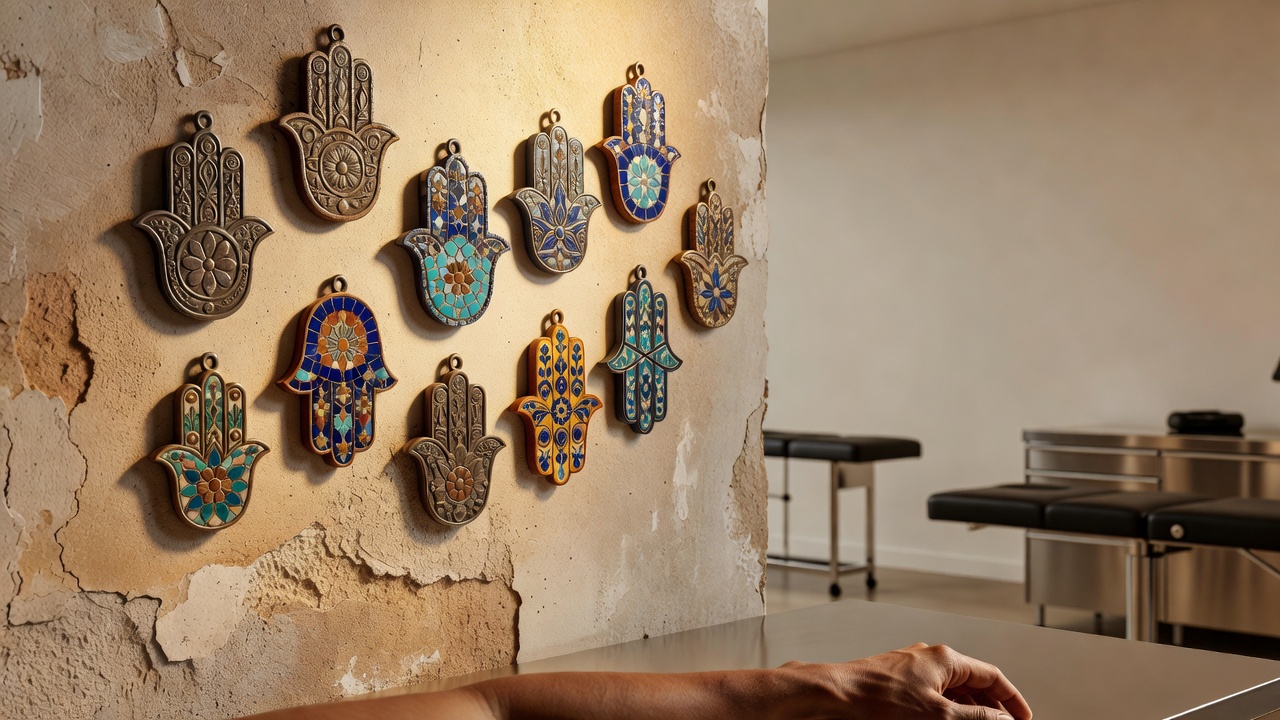
The word hamsa comes from the Arabic and Hebrew words for five. Hand-shaped amulets have been used across North Africa and the Middle East for centuries, and they are often called the Hand of Fatima in Muslim communities and the Hand of Miriam in Jewish ones. Hand symbols also appear in older Mediterranean art as protective charms. The motif is carved into doors, stitched into textiles, cast in jewelry and painted on tiles. You can read a neutral overview in the article on the hamsa.
That long history is why the hamsa pairs so well with related symbols. The eye at its center connects directly to the evil eye tattoo meaning, while lotus and mandala details borrow from the lotus tattoo meaning of renewal and the mandala tattoo meaning of wholeness.
Does the Direction of the Hand Matter?
Yes. A hamsa pointing up is the most common version and is read as protection: the open palm pushes negativity away and signals strength. A hamsa pointing down is usually read as an invitation for blessings, abundance and good luck to flow in, and it is often chosen for fertility or prosperity. Neither reading is wrong, and some wearers simply pick the direction that fits their body placement. Tell your artist which message you want, because the fingers and thumb are drawn slightly differently in each version.
Popular Hamsa Designs and Details
- Eye in the palm: the classic hamsa, a direct symbol of watchfulness and protection.
- Symmetrical hamsa with mirrored fingers: highlights balance and works well in dotwork or ornamental line art.
- Hamsa with lotus or flowers: adds growth, peace and renewal to the protective message.
- Mandala hamsa: fills the hand with a round, repeating pattern that suggests wholeness and meditation.
- Hamsa with fish: fish are a traditional sign of luck and abundance in many cultures.
- Hamsa with stars or a moon: a night-sky look that adds guidance and calm.
- Minimal hamsa outline: a quiet, elegant version for people who want the idea without heavy detail.
Best Styles for a Hamsa Tattoo
The hamsa is a forgiving subject because its symmetrical shape reads clearly in nearly every style.
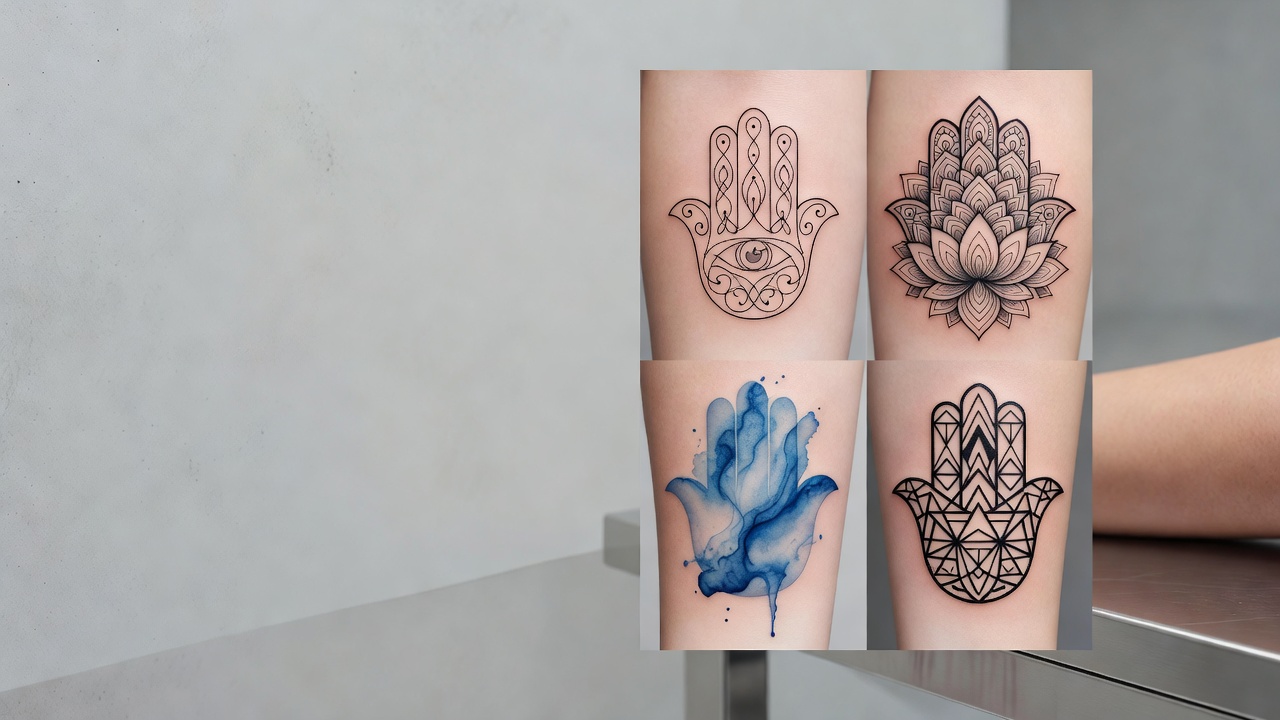
- Fine line: delicate outlines and tiny ornamental dots. Read the fine line tattoo guide before choosing this route, because very thin lines need an experienced artist.
- Geometric: a hamsa built from precise lines and shapes for a modern look. Browse the geometric tattoo designs guide to see how shape changes mood.
- Mandala and dotwork: intricate patterns inside the palm and fingers, ideal for people who love detail.
- Watercolor: soft washes of teal, blue or gold give a dreamy, modern take on a traditional amulet.
- Blackwork: bold solid shapes with sharp negative space for high contrast and a lasting silhouette.
Best Placements and Sizes
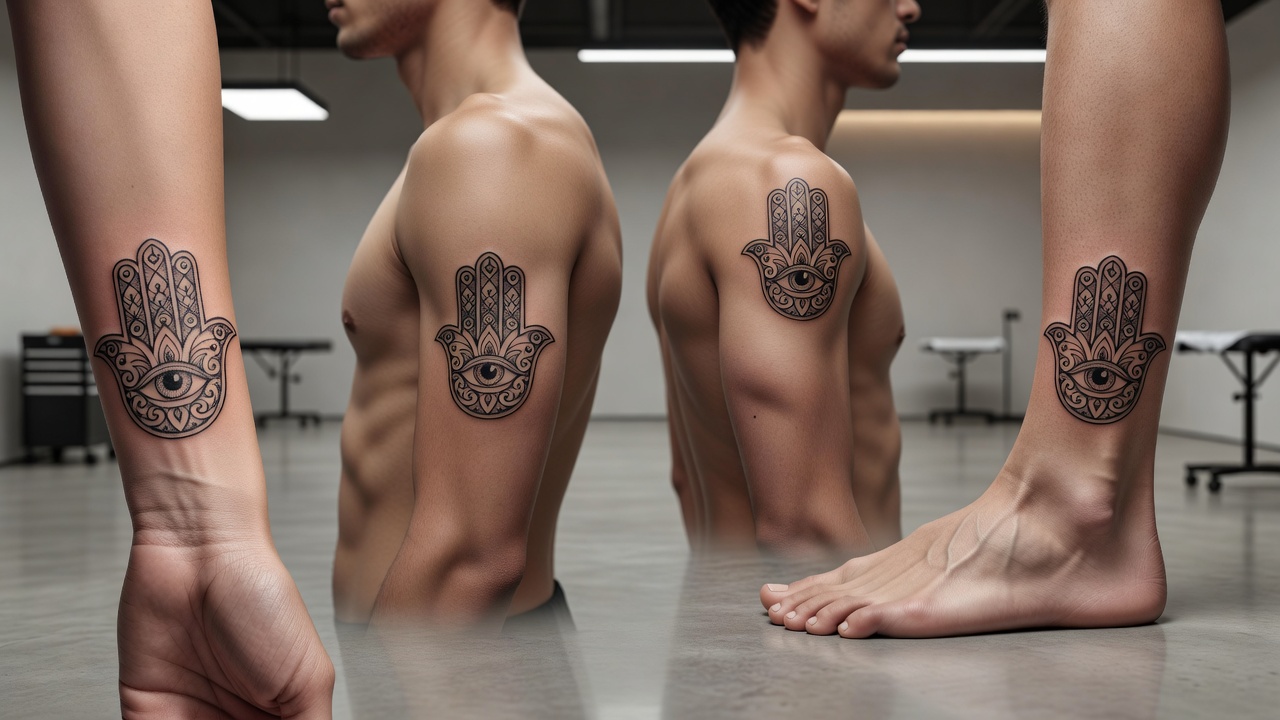
Small hamsas fit the wrist, inner forearm, ankle, behind the ear and the back of the neck. Detailed or ornate versions want space, so the ribs, shoulder blade, thigh and upper back are good choices. Many people place a hamsa where they can see it as a reminder of protection, while others prefer it on the back as a quiet shield. Our best tattoo placements guide helps you match meaning to location, and the tattoo pain chart shows what to expect on bony areas.
As a rule of thumb, keep a hamsa at least two to three inches tall if it includes an eye and ornamental detail, so the fine lines stay crisp as the tattoo ages.
Hamsa Tattoo Colors: Does Color Change the Meaning?
Black and grey keeps a hamsa timeless and serious, which suits a protective message. Blue is the traditional color of the evil-eye charm and is linked to calm and safety. Turquoise and teal add peace and healing, gold and yellow suggest abundance and light, and red brings courage and vitality. White ink can fade quickly, so ask your artist to use grey shading and negative space for highlights instead.
Is a Hamsa Tattoo Cultural Appropriation?
The hamsa is shared by several communities, and for many people it carries religious or family meaning. Choosing it out of respect and understanding is widely seen as fine, while treating it only as a trend can feel hollow. Learn the story behind the symbol, avoid mixing it with unrelated religious imagery, and be thoughtful about placement, such as keeping it above the waist. If you are unsure, ask an artist who is familiar with the tradition.
How to Design Your Hamsa Tattoo
Planning the design first prevents most regrets. An AI tattoo generator such as INK lets you describe the idea, compare several versions and preview the result on your own skin, the same way tattoo try-on technology works.
- Decide what the hamsa should mean: protection, blessings, strength or heritage.
- Choose the direction (up or down) and details such as the eye, lotus, mandala or fish.
- Describe the style and placement and generate a few versions.
- Preview the favorite at different sizes on your body.
- Bring it to your artist to refine into a final stencil.
Aftercare and Safety
Choose a licensed artist, confirm that all equipment is sterile and follow the aftercare instructions you are given. For general health guidance, see the FDA's tattoo safety advice. Fine ornamental detail benefits from careful healing and sun protection, and our tattoo aftercare guide covers healing step by step.
Common Hamsa Tattoo Mistakes to Avoid
- Going too small: a tiny hamsa loses the eye and the ornamental lines as ink softens over time.
- Uneven fingers: the hamsa depends on symmetry, so check the stencil carefully.
- Mixing mismatched symbols: keep extras such as lotus, fish or stars consistent with your meaning.
- Ignoring direction: up and down carry different messages, so choose deliberately.
- Skipping the stencil review: check size and position on your body before the needle starts.
Final Word
The hamsa tattoo meaning is rich yet clear: protection, blessings, strength and good fortune carried in a single open hand. Decide what yours stands for, choose a direction, style and placement that fit, and preview the design on your own skin before you commit.
Design Your Hamsa Tattoo Free in INK
Describe your idea, pick a style and placement, and preview it on your own body before you ink. No sign-up needed.
Try INK Free →

Create Your Perfect Tattoo Design
Use AI to generate unique tattoo designs and preview them on your body before committing to ink.
Start Designing for FreeWritten by
INK Team