
Tattoo Pain Chart: Most & Least Painful Body Locations
A practical tattoo pain chart — the most painful spots, the least painful spots, and what actually drives the difference.

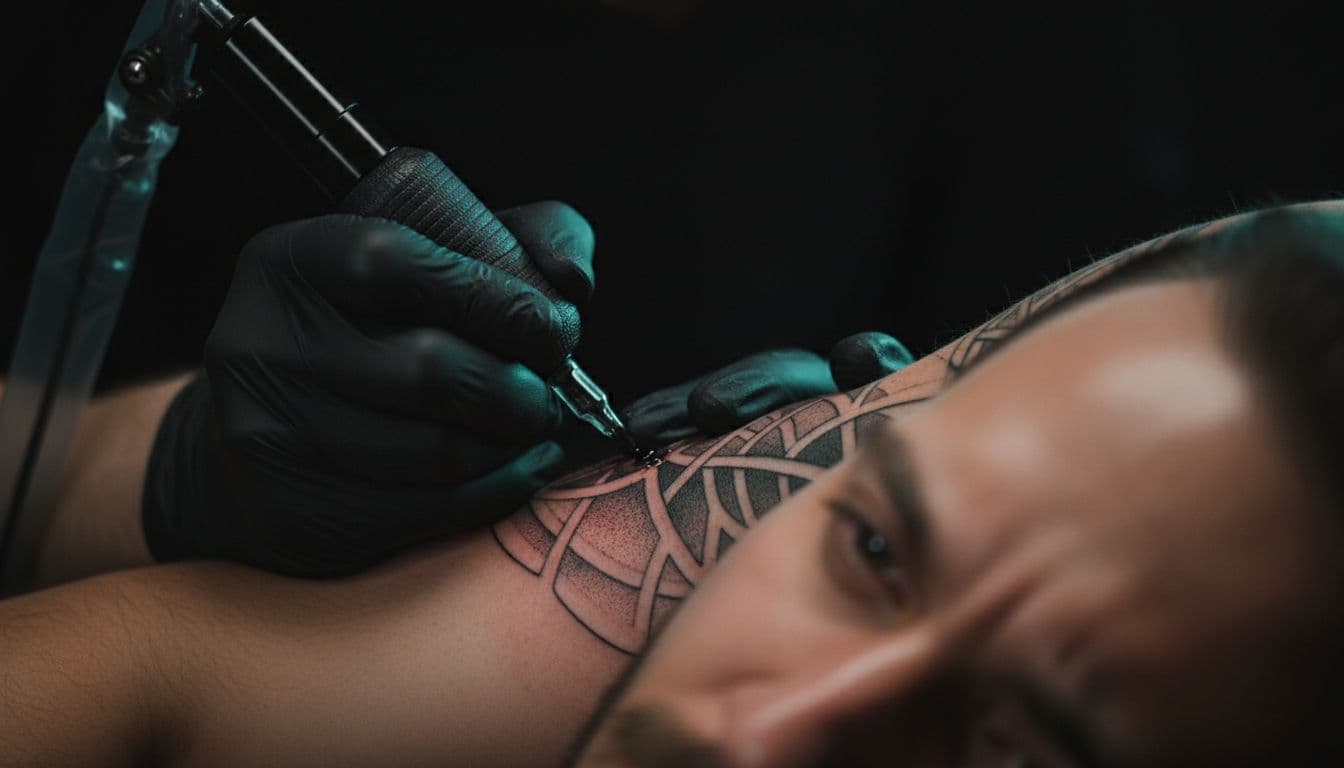
Some tattoos hurt like a dull scratch. Others feel like getting stabbed by a vibrating fork. The difference is almost entirely about where on your body the needle is going. This tattoo pain chart ranks every major body location, explains the anatomy behind why pain varies, and walks through what you can actually do to make it more bearable.
The Quick Tattoo Pain Chart
Most experienced tattoo collectors and artists agree on roughly this hierarchy (rated 1-10):
- 9-10/10 (severe): ribs, sternum, spine, ankle, top of foot, inner bicep, armpit, head, hands, fingers, behind the knee, neck, groin
- 6-8/10 (significant): elbow, kneecap, lower back, stomach, hip, throat, chest (women)
- 4-6/10 (manageable): upper back, shoulder blade, inner forearm, inner thigh, ankle (outer side)
- 2-4/10 (mild): outer arm, outer thigh, calf, outer forearm, upper back near shoulder
Pain is highly individual — your tolerance, the artist's hand, the size of the piece, and even what you ate that day all matter. Use this as a baseline, not a guarantee.
Why Pain Varies by Location
Three things drive how much a tattoo hurts:
- Skin thickness — Thin skin (eyelids, ribs, ankles) puts the needle closer to nerves and bone.
- Bone proximity — Vibration of the machine transfers directly through bone, amplifying the sensation. Spine and sternum are notorious for this.
- Nerve density — Hands, feet, head, and groin have packed nerve clusters that scream when stimulated.
Add fat or muscle between skin and bone (outer arms, thighs, calves) and you get a buffer zone that absorbs vibration and dulls sensation. That's why those areas top every "least painful" list.
The Most Painful Tattoo Spots
Ribs and sternum. Tied for the worst. Razor-thin skin directly over bone, with breathing constantly moving the area. Multi-hour rib sessions are a rite of passage in serious tattoo collecting.
Spine. Vibration travels up and down your entire back. Some people describe it as electric.
Ankles and top of foot. Tendons, bones, almost no padding. Even small designs feel intense.
Inner bicep, armpit, inner elbow. Nerve-rich, soft, sensitive skin. The closer to the armpit, the worse it gets.
Hands, fingers, knuckles. Constant motion, thin skin, dense nerves. Our knuckle tattoo guide covers this in detail.
Head and neck. Skull tattoos hurt for obvious reasons — bone is right there. Neck tattoos add the discomfort of being unable to relax your shoulders.
The Least Painful Tattoo Spots
Outer upper arm. The classic first tattoo location for a reason. Thick skin, muscle padding, easy to access. Most people barely notice the needle here.
Outer thigh. Big canvas, plenty of padding, low pain. Great for medium-to-large pieces.
Calf. Surprisingly painless for most people. The muscle absorbs vibration well.
Outer forearm. Slightly more sensitive than upper arm but still firmly in "manageable" territory.
What Affects Your Personal Pain Tolerance
Your individual experience also depends on:
- Sleep — Poorly rested = lower pain tolerance
- Hydration — Dehydrated skin is more sensitive
- Recent meals — Empty stomach = lower blood sugar = worse experience
- Caffeine and alcohol — Both increase sensitivity. Skip them 24 hours before.
- Hormonal cycle — Many women report higher pain sensitivity around menstruation
- Anxiety — Tense muscles amplify everything
How to Reduce Tattoo Pain
Beyond picking a less painful spot, you can do real things to make any tattoo more bearable:
- Sleep 8 hours the night before
- Eat a real meal 1-2 hours before the session
- Bring snacks and water for sessions over 90 minutes
- Practice slow controlled breathing — inhale for 4, exhale for 6
- Wear comfortable clothing that gives the artist easy access without rubbing the area
- Take micro-breaks if your artist allows — even 30 seconds resets your pain ceiling
- Skip alcohol for 48 hours and ibuprofen for 24 hours pre-session (both thin blood)
For longer sessions, planning matters more than tolerance. Our first tattoo guide covers the full prep playbook.
Plan Smart Sessions with AI
The simplest way to reduce overall pain across your tattoo collecting life: design carefully so each session is shorter, simpler, and more focused. Walk in with a clear vision and your artist spends less time pivoting and more time executing efficiently.
That's where AI tattoo design changes the calculus. Generate, refine, AR-preview, then bring a polished concept that needs minimal consultation time. Sessions get shorter. You suffer less. Both you and the artist win.
Tattoo Pain FAQ
What is the most painful tattoo location? Ribs, sternum, spine, ankles, hands, head — all 9-10/10.
What is the least painful? Outer arm, outer thigh, calf, outer forearm — all 2-4/10.
Does tattoo pain get worse the longer the session? Yes. Adrenaline runs out around hour 2-3.
Does numbing cream work? It reduces pain but rarely eliminates it. Talk to your artist before using any.
Pain is part of the deal — but knowing what you're walking into is half the battle. Pick your placement deliberately, prep your body well, and you'll handle far more than you'd expect.
Design First, Sit Less
Shorter sessions, less pain. Use INK to refine your design before your appointment so every minute under the needle counts.
Design Your Tattoo Free →

Create Your Perfect Tattoo Design
Use AI to generate unique tattoo designs and preview them on your body before committing to ink.
Start Designing for FreeWritten by

Laura Schmitz
Tattoo Content Lead, INK
Laura Schmitz leads tattoo content at INK. She has spent years researching tattoo styles, symbolism and aftercare, and works directly with the AI tattoo generator to test how each style translates from prompt to skin — so every guide here reflects designs that are actually tattooable, not just images that look good on screen.
More about the author