
Lotus Tattoo Meaning: Symbolism, Colors, Styles & Placement Ideas
What a lotus tattoo really means — purity, rebirth and rising above struggle — plus how color, culture and style change the message, and the best places to wear one.


The lotus tattoo meaning is rooted in one striking fact about the plant itself: its roots sit in muddy, murky water, yet every night the flower closes, sinks below the surface, and reopens each morning perfectly clean. That cycle of rising unstained from the mud has made the lotus one of the most enduring symbols of purity, rebirth, and spiritual enlightenment in tattoo art — but the exact meaning shifts depending on the flower's color, how open the bloom is, and which cultural tradition the design draws from.
If you are weighing a lotus for your next piece, this guide breaks down what a lotus tattoo really symbolizes, how the meaning changes across Buddhism, Hinduism, and Ancient Egypt, what the different colors represent, and which styles and placements let the flower do its best work. By the end you will be able to choose a lotus that says exactly what you want it to.
What Does a Lotus Tattoo Mean? (Quick Answer)
A lotus tattoo most commonly means purity, rebirth, and spiritual enlightenment. The symbolism comes directly from the plant's growth pattern — rooted in mud, submerged in murky water overnight, and blooming clean and untouched each morning — which is why the flower is read almost universally as a symbol of rising above hardship and emerging better for it. Layered on top, the specific meaning is shaped by the lotus's color, whether it is drawn open or closed, and which tradition — Buddhist, Hindu, Egyptian, or modern Western — the design leans on.
Lotus Tattoo Symbolism: The Core Meanings
Before getting into cultural specifics, it helps to know the handful of ideas that nearly every lotus tattoo draws on. Most lotus designs are some combination of the following.
Purity and Cleanliness
This is the headline meaning. However dirty the water around it, the lotus surfaces spotless every single day, which has made it a near-universal emblem of a clean spirit unmarked by its surroundings. People often choose a lotus to mark staying true to themselves despite a difficult environment.
Rebirth and Renewal
Because the flower closes at night and reopens at dawn, ancient cultures read it as a daily act of death and resurrection. A lotus tattoo can mark a fresh start, a new chapter, or a version of yourself that emerged after a major life change — one of the most common reasons people choose meaningful tattoo symbols of transformation in the first place.
Strength Through Struggle
The lotus does not bloom in spite of the mud — it needs the mud to grow at all. That detail is why the flower resonates so strongly as a symbol of resilience: the hardship is not incidental to the beauty, it is the source of it. This is often the meaning people connect with most personally.
Spiritual Awakening and Enlightenment
In Buddhist and Hindu thought, the lotus represents the unfolding of consciousness — a closed bud is a mind not yet awakened, while a fully open bloom represents complete spiritual realization. This layered symbolism gives the lotus real depth beyond its surface beauty.
Beauty and Grace Under Pressure
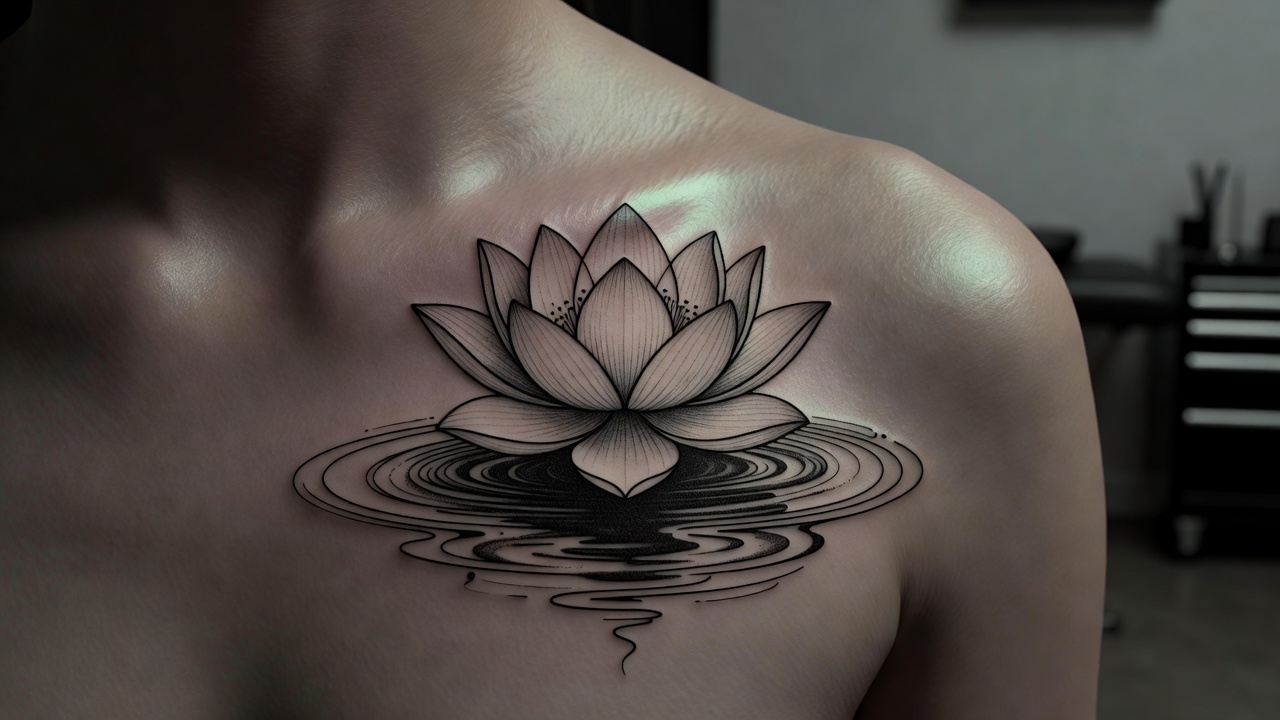
Simply put, the lotus is also chosen because it is elegant. Its symmetrical petals and clean lines translate beautifully into linework, and its meaning of grace maintained under difficult conditions makes it a popular choice for anyone who wants their strength to look effortless rather than aggressive.
Lotus Tattoo Meaning Across Cultures and Religions
Few flowers carry as much religious and cultural weight as the lotus. Knowing the background lets you choose a design that is both beautiful and meaningful — and, in this case, worth a little care.
Buddhism
In Buddhist teaching the lotus is one of the most important visual symbols, representing the journey from ignorance to enlightenment. A closed bud stands for a mind still developing, a partially open flower for growing awareness, and a fully bloomed lotus for complete enlightenment. Buddha is frequently depicted seated on a lotus throne, and the flower's colors carry their own refinements within the tradition, covered in the color section below.
Hinduism
The lotus, or padma, is sacred in Hinduism as a symbol of divine beauty, fertility, and spiritual purity. Several deities, including Lakshmi and Saraswati, are depicted standing or sitting on a lotus, and the flower represents the unfolding of the soul in the same way it does in Buddhist thought. The sacred lotus itself, Nelumbo nucifera, is native to South and East Asia and is the species behind most of this symbolism.
Ancient Egypt
Long before Buddhism or Hinduism, the blue lotus was central to Egyptian religion, associated with the sun because it appeared to rise from the water each morning the same way the sun rose over the horizon. It became a symbol of rebirth and creation, appearing throughout tomb art, temple columns carved in its shape, and funerary rituals meant to guide the dead into a new life. Egyptian lotus imagery tends to be more geometric and stylized than the softer Asian depictions, which makes it a striking reference for anyone drawn to ancient art.
Modern Western Symbolism
Outside any specific religious framework, the lotus has become a widely secular symbol of personal growth, mental health recovery, and rising above adversity. This is the reading most Western wearers connect with — less about a specific deity or doctrine, more about their own story of pushing through difficulty and coming out the other side intact.
The lotus does not bloom despite the mud — it blooms because of it. That single idea is why the flower has meant resilience to almost every culture that has ever grown beside it.
What Do Lotus Tattoo Colors Mean?
In Buddhist tradition especially, the color of a lotus carries its own layer of meaning. Choosing a color is an easy way to fine-tune what your lotus says without changing the overall design.
- White — the purest form: spiritual perfection, mental purity, and a mind free of attachment.
- Pink — the classic, supreme lotus associated directly with Buddha; devotion, compassion, and enlightenment.
- Blue — wisdom, knowledge, and self-mastery over the senses; traditionally shown as never fully open, representing a mind still seeking.
- Purple — mysticism and esoteric spiritual insight, less common but tied to deeper contemplative traditions.
- Red — the heart and its qualities: love, compassion, and passion.
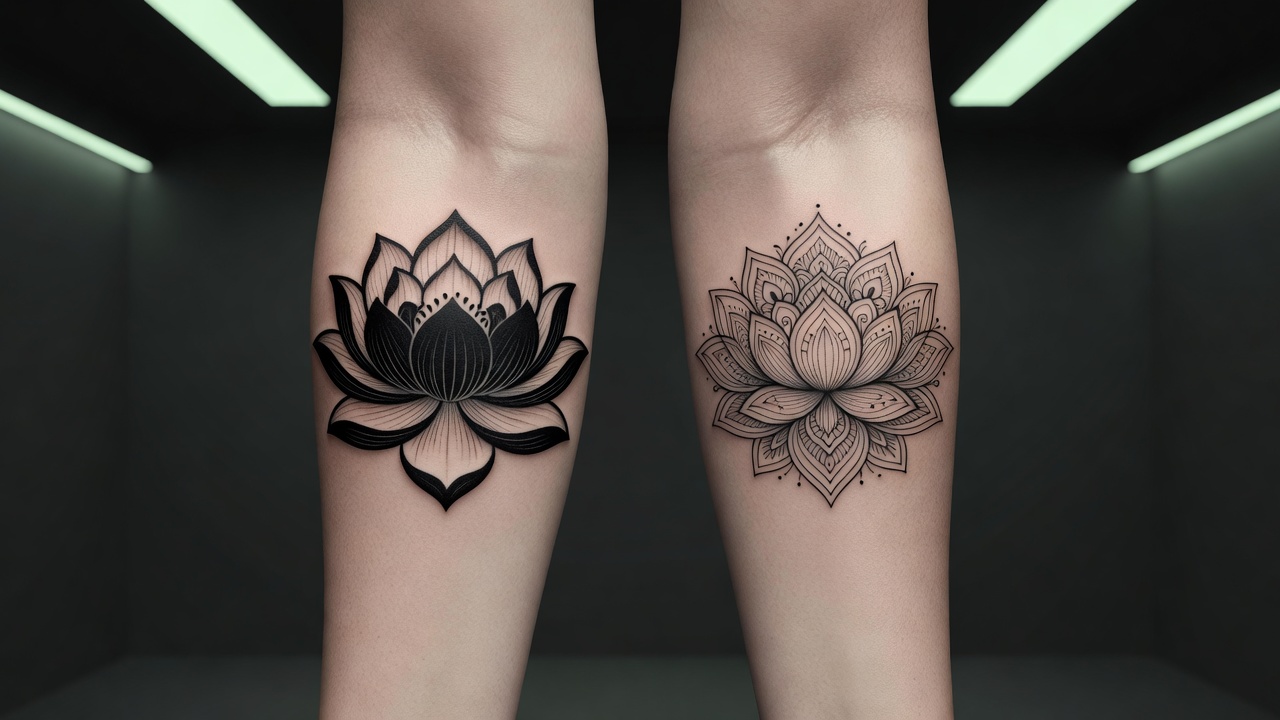
- Black — resilience, mystery, and strength earned through genuine hardship rather than softer purity.
Popular Lotus Tattoo Designs and What They Mean
Most lotus tattoos pair the flower with a second element, and that pairing sharpens the meaning. Here are the most requested combinations and how they read.
- Lotus mandala — layers the flower's rebirth symbolism with the mandala's meaning of balance and wholeness; explore the pattern side of this pairing in our mandala tattoo meaning guide.
- Lotus and koi fish — perseverance meeting enlightenment, drawn from the koi's legendary struggle upstream; see the full story in our koi fish tattoo meaning guide.
- Lotus with Om symbol — grounds the flower directly in Hindu and yogic spirituality, pairing enlightenment with cosmic sound and vibration.
- Broken chain lotus — a modern combination specifically about breaking free from addiction, trauma, or a difficult past.
- Geometric or linear lotus — trades softness for precision, emphasizing balance and intentional design over organic symbolism.
- Lotus with skull — a memento mori pairing: beauty, purity, and the transience of life held in the same image.
Best Tattoo Styles for a Lotus
The lotus is one of the most adaptable flowers in tattooing. The style you choose changes the mood as much as the meaning.
Fine Line and Minimalist
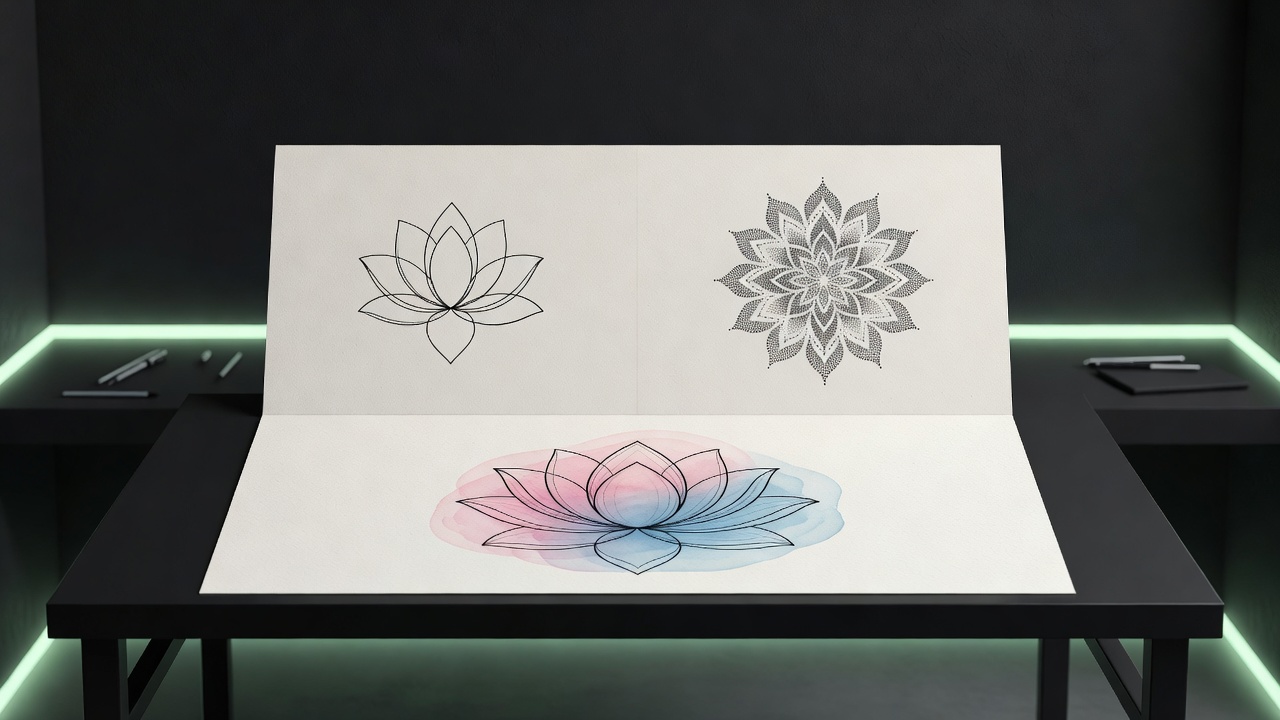
A single-needle lotus with clean, thin outlines is one of the most popular ways to wear the flower today — quiet, elegant, and easy to place almost anywhere. Explore the approach further in our fine line tattoo guide.
Dotwork and Mandala
Because a lotus is naturally symmetrical, it is a favorite subject for dotwork mandala artists, who build a radiating geometric pattern outward from the flower's center. The result feels meditative and precise, echoing the spiritual weight of the symbol.
Watercolor
Watercolor lotus tattoos trade hard outlines for soft washes of pink, blue, or purple that bleed into one another, capturing the flower's natural softness and making it feel painted rather than drawn.
Japanese and Traditional
Bolder, more graphic lotus designs with heavier outlines and flat color fit naturally into Japanese-influenced or American traditional work, often paired with koi, waves, or other classic motifs from those traditions.
Where Do Lotus Tattoos Look Best?
Because the lotus is naturally symmetrical and reads clearly at almost any size, it suits a wide range of placements — a rarer trait than it sounds among tattoo motifs.
- Wrist or ankle — a small, delicate lotus that stays visible as a quiet daily reminder.
- Behind the ear or collarbone — subtle placements that suit a minimalist single-line lotus.
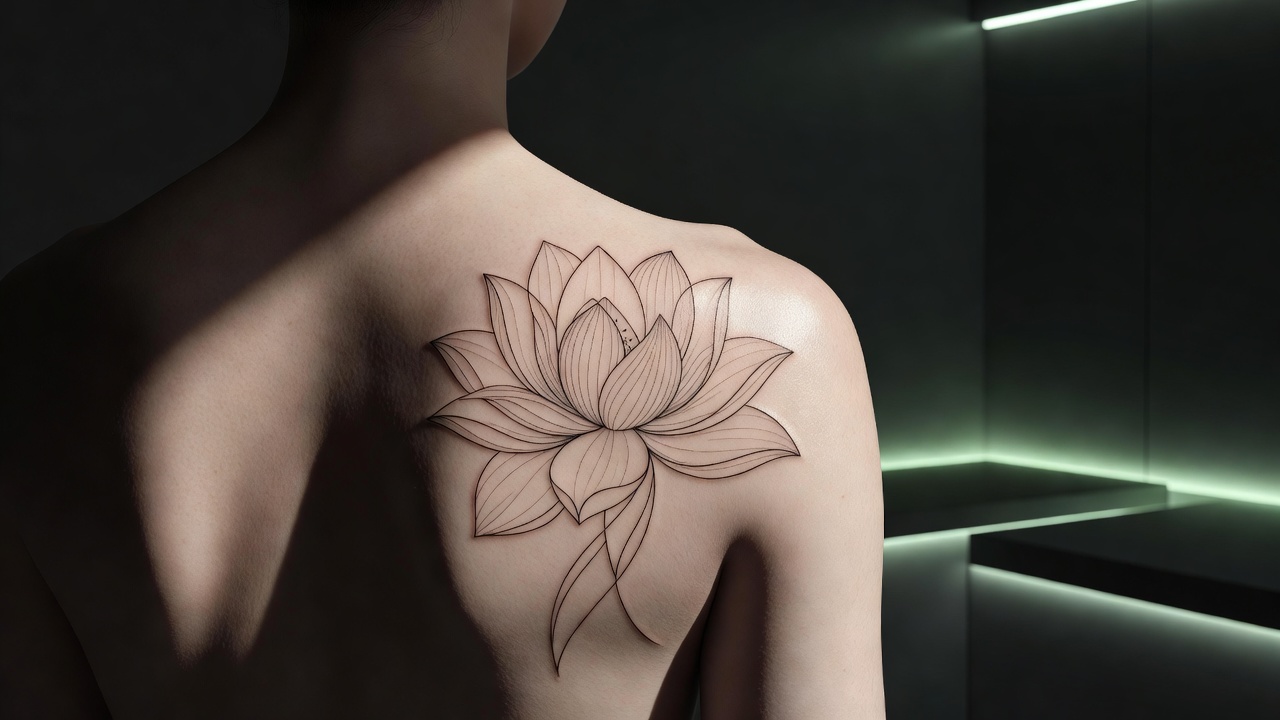
- Spine — a striking vertical placement for a lotus that trails upward like it is blooming from the base of the back.
- Shoulder or shoulder blade — enough room for a detailed lotus mandala or a lotus paired with water and koi.
- Ribs or thigh — larger, more private placements suited to a bigger, more elaborate composition. Our best tattoo placements guide covers pain levels and visibility for each of these spots.
How to Choose Your Lotus Tattoo Design (Step by Step)
With so many colors, cultural references, and styles to choose from, it helps to work through the decision in order rather than all at once.
- Decide what the lotus should represent for you. Anchor the design in one core meaning — purity, rebirth, resilience, or spiritual growth — so every other choice reinforces it instead of diluting it.
- Pick a cultural lens. Decide whether you want the design to lean Buddhist, Hindu, Egyptian, or a modern Western reading, since that shapes which colors, companion symbols, and styles feel authentic.
- Choose a color that matches your meaning. White or pink for purity and compassion, blue for wisdom, or black for resilience — the color should match the message.
- Match the style to the mood you want. Fine-line keeps it quiet, dotwork mandala makes it meditative, and watercolor or Japanese-influenced work makes it bold.
- Pick a placement that suits the size. A small lotus reads well on the wrist or ankle, while a larger piece has room to breathe along the spine, shoulder, or ribs.
Designing Your Lotus Tattoo with AI
A lotus is a deceptively detailed flower — the petal layering, symmetry, and shading all have to feel intentional, or the design can read as generic rather than meaningful. This is where designing with AI helps. With INK you can describe your lotus in plain language ("a fine-line lotus rising from a ripple of water, small enough for the wrist"), test how it looks in different colors and styles, and compare a minimalist single-line version against a fuller dotwork mandala before committing to either.
Because you can iterate freely, you can try the same flower as a delicate wrist piece or a larger spine-length composition, see how a koi fish or an Om symbol changes the story, and AR-preview the design on your own body before any ink is permanent. When you are ready, you bring a clear, considered reference to your artist instead of a vague idea. New to the process? Our first tattoo guide walks through what to expect.
Choosing Your Lotus
The lotus rewards a little thought before the needle touches skin. The same flower can mean quiet purity or hard-won resilience, and the difference comes down to the color, culture, and style you choose to build the design around. Decide what you want your lotus to stand for first, then let the rest of the design follow from that meaning.
What does a lotus tattoo mean? Most often purity, rebirth, and spiritual enlightenment, symbolized by the flower rising clean from muddy water.
Which culture should I draw from? Buddhist and Hindu traditions emphasize enlightenment and divine purity; Ancient Egyptian imagery ties the lotus to the sun and rebirth; modern Western use leans secular, focused on personal growth.
Do colors matter? Yes — white and pink mean purity, blue means wisdom, red means compassion, and black means resilience through hardship.
Where does it look best? Almost anywhere — wrist and ankle for something small and quiet, spine, shoulder, or ribs for a larger, more detailed piece.
Whatever meaning you land on, take your time with the design. Choose your color and cultural reference deliberately, and you will end up with a lotus that carries real depth for a lifetime.
Design Your Lotus Tattoo Free
Describe your lotus, explore colors, styles and pairings, and AR-preview the design on your body before you commit — all in INK. No sign-up needed.
Try INK Free →

Create Your Perfect Tattoo Design
Use AI to generate unique tattoo designs and preview them on your body before committing to ink.
Start Designing for FreeWritten by

Laura Schmitz
Tattoo Content Lead, INK
Laura Schmitz leads tattoo content at INK. She has spent years researching tattoo styles, symbolism and aftercare, and works directly with the AI tattoo generator to test how each style translates from prompt to skin — so every guide here reflects designs that are actually tattooable, not just images that look good on screen.
More about the author