
Koi Fish Tattoo Meaning: Symbolism, Colors, Styles & Placement Guide
What a koi fish tattoo really means — perseverance, strength, good fortune and transformation — plus how color, a pair of koi, and the koi-to-dragon legend shift the message, and the best styles and placements.

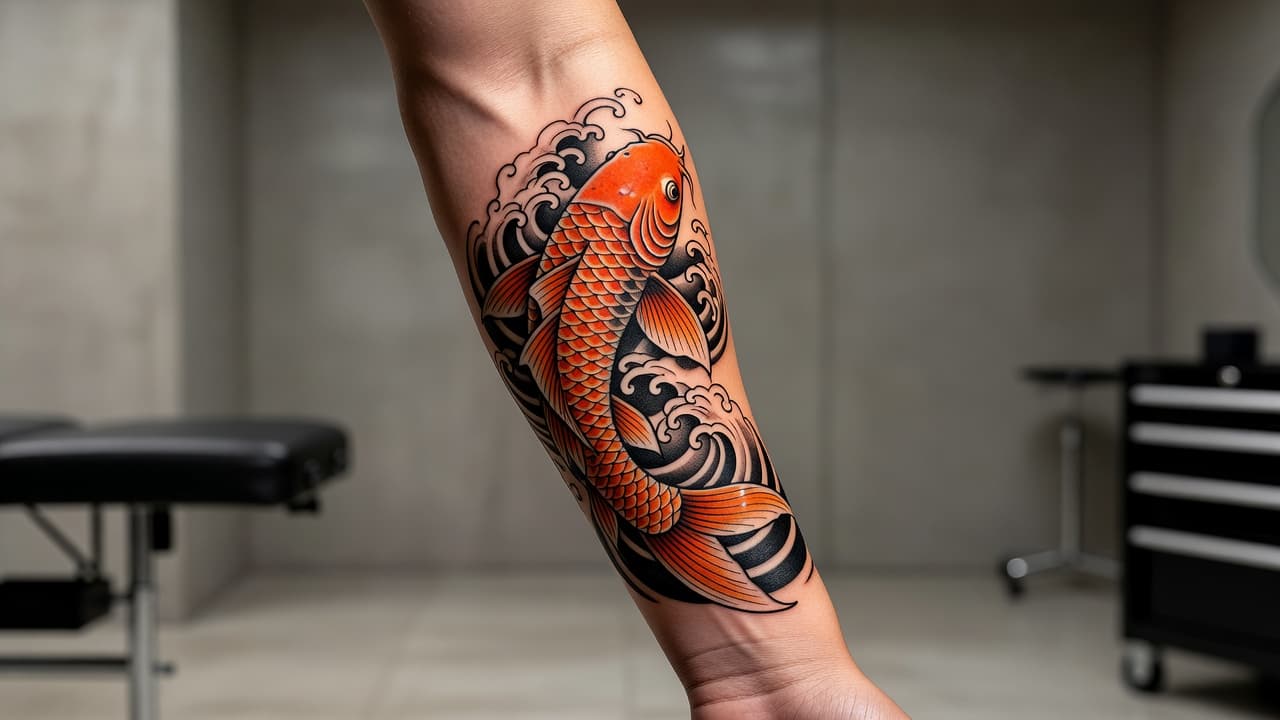
The koi fish tattoo meaning is built on one of the most enduring stories in tattoo art: a fish that refused to give up. Koi are famous for swimming against strong currents and leaping waterfalls, and that single image of quiet, stubborn persistence has made the koi one of the most requested designs in Japanese-influenced tattooing. It is a fish that stands for the fight, not just the finish line.
If you are considering a koi for your next piece, this guide covers what a koi fish tattoo really symbolizes, how color changes the message, what the koi-to-dragon legend means, and which styles and placements let the design flow the way it should. By the end you will be able to choose a koi that tells your specific story.
What Does a Koi Fish Tattoo Mean? (Quick Answer)
A koi fish tattoo most commonly means perseverance, strength, and overcoming adversity, along with good fortune, prosperity, and transformation. The symbolism traces back to a Chinese legend in which a koi that swam upstream and leapt a waterfall known as the Dragon Gate was transformed into a dragon as a reward for its determination. Layered on top, the exact meaning depends on the design: a koi swimming upstream emphasizes struggle and resolve, a koi becoming a dragon emphasizes ambition and achievement, and a pair of koi emphasizes love and balance. Color adds another layer — black for hardship overcome, red or orange for courage and love, and gold for prosperity.
Koi Fish Tattoo Symbolism: The Core Meanings
Before getting into color and design variations, it helps to know the handful of ideas nearly every koi tattoo draws on. Most koi designs are some combination of the following.
Perseverance and Determination
This is the heart of the koi's symbolism. The fish is known for swimming upstream against strong currents, and in the old legend, one koi's refusal to quit against a waterfall earned it transformation into a dragon. A koi tattoo is one of the clearest ways to mark a period of struggle you pushed through, or a reminder to keep going when things get hard.
Strength and Courage
Because the koi's journey is a fight against the current, the fish also represents raw strength and courage in the face of resistance. A koi swimming forcefully upstream, muscles and fins tensed, leans hard into this meaning — it is a design about effort, not ease.
Good Fortune and Prosperity
In Japan, koi (also bred ornamentally as nishikigoi) are strongly associated with luck, abundance, and wealth, and are often kept in garden ponds specifically for that reason. A koi tattoo, especially in gold or orange, is a popular way to invite prosperity and good fortune into your life.
Love and Friendship
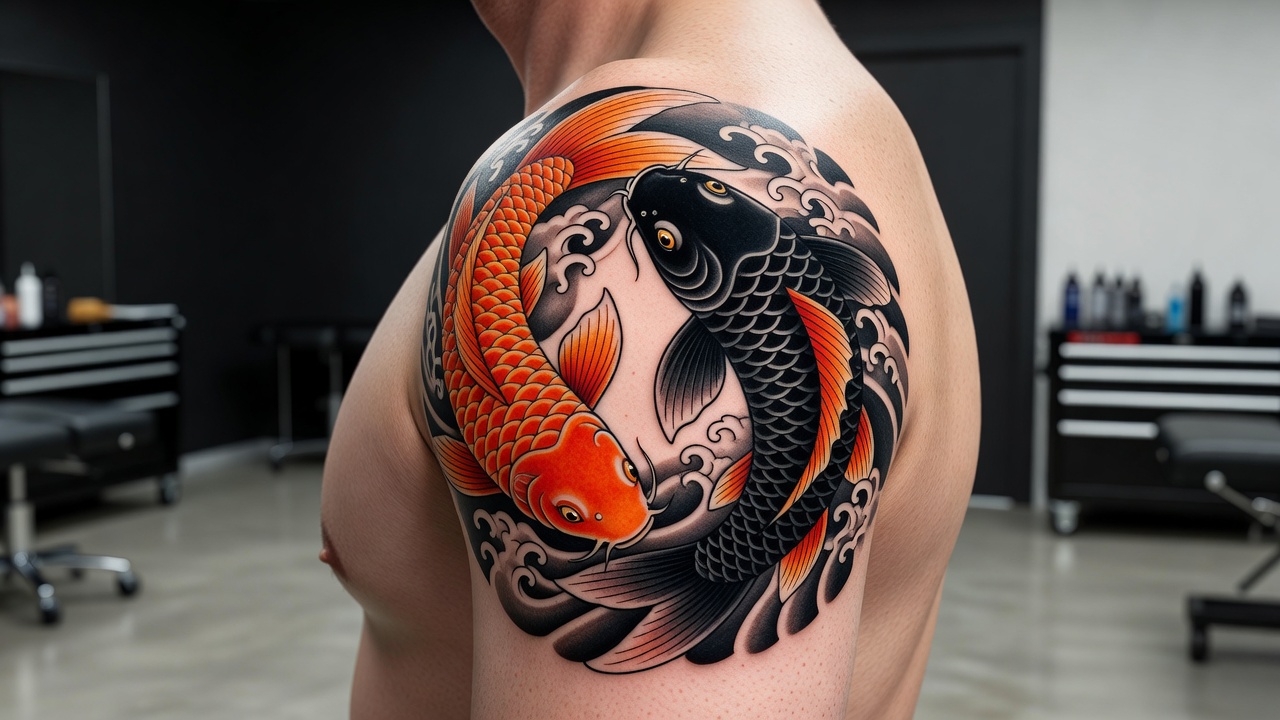
A single koi speaks to personal strength, but two koi swimming together — often in a circular yin-yang shape — represent love, partnership, and balance. It is a common design for couples, close family, or any relationship worth honoring permanently.
Transformation and Ambition
The full legend does not end with the climb — it ends with the koi becoming a dragon. As a tattoo, that transformation represents ambition, achievement, and the reward that comes after sustained effort, which is why a koi-to-dragon design is popular for marking a major turning point or hard-won success.
What Do Different Koi Fish Colors Mean?
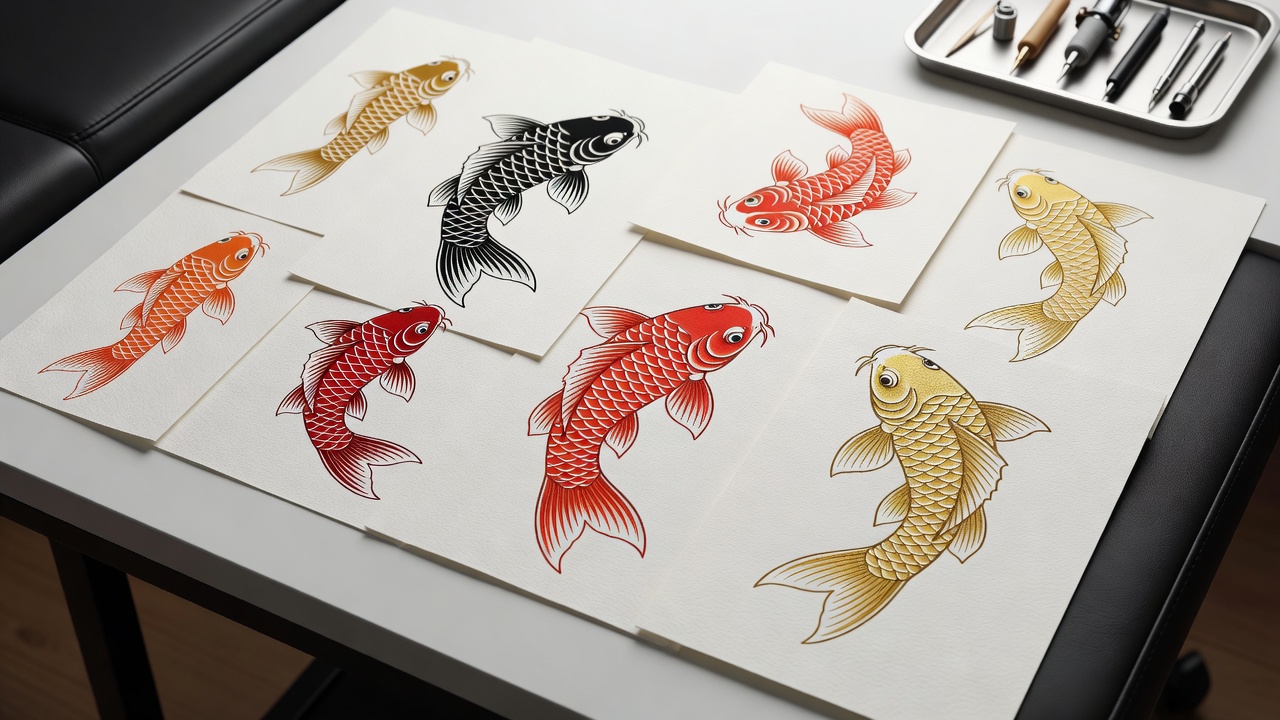
Color is one of the most important choices in a koi tattoo, and traditional Japanese symbolism assigns a distinct meaning to each one. Mixing colors on a single koi is common and simply layers the meanings together.
- Black koi — adversity already overcome; a fish that has been through the hardest part of the journey and survived.
- Red or orange koi — strength, courage, and powerful love; one of the most popular and traditional koi colors.
- Gold or yellow koi — wealth, prosperity, and good fortune; often chosen to mark career success or a new venture.
- Blue koi — calm, masculinity, and reproduction; associated with a peaceful, steady kind of strength.
- Pink koi — love and femininity; a softer take on the fish's romantic symbolism.
- White koi — success, a fresh start, and major life transitions.
- Butterfly koi (long-finned) — the same color meanings, expressed with flowing, elegant fins that suit larger, movement-heavy designs.
Koi Fish Tattoo Designs: Direction, Pairs & the Dragon Transformation
Beyond color, the koi's pose and the elements around it change the story it tells. These are the most common variations.
- Koi swimming upstream — struggle, resolve, and pushing forward against resistance; the classic "still fighting" design.
- Koi swimming downstream — some traditions read this as having already achieved your goal, or choosing an easier, more accepting path.
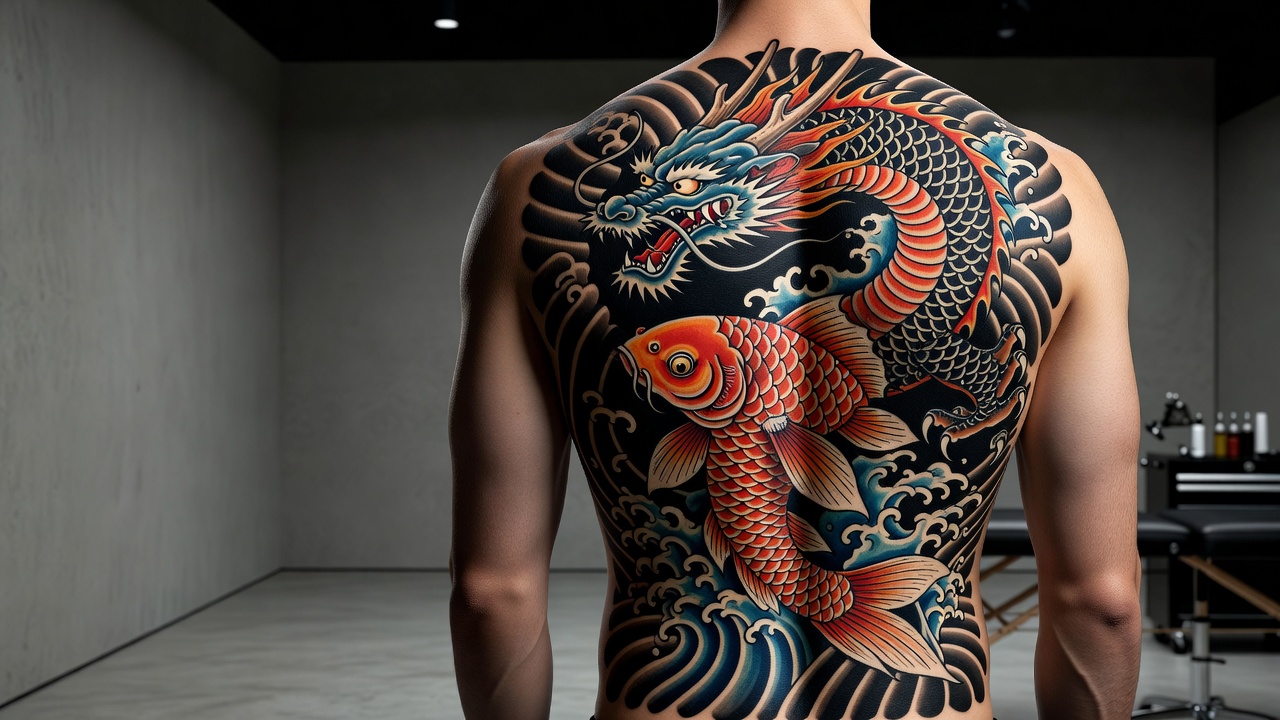
- Koi transforming into a dragon — ambition and achievement; the full Dragon Gate legend rendered as one continuous design.
- Pair of koi (yin-yang) — love, partnership, and balance; two koi circling each other, often in contrasting colors.
- Koi with lotus flowers — purity and spiritual growth rising out of difficulty, echoing the lotus growing from muddy water.
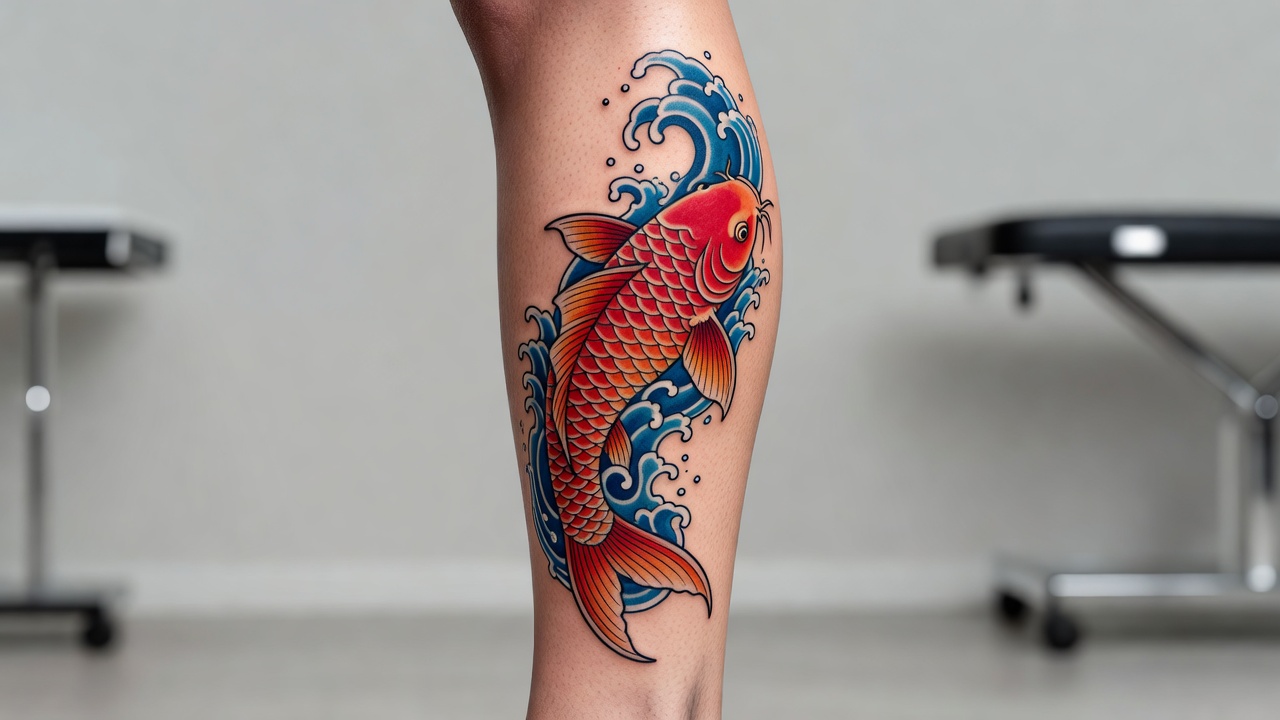
- Koi with waves — the current itself becomes part of the story, emphasizing motion, effort, and the water the koi is fighting through.
- Koi with cherry blossoms — the fleeting, beautiful nature of life paired with the fish's persistence and strength.
Cultural Meaning: The Dragon Gate Legend
Part of the koi tattoo's power comes from the story behind it. Understanding it adds a deeper layer to your design.
- The Dragon Gate legend — in Chinese mythology, a group of koi attempted to swim up the Yellow River and leap a waterfall known as the Dragon Gate. Most failed, but the koi that succeeded was transformed into a dragon — the origin of the koi's link to perseverance and reward.
- Japanese tradition — the koi (nishikigoi) became a celebrated ornamental fish in Japan and a mainstay of irezumi, worn as a badge of strength and good fortune; it pairs naturally with the wider symbolism covered in our Japanese tattoo meaning guide.
- Children's Day symbolism — in Japan, koi-shaped windsocks called koinobori are flown for Children's Day to wish strength and success on the next generation, reinforcing the fish as a symbol of resilience passed down through family.
- Buddhist reading — a koi swimming upstream is sometimes read as spiritual determination, the discipline to keep moving toward enlightenment despite resistance.
A koi on its own says perseverance. Add a color, a direction, a dragon transformation, or a second fish, and it starts telling your story instead of a generic one.
The Best Tattoo Styles for a Koi Fish
The koi is closely tied to one style in particular, but it adapts well to several others. Because the fish is long and flowing, it rewards designs with room to move.
Traditional Japanese (Irezumi)
This is the classic home for the koi — bold black outlines, saturated color, and waves rendered in the traditional Japanese style. Our Japanese tattoo style guide covers the technique and etiquette behind this centuries-old approach, which remains the most authentic way to wear a koi.
Watercolor and Illustrative
Soft color blending and painterly splashes give a koi a fluid, almost aquatic quality that mirrors the water it swims through. See our watercolor tattoo designs guide for a vivid, modern take on the fish.
Fine Line and Minimalist
A single-needle koi, outlined without heavy shading, proves the design does not need to be large or colorful to carry meaning. Check our fine-line tattoo guide for a subtle koi suited to the wrist, ankle, or ribs.
Where Do Koi Fish Tattoos Look Best?
Koi are long, curved designs that look best where they can follow the natural line of the body. The most flattering placements include:
- Forearm — a single koi flows naturally along the arm, swimming toward the elbow or wrist.
- Calf and shin — one of the most popular spots for a koi, since the curve of the muscle mimics the fish swimming upward.
- Back and ribs — room for a full koi pond scene with waves, lotus flowers, or a dragon transformation.
- Thigh — a strong vertical canvas for a large, detailed koi.
- Full or half sleeve — koi are a classic centerpiece for a sleeve, often paired with waves, cherry blossoms, or a second koi.
- Wrist or ankle (small) — simplified, fine-line, or single-color koi that stay readable at a smaller scale.
Not sure where to commit? Our best tattoo placements guide covers pain levels and visibility for each area.
Designing Your Koi Fish Tattoo with AI
A koi may be a familiar motif, but a great koi tattoo is anything but generic — the color, the direction, the surrounding elements, and the style all have to come together to say something that is yours. This is where designing with AI helps. With INK you can describe your koi in plain language ("a red and white traditional Japanese koi swimming upstream through waves, calf placement"), compare a single koi against a yin-yang pair or a full dragon transformation side by side, and refine the composition until it matches the meaning you want.
Because you can iterate freely, you can test how different colors change the feel of the same pose, see how the fish flows down your calf or forearm, and AR-preview the design on your own skin before committing. When you are ready, you bring a clear, considered reference to your artist instead of a vague idea. New to the process? Our first tattoo guide walks through what to expect.
Choosing Your Koi
The koi rewards thought as much as almost any other motif. The same fish can mean quiet perseverance, hard-won strength, or a full transformation into something greater, and the difference comes down to the color, the direction, and the elements you build around it. Decide what part of the journey you want your koi to represent first, then build the design around that meaning.
What does a koi fish tattoo mean? Most often perseverance, strength, and good fortune — with color and direction shifting it toward hardship overcome, courage, or prosperity.
Does color matter? Yes — black reads as adversity overcome, red or orange as strength and love, and gold as prosperity.
Which style suits a koi? Traditional Japanese for authenticity, watercolor for fluid energy, and fine line for subtlety.
Where does it look best? Forearm, calf, back, thigh, or as a sleeve centerpiece — anywhere the body's curve can carry the fish's motion.
Whatever meaning you land on, take your time with the design. Choose your color, direction, and style deliberately, and you will end up with a koi that carries depth for a lifetime.
Design Your Koi Fish Tattoo Free
Describe your koi, explore colors, directions and styles, and AR-preview the design on your body before you commit — all in INK. No sign-up needed.
Try INK Free →

Create Your Perfect Tattoo Design
Use AI to generate unique tattoo designs and preview them on your body before committing to ink.
Start Designing for FreeWritten by

Laura Schmitz
Tattoo Content Lead, INK
Laura Schmitz leads tattoo content at INK. She has spent years researching tattoo styles, symbolism and aftercare, and works directly with the AI tattoo generator to test how each style translates from prompt to skin — so every guide here reflects designs that are actually tattooable, not just images that look good on screen.
More about the author