
Japanese Tattoo Meaning, Rules & Symbolism Guide
Understand Japanese tattoo meanings, cultural rules, and symbolism. Learn about dragons, koi fish, cherry blossoms, and how to design authentic Japanese tattoos.

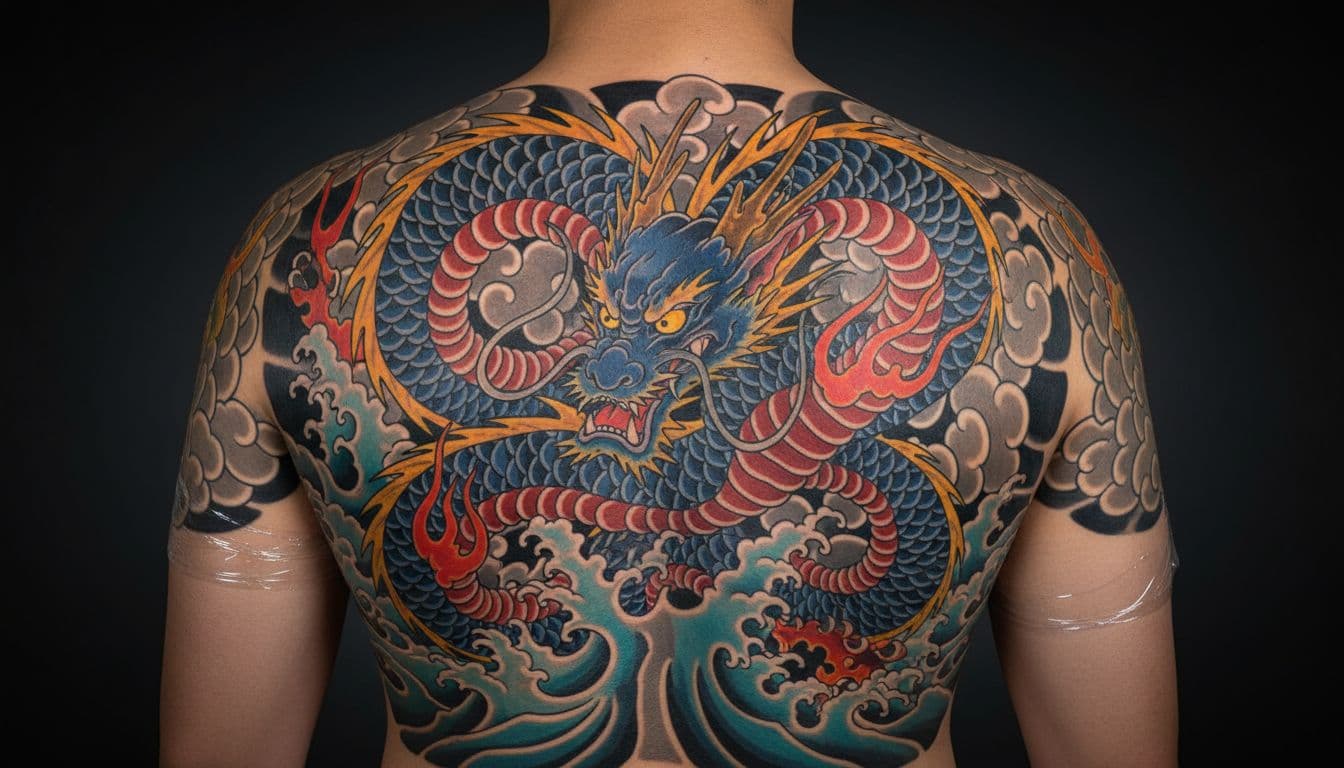
Japanese tattoos aren't just beautiful—they're loaded with centuries of meaning, tradition, and cultural significance. Every dragon, every koi fish, every cherry blossom tells a story. Getting a Japanese tattoo without understanding that story is like getting a quote tattooed in a language you don't speak. It might look cool, but you're missing the point.
Whether you're drawn to the bold imagery of traditional irezumi or just love the aesthetic, understanding Japanese tattoo meaning and the rules of Japanese tattooing will help you create something truly meaningful—and help you avoid cultural missteps along the way.
The Art of Irezumi: Japanese Tattoo History
The word "irezumi" literally means "inserting ink" and refers to traditional Japanese tattooing. Its history stretches back thousands of years, though its meaning and cultural status have shifted dramatically over time.
In ancient Japan, tattoos served various purposes—spiritual protection, tribal identification, and later, punishment for criminals. But the art form we recognize today really developed during the Edo period (1603-1868), when woodblock print artists began influencing tattoo designs. The bold outlines, flat color fills, and flowing compositions of ukiyo-e prints became the foundation of Japanese tattoo aesthetics.
According to Wikipedia's comprehensive history of irezumi, the art form became associated with the working class—particularly firemen, laborers, and eventually the yakuza (Japanese organized crime). This association led to tattooing being banned in Japan from 1872 until 1948.
Today, while attitudes are slowly changing, tattoos still carry stigma in Japan. Many onsens (hot springs), gyms, and pools prohibit tattooed visitors. Understanding this context matters if you're getting Japanese-inspired ink—it's a tradition with complex cultural weight.
Dragon Tattoos: Power and Wisdom
The Japanese dragon (ryū) is perhaps the most iconic symbol in irezumi. Unlike Western dragons that are typically portrayed as evil, destructive creatures, Japanese dragons are benevolent beings associated with wisdom, strength, and protection.
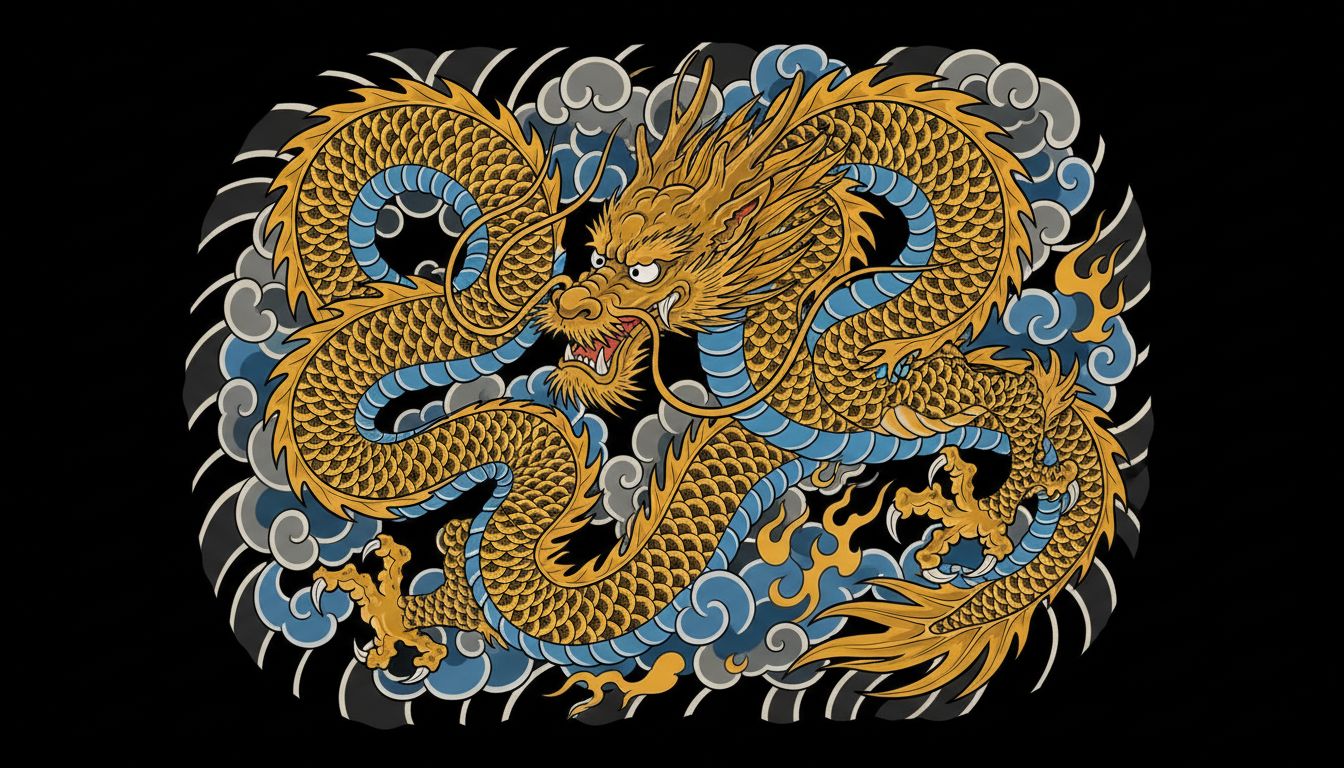
Dragon symbolism includes:
- Wisdom and intelligence — Dragons are seen as enlightened beings
- Protection — They guard against evil and misfortune
- Power over the elements — Particularly water, wind, and storms
- Good fortune — Dragons bring luck and prosperity
- Transformation — The ability to change and evolve
Design elements matter:
- Color — Black dragons represent wisdom; blue/green symbolize nature and life; gold represents value and prosperity
- Claws — Three-clawed dragons are traditional Japanese; five-clawed are Chinese imperial symbols
- Direction — Ascending dragons represent achieving goals; descending dragons represent wisdom gained from challenges
- Surrounding elements — Clouds represent heaven; waves represent power over water; flames show spiritual energy
A dragon tattoo isn't just about looking fierce—it's a statement about the qualities you aspire to embody.
Koi Fish: Perseverance and Transformation
The koi fish is one of the most beloved symbols in Japanese tattoo culture, and its meaning is rooted in an ancient Chinese legend. According to the story, koi swim upstream against powerful currents in the Yellow River. Those that reach the Dragon Gate waterfall and successfully leap over it transform into dragons.
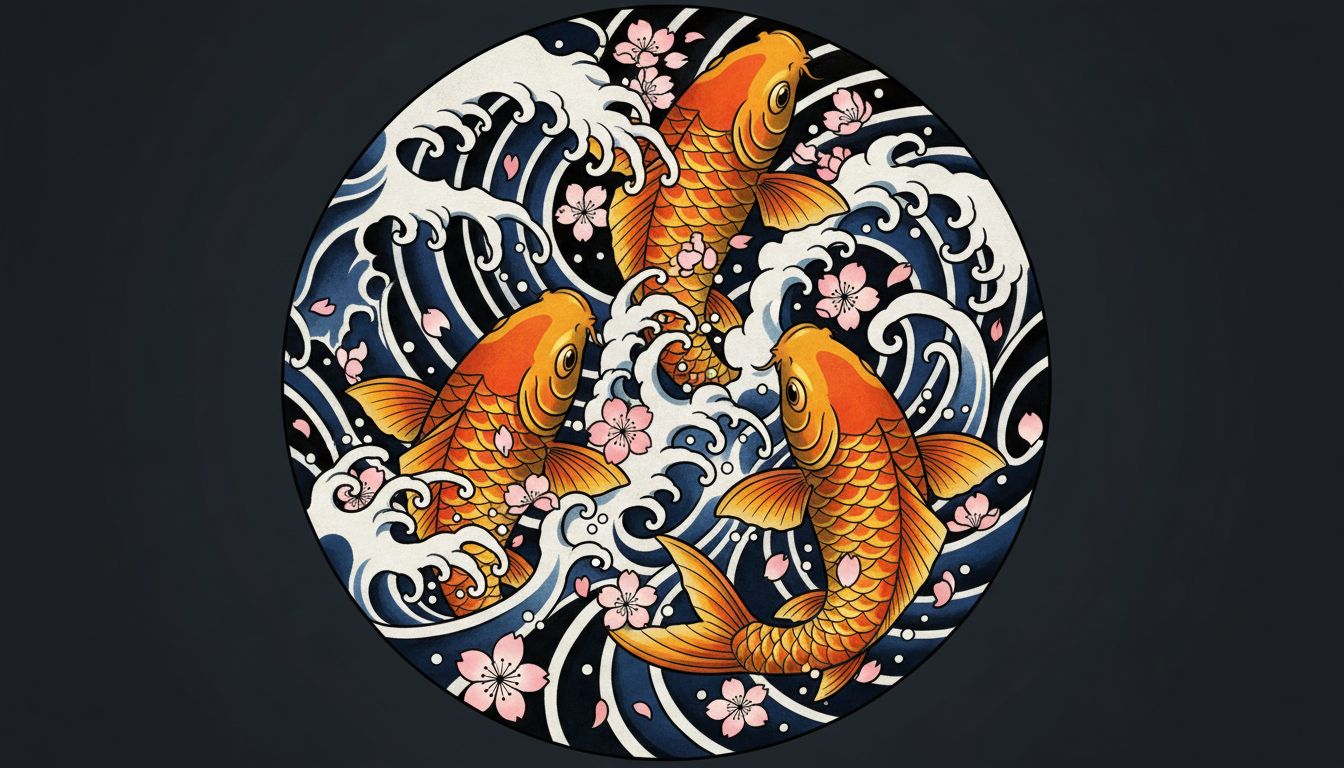
This legend gives koi tattoos powerful meaning:
- Perseverance — Swimming against the current, never giving up
- Courage — Facing challenges head-on
- Transformation — The potential to become something greater
- Strength — Both physical and mental fortitude
- Good fortune — Success in life's endeavors
Direction matters in koi tattoos:
- Swimming upstream — You're currently fighting battles, struggling toward goals
- Swimming downstream — You've overcome obstacles, achieved your goals, at peace
Colors also carry meaning:
- Gold/yellow — Prosperity and fortune
- Red — Love, relationships, and passionate energy
- Black — Overcoming adversity, especially major life changes
- Blue — Masculinity and reproduction (often representing sons)
- White — Career success and social advancement
Create Japanese Tattoo Designs with AI
Generate authentic-looking irezumi designs featuring dragons, koi, and traditional elements. Free on iOS and Android.


Cherry Blossoms: Beauty and Mortality
Sakura (cherry blossoms) are deeply embedded in Japanese culture, and their meaning in tattoos reflects the Japanese concept of mono no aware—the bittersweet awareness of impermanence.
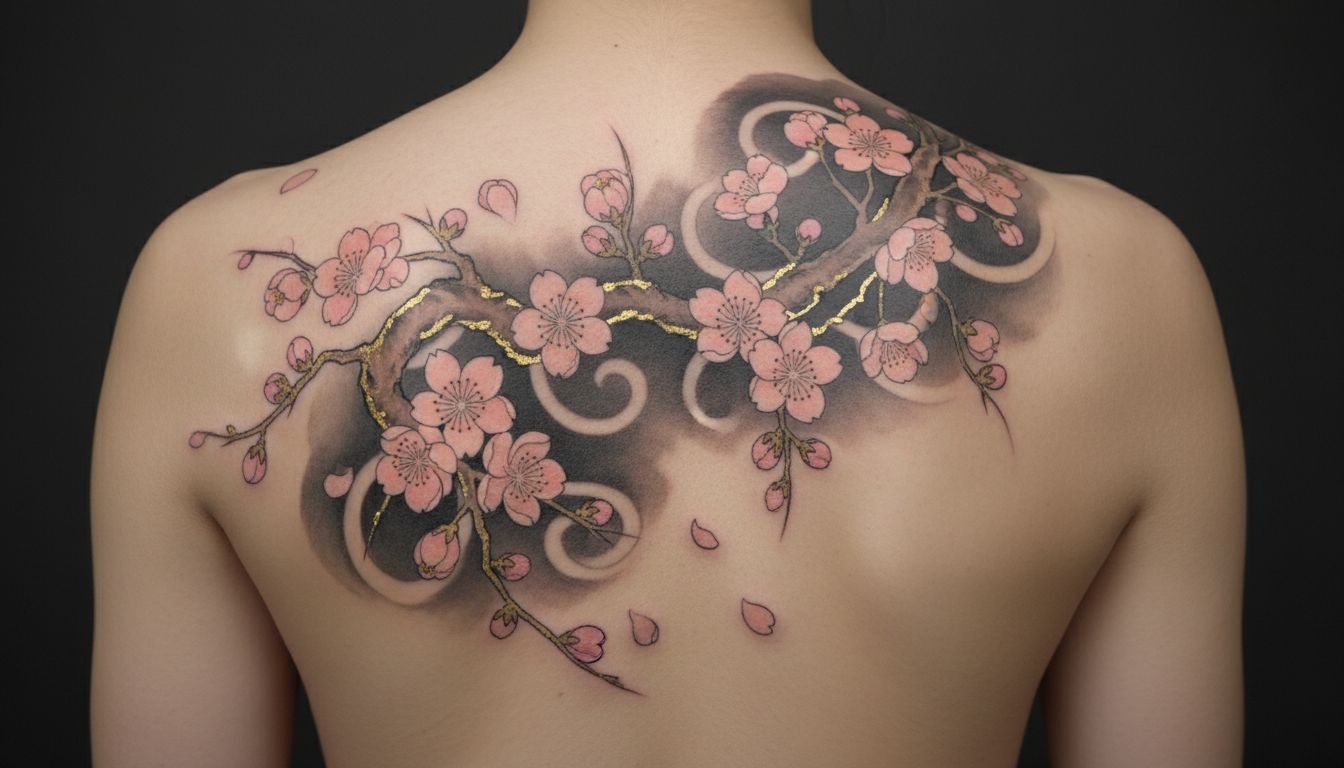
Cherry trees bloom spectacularly but briefly—usually just one to two weeks. The flowers are stunningly beautiful, then fall. This brevity is the point.
Cherry blossom symbolism:
- Impermanence — The transient nature of life
- Beauty — Appreciating what's beautiful while it lasts
- Renewal — Spring, new beginnings, fresh starts
- Mortality — Accepting that all things end
- Living fully — Making the most of the present moment
In samurai culture, cherry blossoms held special significance. Warriors saw themselves in the flowers—lives that could end suddenly and beautifully in their prime. A falling blossom represented an honorable death.
Cherry blossoms often appear as secondary elements in larger Japanese pieces, scattered among other imagery or used as background fill. They add movement, femininity, and that philosophical depth about life's fleeting nature.
Other Important Japanese Tattoo Symbols
Beyond the big three, Japanese tattooing features a rich vocabulary of meaningful imagery:
Tigers (Tora)
Tigers represent strength, courage, and protection against evil spirits and bad luck. They're often paired with dragons—the tiger representing earthly strength and the dragon representing heavenly wisdom. Together they symbolize balance between opposing forces.
Phoenixes (Hō-ō)
The Japanese phoenix symbolizes rebirth, renewal, and the sun. Unlike the Western phoenix that dies and is reborn from flames, the Japanese hō-ō represents grace, justice, and fidelity. It's often associated with the feminine.
Oni (Demons)
Oni are supernatural demons or ogres in Japanese folklore. In tattoos, they can represent protection (scaring away evil spirits), punishment of injustice, or acknowledgment of one's own inner demons. The meaning depends heavily on context and intent.
Foo Dogs (Komainu)
These lion-like guardians are actually based on Chinese lions. They traditionally guard temple entrances and in tattoos represent protection, strength, and courage. They often appear in pairs—one with mouth open (expelling evil), one closed (keeping good in).
Snakes (Hebi)
Snakes in Japanese tattoos represent regeneration, protection, and wisdom. They're associated with good luck, particularly in financial matters. Unlike Western negative associations, snakes are generally positive symbols in Japanese culture.
Masks
Hannya masks (the horned female demon) represent a woman transformed by jealousy and rage—complex emotions beneath surface beauty. Tengu masks (the long-nosed creature) represent martial arts mastery and supernatural power.
Cultural Considerations and Respect
Getting a Japanese-style tattoo as a non-Japanese person isn't automatically problematic, but it requires thought and respect.
Things to consider:
- Understand what you're getting — Know the meaning behind your imagery. Random combinations can be as meaningless (or contradictory) as a foreign phrase tattoo gone wrong
- Respect the tradition — Irezumi has specific compositional rules. Working with artists who understand these creates more authentic, better-looking work
- Avoid sacred imagery used trivially — Buddhist imagery, for example, carries religious weight
- Be aware of Japanese context — If you travel to Japan, understand that your tattoos may exclude you from certain spaces like onsens, pools, and beaches
- Choose artists thoughtfully — Artists who specialize in Japanese work will create better pieces and advise on traditional composition
The goal isn't to gatekeep Japanese aesthetics but to engage with them meaningfully rather than superficially. According to National Geographic's exploration of tattoo culture, tattooing has always been a cross-cultural exchange, but the best results come from informed appreciation.
Japanese Sleeve Composition Rules
Traditional Japanese tattooing follows specific compositional rules that create the distinctive "look" of irezumi:
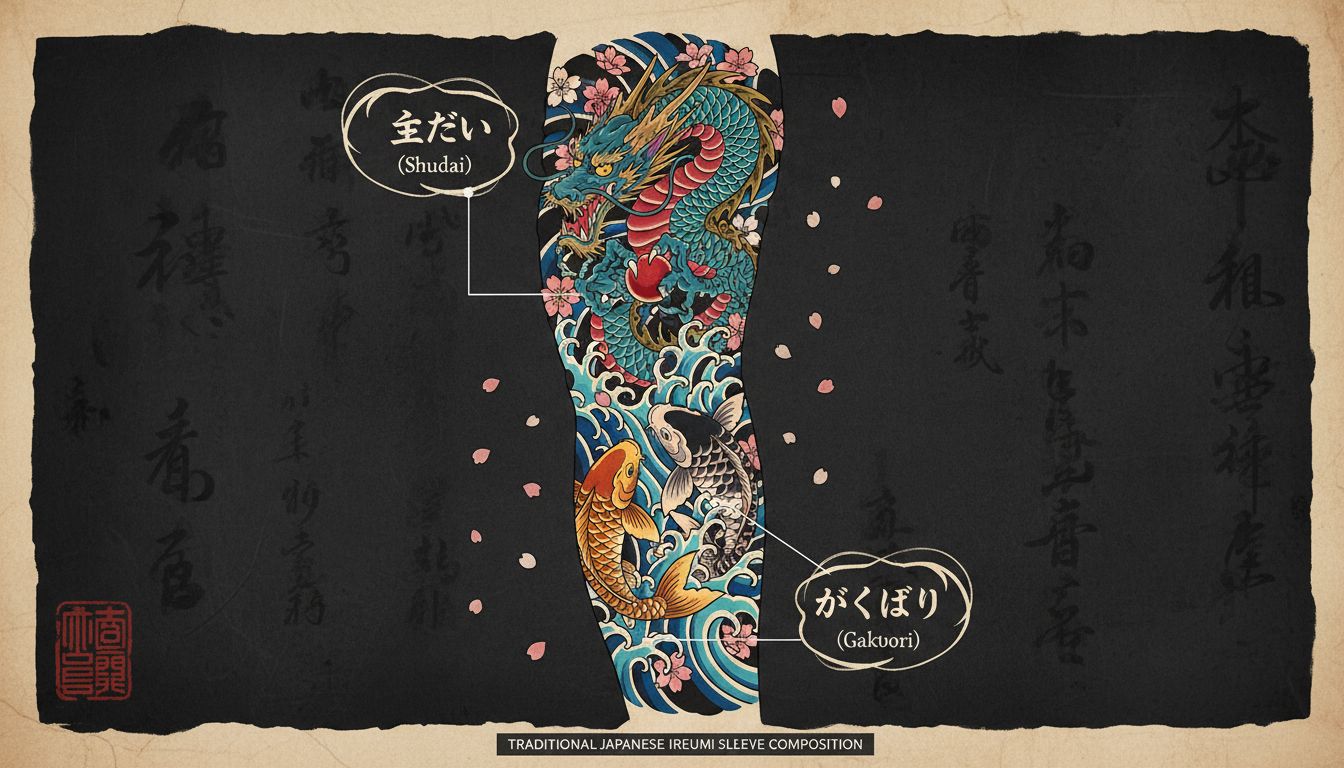
Key compositional elements:
- Main subject (shudai) — One central figure that dominates the piece (dragon, koi, tiger, etc.)
- Background (gakubori) — Waves, clouds, wind bars, or smoke that fill space and create movement
- Accent elements — Cherry blossoms, maple leaves, peonies that add color and meaning
- Rocks and water — Ground the composition and add visual weight
Traditional rules include:
- Designs flow with the body's natural contours
- Negative space (unmarked skin) is intentional and important
- Backgrounds should unify multiple pieces into cohesive compositions
- Seasonal elements shouldn't contradict (no cherry blossoms with autumn maple leaves)
- The work tells a complete story or represents harmonious themes
For planning a Japanese-style sleeve, check out our AI sleeve generator guide for tips on creating cohesive compositions.
Creating Japanese-Style Tattoos with AI
AI tattoo generators can be powerful tools for exploring Japanese tattoo concepts before committing to ink. Here's how to get the best results:
Effective prompts for Japanese designs:
- "Traditional Japanese sleeve with black dragon and blue waves, irezumi style"
- "Koi fish swimming upstream through cherry blossoms, Japanese tattoo composition"
- "Japanese hannya mask with peony flowers and smoke background"
- "Tiger and bamboo in traditional Japanese tattoo style with wind bars"
The AI can help you visualize concepts, test color combinations, and explore different compositions. Use it as a starting point for conversations with a skilled artist who specializes in Japanese work. They can refine AI concepts into fully realized, traditionally-grounded designs.
Browse all available tattoo styles including Japanese in our tattoo styles gallery.
Design Your Japanese Tattoo
Explore dragons, koi fish, cherry blossoms, and more. Generate AI concepts in authentic irezumi style and preview them before your tattoo appointment.
Generate Japanese Designs →
Create Your Perfect Tattoo Design
Use AI to generate unique tattoo designs and preview them on your body before committing to ink.
Start Designing for FreeWritten by

Laura Schmitz
Tattoo Content Lead, INK
Laura Schmitz leads tattoo content at INK. She has spent years researching tattoo styles, symbolism and aftercare, and works directly with the AI tattoo generator to test how each style translates from prompt to skin — so every guide here reflects designs that are actually tattooable, not just images that look good on screen.
More about the author