
Mandala Tattoo Meaning: Symbolism, Sacred Geometry & Design Ideas
What a mandala tattoo really means — balance, harmony, spiritual growth and protection — plus the sacred geometry behind the pattern, popular variations, dotwork styles and the best placements.

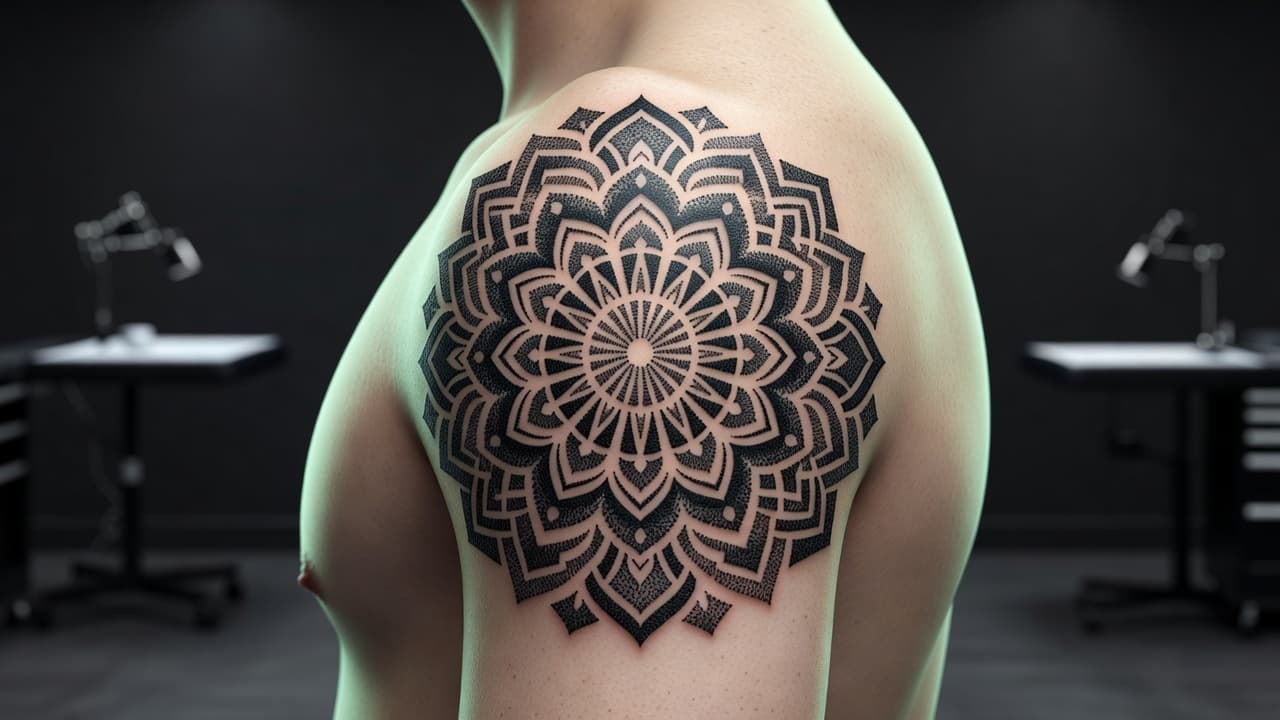
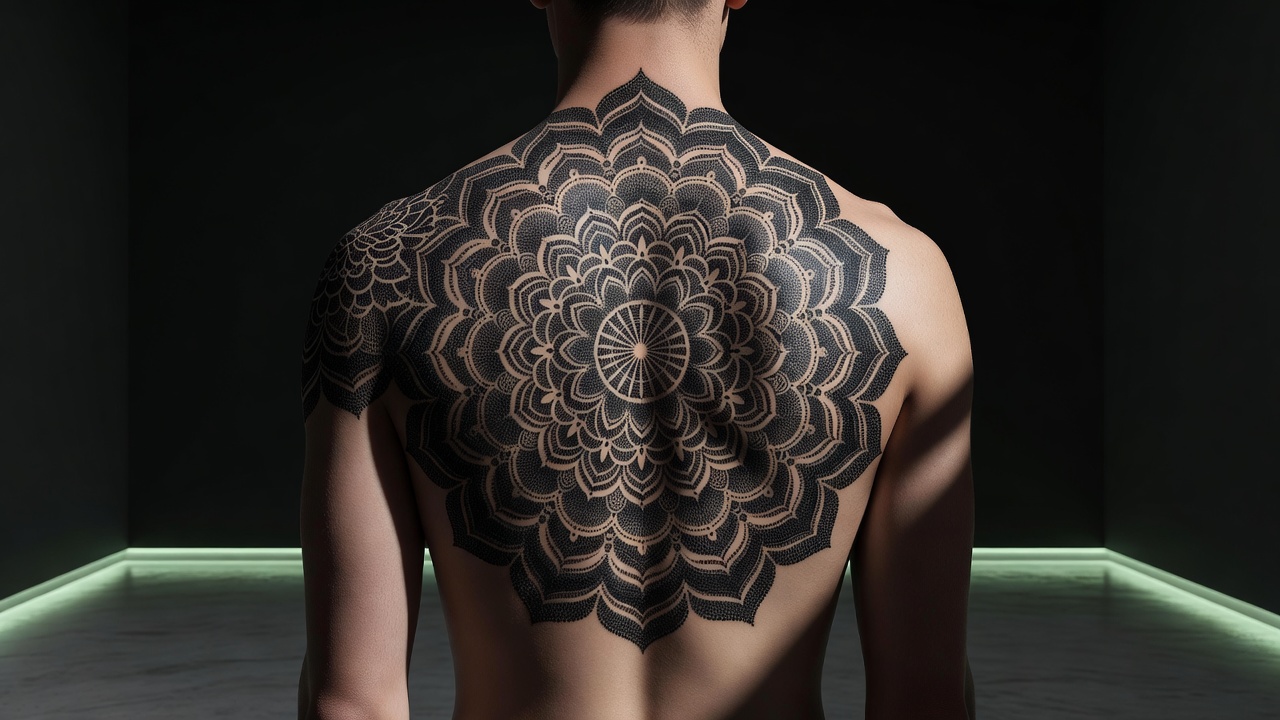
A mandala tattoo is one of the most instantly recognizable designs in tattooing — a perfectly symmetrical pattern radiating outward from a single center point, often rendered in intricate dotwork. But the appeal goes deeper than the geometry. A mandala carries centuries of spiritual meaning around balance, unity, and the connectedness of everything in the universe, which is part of why it remains one of the most requested tattoo motifs year after year.
This guide covers what a mandala tattoo actually symbolizes, where the design comes from, the most popular variations and combinations, the styles that suit it best, and where it looks strongest on the body — so you can choose a mandala that means something specific to you rather than a pattern picked at random.
What Does a Mandala Tattoo Mean? (Quick Answer)
A mandala tattoo most commonly represents balance, harmony, and wholeness. The word "mandala" comes from Sanskrit and translates to "circle," and the design's perfect symmetry — radiating out in matching layers from one central point — visually represents unity, infinity, and the idea that the universe and everything in it are interconnected. In Hindu and Buddhist traditions, mandalas are used as tools for meditation and represent the cosmos itself and the journey toward enlightenment. As a tattoo, the core meaning stays consistent across variations, while specific elements added to the design — a lotus, an elephant, a dreamcatcher — layer in additional, more personal meaning.
Mandala Tattoo Symbolism: The Core Meanings
Nearly every mandala design, no matter how elaborate, draws on a small set of consistent ideas. Understanding them helps you decide what you actually want your mandala to say.
Balance and Harmony
This is the mandala's defining meaning. The design is built from perfect radial symmetry, with every element mirrored and repeated around a central point. That structure is a direct visual metaphor for a life, or a mind, held in balance — nothing overweighted, everything in proportion.
Unity and Wholeness
Because a mandala has no true beginning or end — it is a closed, continuous circle — it represents wholeness and the idea that separate parts (people, ideas, moments in a life) form one connected whole. This is why mandalas are popular choices to mark the end of a difficult chapter or the sense of "becoming whole" again.
Spiritual Growth and Meditation
In its original context, a mandala is not just decoration but a focus object for meditation: the eye follows the pattern inward toward the center, mirroring a meditative journey toward stillness or enlightenment. As a tattoo, it is often chosen as a permanent reminder to slow down, look inward, and stay grounded.
Protection
The circular, shielding shape of a mandala has long been associated with protection — a boundary that holds calm and order inside and keeps chaos out. This reading is reinforced when a mandala is combined with other protective symbols, such as a dreamcatcher or an eye motif.
The Cycle of Life
The endless, repeating rings of a mandala are also read as a symbol of life's cycles — birth, growth, change, and renewal, circling continuously rather than moving in a straight line. This meaning is part of why mandalas are common memorial tattoos, honoring a life as a complete, connected whole rather than something cut short.
Where Do Mandalas Come From? Cultural Origins
A mandala tattoo carries more weight when you understand the tradition it draws from. The word and the practice both trace back thousands of years.
- Hindu origins. Mandalas appear in Hindu ritual and art as diagrams representing the cosmos, often used in temple architecture and meditation practice, with the mandala serving as a map of the universe centered on a deity or sacred point.
- Buddhist practice. In Tibetan Buddhism, monks create elaborate sand mandalas over many days using millions of grains of colored sand, only to ritually destroy them afterward — a practice meant to teach the impermanence of all things, a meaning many people carry into a permanent mandala tattoo as a deliberate contrast.
- Jungian psychology. In the 20th century, psychologist Carl Jung studied mandalas extensively and used them as a tool in therapy, arguing that the circular, self-balancing form reflected the psyche's own drive toward wholeness — a reading that helped introduce the symbol to a much wider, secular audience.
- Global adoption. Today the geometric mandala is one of the most widely recognized symbols of mindfulness and balance worldwide, appearing in everything from adult coloring books to yoga studios, which is part of why it has become such a popular tattoo choice outside its countries of origin.
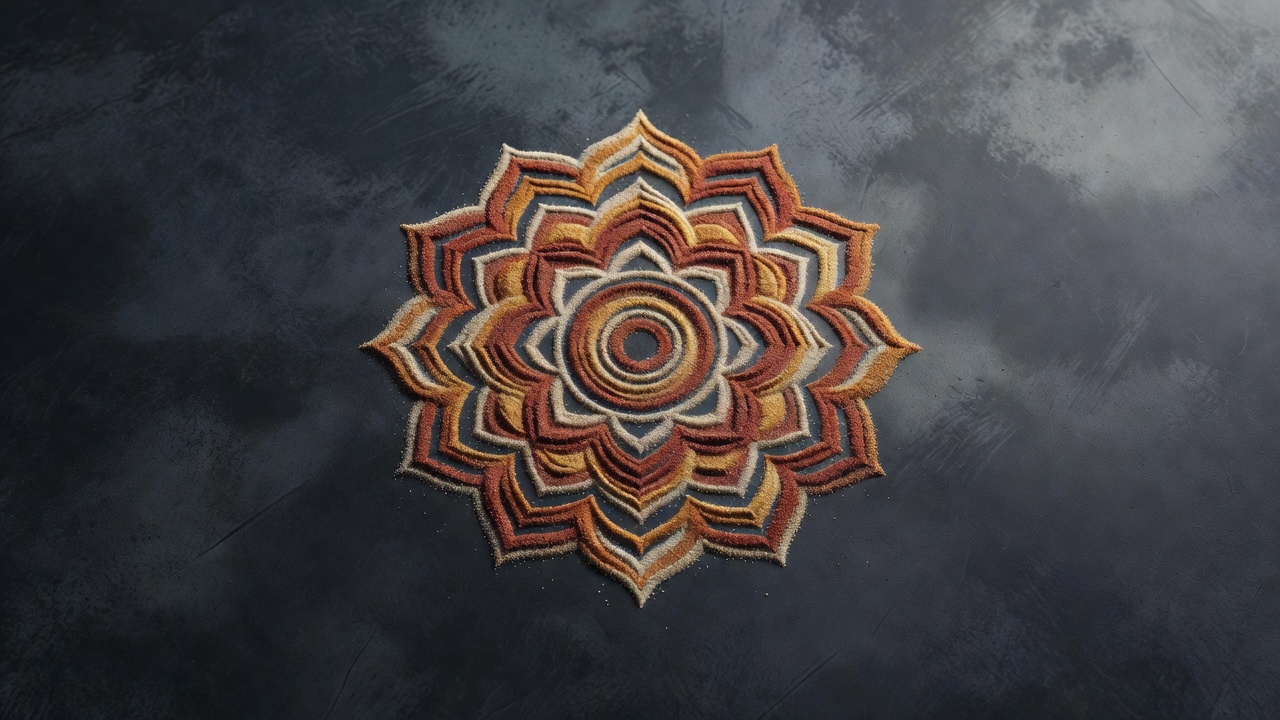
A mandala is a circle with no true start or end — which is exactly why it has come to represent a life, and a self, held together in balance.
Popular Mandala Tattoo Designs and Combinations
Because a mandala is fundamentally a pattern rather than a picture, most of its personality comes from what it is combined with. These are the most common variations.
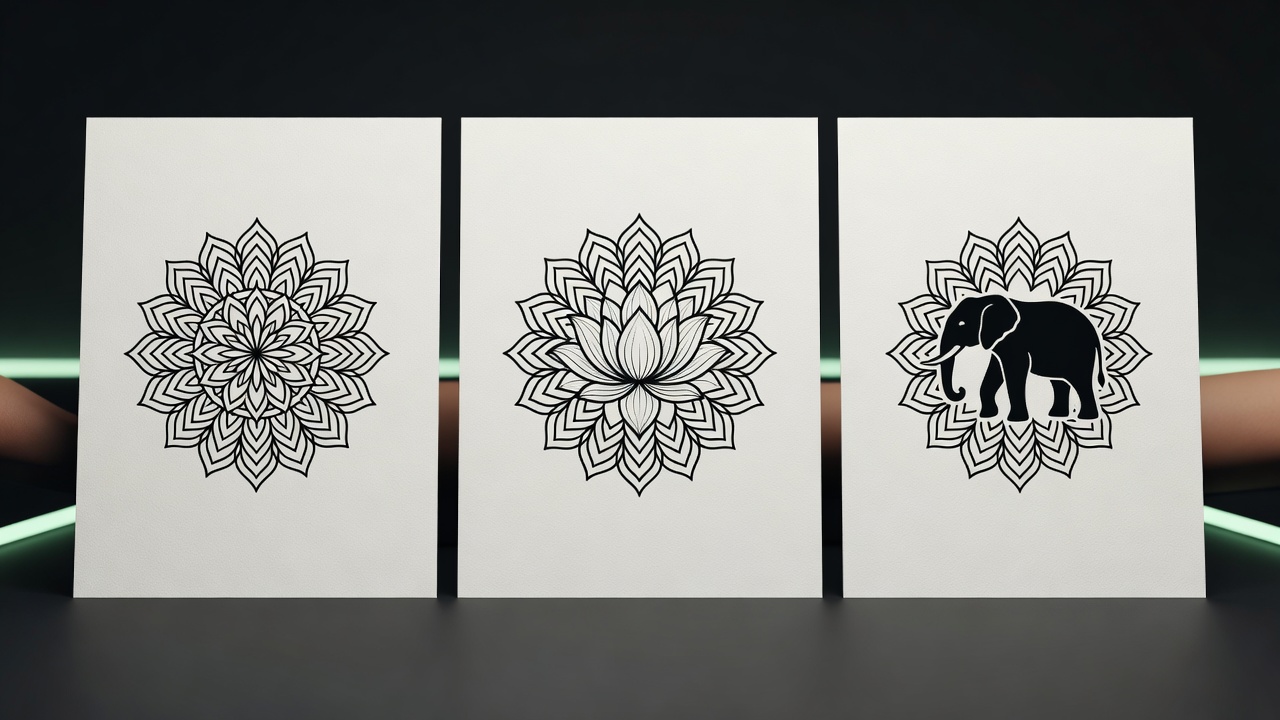
- Lotus mandala — a lotus flower forms the center or frame of the mandala, adding purity, growth, and rising above adversity to the design's core theme of balance.
- Elephant mandala — an elephant's head or silhouette worked into or behind a mandala, layering in wisdom, strength, and good fortune.
- Dreamcatcher mandala — a mandala rendered inside a dreamcatcher web, doubling down on the protective reading of both symbols.
- Sun or moon mandala — a radiant sun mandala emphasizes energy and life force, while a moon mandala leans toward intuition and cycles.
- Animal mandalas — wolves, owls, and other animals are sometimes framed inside or behind a mandala to combine the animal's individual symbolism with the mandala's theme of wholeness.
- Geometric-only mandala — no additional imagery, just pure sacred geometry; the most minimal, versatile take on the design and a strong choice if you want the symbolism to stay open-ended.
The Best Tattoo Styles for a Mandala
A mandala's meaning does not change much with style, but the technique used has a big impact on how the fine detail ages and reads on skin.
Dotwork
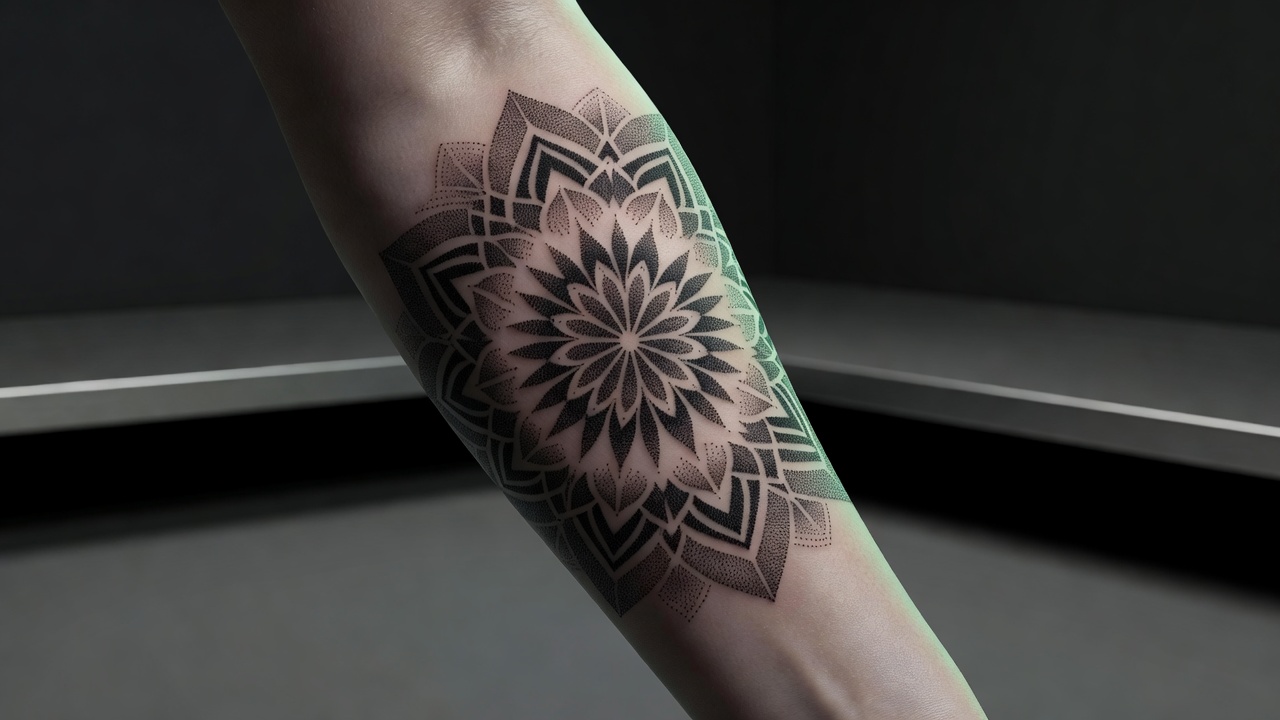
The most iconic mandala style, built entirely from small dots rather than solid lines. Dotwork creates smooth gradients and intricate texture that suit a mandala's layered, radial patterns better than almost any other technique, which is why "dotwork mandala tattoo" has become its own recognizable category.
Fine Line
Clean, thin outlines without heavy shading. A fine-line mandala keeps the geometry crisp and reads well even at a smaller scale — see our fine-line tattoo guide for what to expect from the technique.
Blackwork and Geometric
Bold, solid black shapes and sharp negative space give a mandala a graphic, architectural quality. It is a natural extension of the wider geometric tattoo designs trend and holds up especially well over decades because the shapes stay legible even as fine lines soften.
Where Do Mandala Tattoos Look Best?
Because a mandala is symmetrical in every direction, it works differently on the body than a design with a clear top and bottom. The most popular placements include:
- Back and shoulder blade — plenty of flat space for a large, detailed mandala with multiple rings.
- Sternum and chest — a striking, symmetrical spot directly over the body's own center line, though one of the more sensitive areas to tattoo.
- Forearm — a mandala reads clearly here and stays visible, a popular choice for a first larger piece.
- Thigh and calf — plenty of room for a large mandala, often paired with a lotus or floral elements below it.
- Back of the hand or behind the ear — smaller, simplified mandalas that work well as understated pieces.
- Spine — a vertical chain of smaller mandalas, or a single design centered along the backbone.
Not sure which spot suits the size you want? Our best tattoo placements guide breaks down pain levels and visibility for every area of the body.
Designing Your Mandala Tattoo with AI
A mandala looks simple from a distance, but getting the symmetry, proportion, and layering right by hand is genuinely difficult — which is exactly the kind of precise, repeating pattern an AI tattoo generator handles well. With INK, you can describe the mandala you want ("a dotwork lotus mandala with six rings, sternum placement") and generate several fully symmetrical variations in seconds, then compare a pure geometric mandala against one combined with a lotus, elephant, or dreamcatcher.
Because every generation is free to explore, you can test different ring counts, densities, and combinations before committing to one, then use AR try-on to see exactly how the finished size and placement will look on your own skin. If this is your first larger piece, our first tattoo guide covers what to expect from booking to healing, and our roundup of meaningful tattoo symbols is a good next stop if you are still weighing your options against other designs.
Choosing Your Mandala
A mandala tattoo rewards a little intention. The core meaning — balance, unity, and wholeness — stays constant, but the ring count, the combined symbols, and the style you choose all shape how personal the design feels. Decide what kind of balance you want your mandala to represent first, then build the specific pattern around that.
What does a mandala tattoo mean? Most often balance, harmony, and wholeness, rooted in Hindu and Buddhist meditation practice.
Does the design need to be huge? No — a simple mandala works small on the wrist or ankle, while a detailed dotwork piece needs more room to stay crisp.
Which style suits it best? Dotwork is the classic choice, with fine-line and blackwork geometric as strong alternatives.
Where does it look best? Anywhere with room for the pattern to stay symmetrical — the back, sternum, forearm, or thigh are the most popular spots.
Whatever combination you land on, a mandala is one of the few tattoo motifs where the geometry itself is the meaning — take the time to get the balance right.
Design Your Mandala Tattoo Free
Describe your mandala, compare ring counts and combinations, and AR-preview the design on your body before you commit — all in INK. No sign-up needed.
Try INK Free →

Create Your Perfect Tattoo Design
Use AI to generate unique tattoo designs and preview them on your body before committing to ink.
Start Designing for FreeWritten by

Laura Schmitz
Tattoo Content Lead, INK
Laura Schmitz leads tattoo content at INK. She has spent years researching tattoo styles, symbolism and aftercare, and works directly with the AI tattoo generator to test how each style translates from prompt to skin — so every guide here reflects designs that are actually tattooable, not just images that look good on screen.
More about the author