
Tattoo Aftercare Guide: Healing, Itching & What to Expect
Complete tattoo aftercare guide covering healing timeline, when tattoos start itching, tattoo flu symptoms, and proper care tips to protect your new ink.

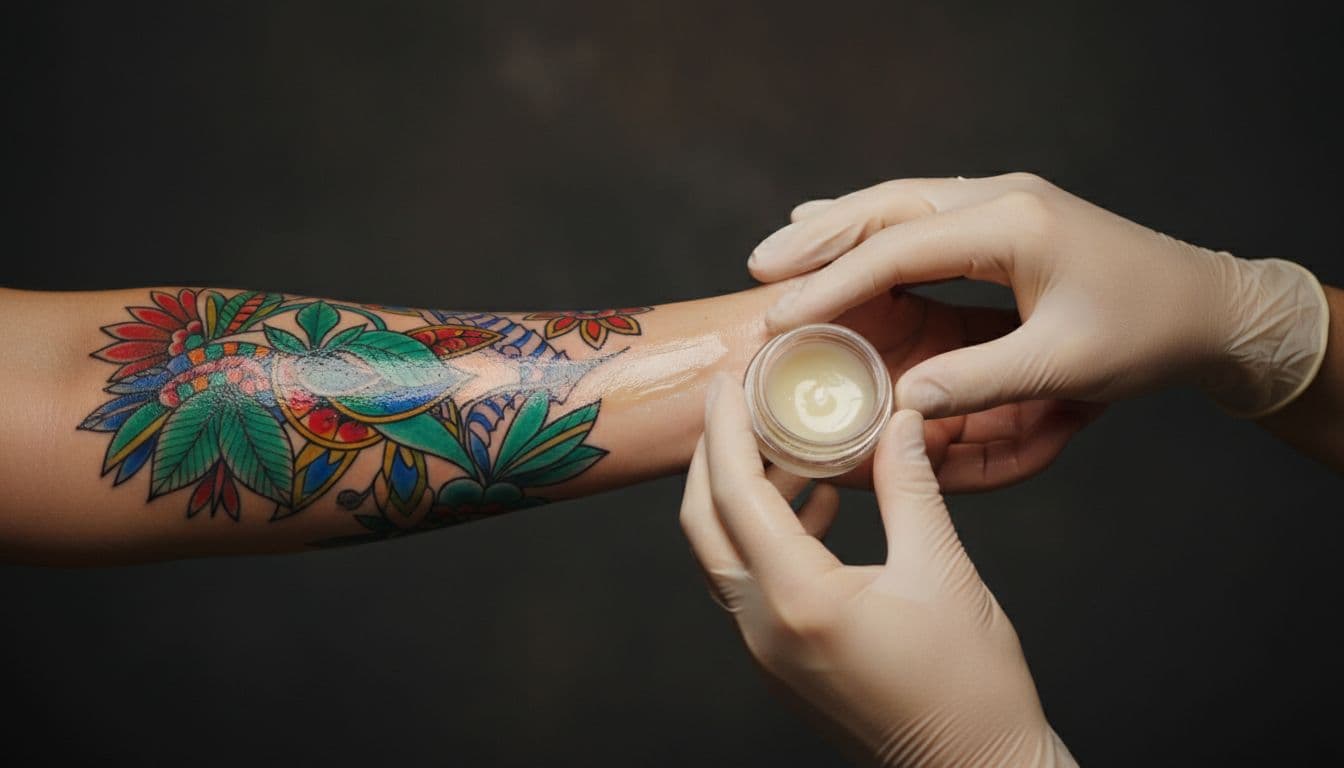
You just got tattooed. The adrenaline is fading, your new ink looks incredible, and now comes the part nobody really prepares you for—keeping it that way. Proper aftercare isn't optional. It's the difference between a tattoo that heals beautifully and one that ends up faded, patchy, or infected.
I'm going to walk you through everything you need to know about tattoo aftercare, from the moment you leave the shop until your tattoo is fully healed. We'll cover the healing timeline, when things get itchy (and why you absolutely cannot scratch), what "tattoo flu" actually is, and all the products that help versus hurt.
Your tattoo artist put in the work. Now it's your turn.
The First 24 Hours: Critical Care
The first day is the most important. Your tattoo is essentially an open wound right now—thousands of tiny punctures in your skin filled with ink. How you treat it in these first hours sets the tone for the entire healing process.
Leaving the Shop
Your artist will cover your fresh tattoo with either plastic wrap (Saran wrap), a bandage, or a specialized tattoo film like Saniderm or Tegaderm. Each has different instructions:
Plastic wrap/bandage: Remove after 2-4 hours. Don't leave it on overnight—trapped moisture and heat create a breeding ground for bacteria.
Tattoo film (Saniderm/Tegaderm): Can stay on for 24 hours to several days depending on your artist's instructions. This breathable film creates a sterile environment while your tattoo weeps plasma and excess ink.
First Wash
When it's time to remove the covering, wash your hands thoroughly first. Then gently wash the tattoo with lukewarm water and a fragrance-free soap. Use your fingertips—no washcloths, loofahs, or anything abrasive.
You'll notice some ink, blood, and plasma washing off. This is completely normal. Don't panic. You're not losing your tattoo.
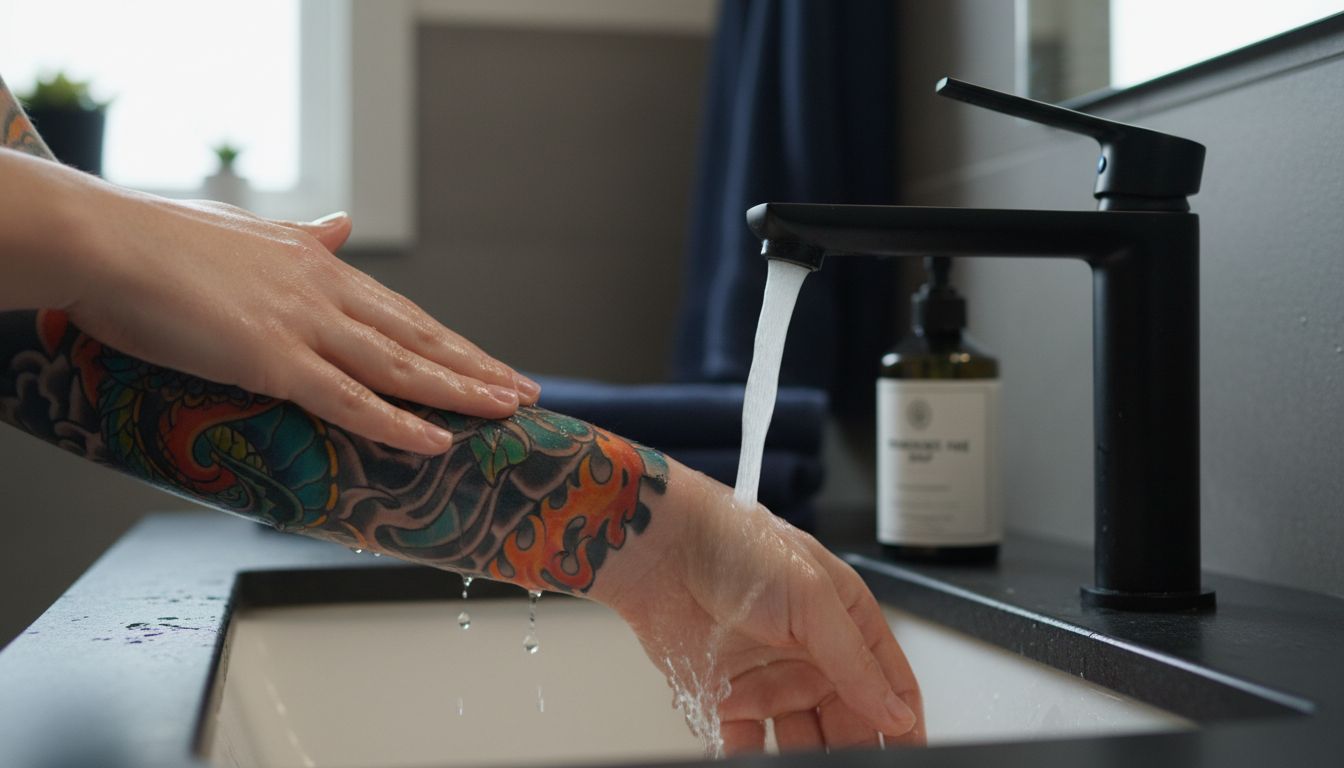
Pat dry with a clean paper towel—not a bath towel that could harbor bacteria or leave fibers in your fresh wound. Let it air dry for 10-15 minutes before applying any moisturizer.
First Night
Sleep on clean sheets. If your tattoo is in an area that might stick to bedding, either use fresh tattoo film or wear loose, clean clothing over it. Don't wrap it in plastic overnight—your skin needs to breathe.
Expect some oozing. Place a clean towel under the tattooed area to protect your sheets. This is normal and usually stops within the first day or two.
Week 1: Peeling and Itching Begins
Days 2-7 are when things get interesting. Your tattoo goes through visible changes, and this is where most aftercare mistakes happen.
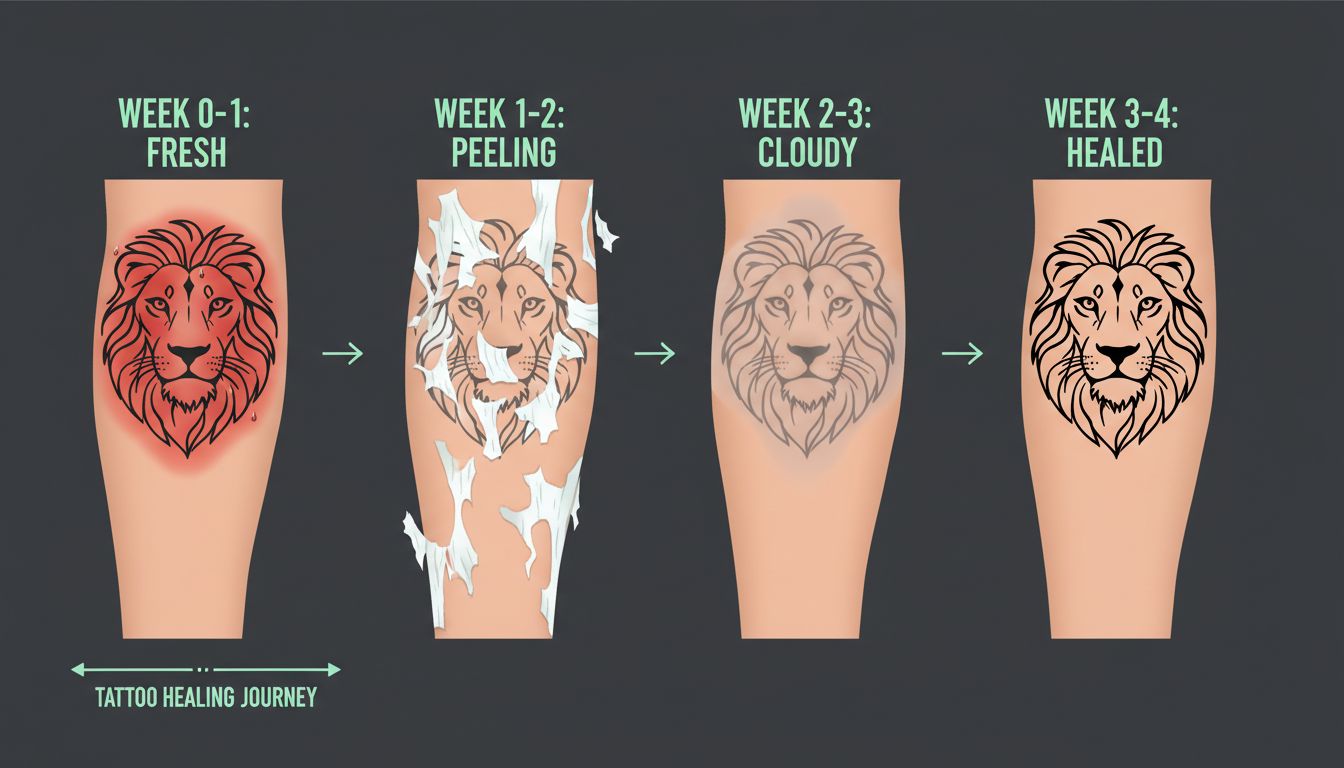
Days 2-3: Your tattoo may feel tight, warm, and slightly swollen. This is normal inflammation as your immune system responds to the trauma. The colors might look darker or more intense than they will once healed.
Days 4-6: The peeling begins. Your tattoo will start to flake like a sunburn. The skin might look dull, milky, or cloudy. This is the outer layer of damaged skin sloughing off.
When does a tattoo start itching? Usually around days 3-7. This itching can range from mild to absolutely maddening. It happens because new skin is forming underneath the damaged layer, and your nerve endings are healing.
DO NOT SCRATCH. I cannot stress this enough. Scratching can:
- Pull out ink before it's settled
- Create scars that distort your design
- Introduce bacteria and cause infection
- Damage the delicate new skin forming underneath
If the itching is unbearable, try these instead:
- Gently slap or tap the area (not hard—just enough pressure to distract)
- Apply a thin layer of unscented moisturizer
- Hold a cool (not cold) compress near the area
- Distract yourself—seriously, it works
Planning Your Next Tattoo?
Use INK to design and preview your next piece while this one heals. Generate custom designs with AI.


Tattoo Flu: What It Is and How to Handle It
What is tattoo flu? It's not actually the flu, but a collection of flu-like symptoms that some people experience after getting tattooed. Your body has just gone through trauma—it's mounting an immune response.
Symptoms of tattoo flu typically appear within 24-48 hours and can include:
- Fatigue and tiredness
- Low-grade fever
- Body aches
- Chills
- Headache
- Nausea (especially if you didn't eat before your session)
According to Healthline's guide on tattoo flu, these symptoms are generally harmless and resolve within 24-48 hours. They're more common with larger tattoos, longer sessions, and first-time tattoo recipients.
How to manage it:
- Rest—your body is working hard to heal
- Stay hydrated (water, not alcohol)
- Eat nutritious foods
- Take over-the-counter pain relievers if needed (avoid blood thinners like aspirin)
- Give it time—symptoms usually pass quickly
When to worry: If symptoms persist beyond 48-72 hours, get progressively worse, include high fever (over 101°F), or you see signs of infection at the tattoo site (increasing redness, pus, red streaks), contact a healthcare provider immediately.
Weeks 2-4: The Healing Process
By week two, the dramatic peeling should subside, but your tattoo isn't fully healed yet. This phase is sometimes called the "milky" or "cloudy" stage.
Week 2: Peeling tapers off. Your tattoo may look dull, faded, or have a slight sheen to it. This is dead skin cells over the new, healed skin underneath. Don't worry—your colors aren't gone.
Weeks 3-4: The cloudiness clears. Your tattoo starts to look more like its final form. The outer layers of skin have completely regenerated, but the deeper layers are still healing.
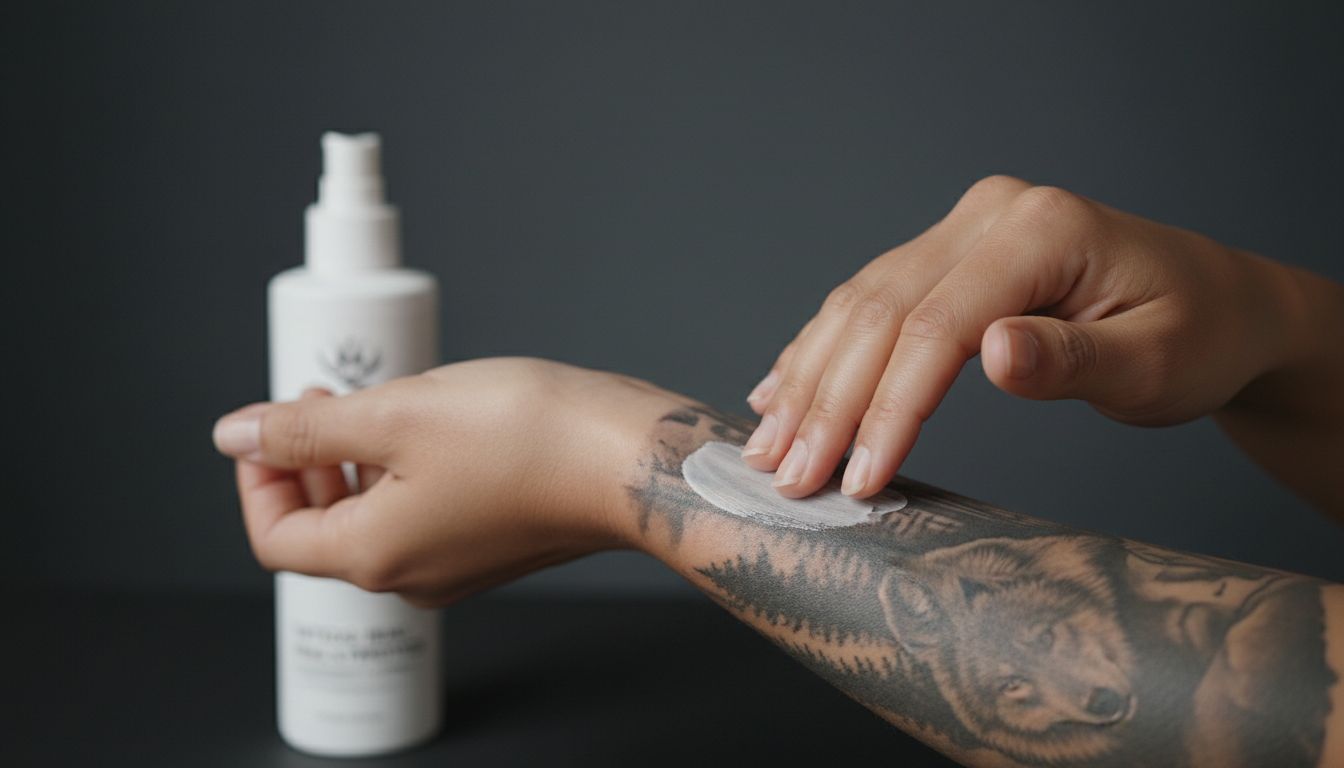
Continue your routine:
- Wash gently 1-2 times daily
- Apply thin layers of moisturizer as needed
- Avoid submerging in water (no baths, pools, oceans)
- Stay out of direct sunlight
- Wear loose clothing over the tattoo
Full healing takes longer than most people realize. While the surface may look healed in 2-3 weeks, the deeper dermal layers where the ink sits take 2-3 months to fully repair. During this time, your tattoo is still vulnerable to damage and fading.
Products to Use (and Avoid)
Not all moisturizers are created equal when it comes to tattoo healing. Here's what works and what to stay away from.
Good Products
- Unscented, gentle lotion: Lubriderm, Eucerin, Aveeno (fragrance-free versions)
- Specialized tattoo aftercare: Hustle Butter, After Inked, Tattoo Goo
- Coconut oil: Natural, antibacterial—but use sparingly
- Aquaphor: Good for the first few days, but switch to lighter lotion after to avoid clogging
- Fragrance-free soap: Dove sensitive, Dr. Bronner's unscented, Dial Gold
Products to Avoid
- Anything with fragrance: Chemicals in fragrances can irritate healing skin
- Petroleum jelly (Vaseline): Too heavy, suffocates the tattoo, traps bacteria
- Neosporin/antibiotic ointments: Can cause allergic reactions and pull out ink
- Alcohol-based products: Dries out and damages healing skin
- Sunscreen: Wait until fully healed (2-3 weeks minimum) before applying
The American Academy of Dermatology recommends keeping new tattoos moisturized but not over-saturated. A thin layer is better than glopping on product—your tattoo needs to breathe to heal properly.
Long-Term Tattoo Care
Congratulations—your tattoo is healed! But aftercare doesn't completely stop. How you treat your tattoo for years to come affects how it ages.
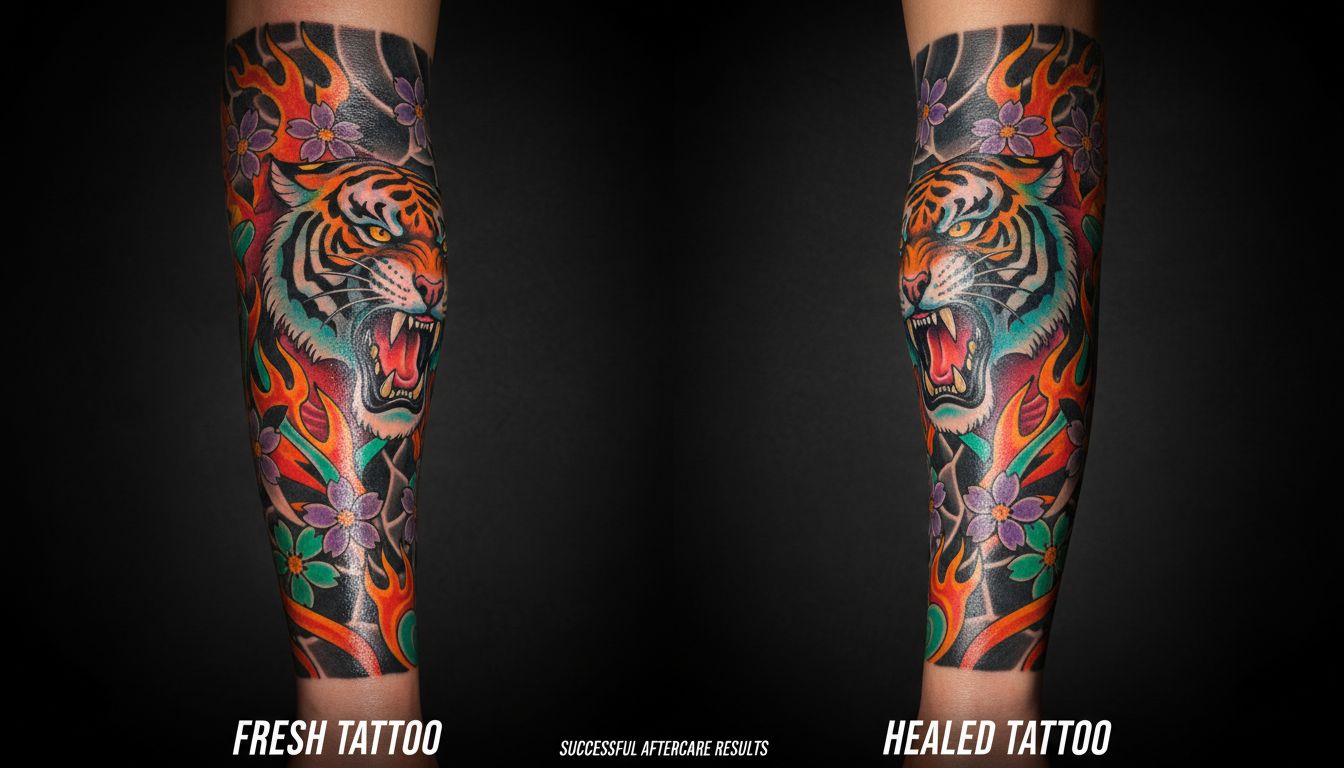
Sun protection is non-negotiable. UV rays are the #1 enemy of tattoo longevity. They break down ink particles and cause fading faster than anything else. Once healed:
- Apply SPF 30+ sunscreen to tattooed areas when exposed
- Reapply every 2 hours in direct sun
- Consider covering tattoos with clothing when possible
- Seek shade during peak UV hours
Keep skin healthy: Moisturize regularly. Healthy, hydrated skin keeps tattoos looking their best. Dry, damaged skin makes tattoos look dull.
Watch for changes: If a healed tattoo suddenly becomes raised, itchy, or changes appearance, consult a dermatologist. Some people develop delayed allergic reactions to certain ink colors (red and yellow are most common).
Touch-ups: Even with perfect care, some tattoos need touch-ups over time. This is normal. Most artists offer free or discounted touch-ups within the first year. After that, check out our guide on how much tattoos cost for typical touch-up pricing.
Warning Signs: When to Seek Help
Most tattoos heal without any complications, but infections do happen. Know the warning signs:
Signs of infection:
- Increasing redness spreading beyond the tattoo
- Pus or discharge (yellow, green, or foul-smelling)
- Red streaks extending from the tattoo
- Fever that persists or gets worse
- Increasing pain after the first few days
- Swelling that doesn't improve
Signs of allergic reaction:
- Severe itching localized to one color
- Raised, bumpy texture on specific areas
- Rash around the tattoo
- Blistering
If you notice any of these, see a healthcare provider. Don't try to treat infections yourself—you could make things worse and potentially damage your tattoo permanently.
For information on what to expect during the actual tattoo process, check out our guide on how tattoos are made.
Design Your Next Tattoo with AI
While your current tattoo heals, start planning what's next. Use INK to generate custom designs and preview them on your body before committing.
Start Designing Free →
Create Your Perfect Tattoo Design
Use AI to generate unique tattoo designs and preview them on your body before committing to ink.
Start Designing for FreeWritten by

Laura Schmitz
Tattoo Content Lead, INK
Laura Schmitz leads tattoo content at INK. She has spent years researching tattoo styles, symbolism and aftercare, and works directly with the AI tattoo generator to test how each style translates from prompt to skin — so every guide here reflects designs that are actually tattooable, not just images that look good on screen.
More about the author