
Tribal AI Tattoo Generator: Design Bold Tribal Art
How a tribal AI tattoo generator renders Polynesian, Maori, and Celtic-inspired motifs — what the AI gets right, where cultural respect still needs a human eye, and how to prompt it for bold, well-composed results.

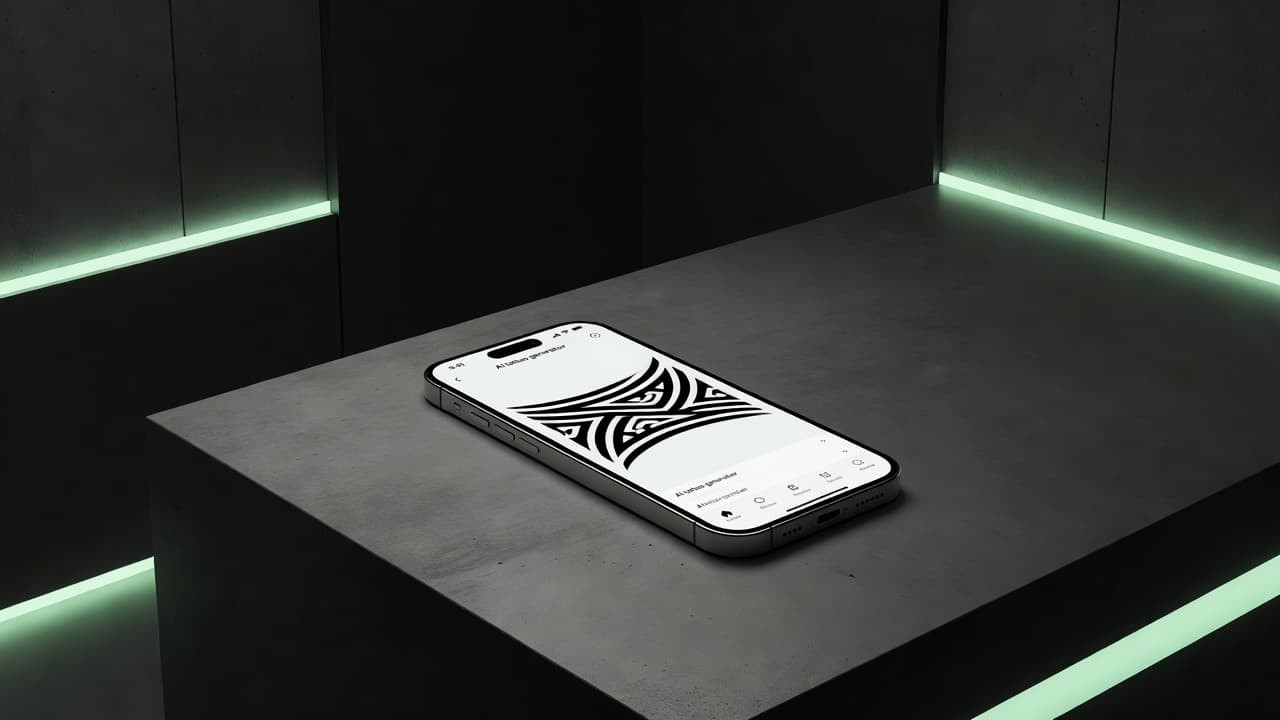
Few tattoo styles rely on bold, confident shapes the way tribal tattooing does — thick black linework, repeating patterns, and curves that wrap around the body instead of sitting flat on it. A tribal AI tattoo generator gives you a fast way to explore that language before committing to ink: describe a Polynesian-inspired armband, a Celtic knot sleeve, or a modern blackwork fusion piece, and see a bold, well-composed design rendered in seconds instead of sketching every curve by hand.
In short: a tribal AI tattoo generator is an AI tattoo tool set to the tribal aesthetic — heavy black shapes, symmetrical patterning, and flowing linework inspired by traditions like Polynesian tattooing, Maori-influenced motifs, and Celtic knotwork, plus modern abstract tribal fusion. You describe or upload a reference, select a tribal style, and the AI produces artwork you can refine and preview on your own body before booking an appointment. This guide covers how these generators render tribal style, where AI is strong and where cultural context still needs a human eye, and how to prompt one for results that feel bold and intentional rather than generic.
What Is Tribal Tattooing?
"Tribal tattoo" is an umbrella term covering a range of pattern-based styles built on bold black shapes, repetition, and flow rather than color or fine detail. Historically, the term draws on several distinct traditions — including Polynesian tattooing and Tā moko, the Maori practice of carving patterns into the skin that carry personal and genealogical significance — alongside Celtic knotwork, Borneo-style curvilinear patterns, and the modern "tribal fusion" blackwork that became popular in Western tattoo shops from the 1990s onward. Our tribal tattoo designs guide covers the history and meaning of these traditions in more depth; this piece focuses specifically on how AI renders tribal-style tattoos and how to get the most out of a generator.
What ties these styles together visually is the use of the human body's contours as part of the design — a tribal band doesn't just sit on the bicep, it wraps and tapers with the muscle, and a Celtic knot sleeve is built to flow continuously from shoulder to wrist. That relationship between pattern and body is part of what makes tribal tattoos read as bold and intentional rather than decorative.
How Does a Tribal AI Tattoo Generator Work?
An AI tattoo generator renders an image from your description or reference photo, and selecting a tribal-adjacent style tells the model to favor thick, confident outlines, high-contrast blackwork, and repeating or mirrored patterns instead of shading, color gradients, or fine detail. You can steer it toward a specific tradition — Polynesian-inspired, Celtic knotwork, Borneo-style curves — or toward the more generic "modern tribal" look that blends elements freely.
In INK, you can generate the same idea from a typed prompt or an uploaded reference photo, choose a tribal-leaning style, and compare several variations side by side. Because tribal designs depend so heavily on how the pattern flows with a specific body part, it's worth generating a few versions and paying close attention to symmetry, taper, and how the shape would sit on a curved bicep or shoulder rather than judging it as a flat image alone.
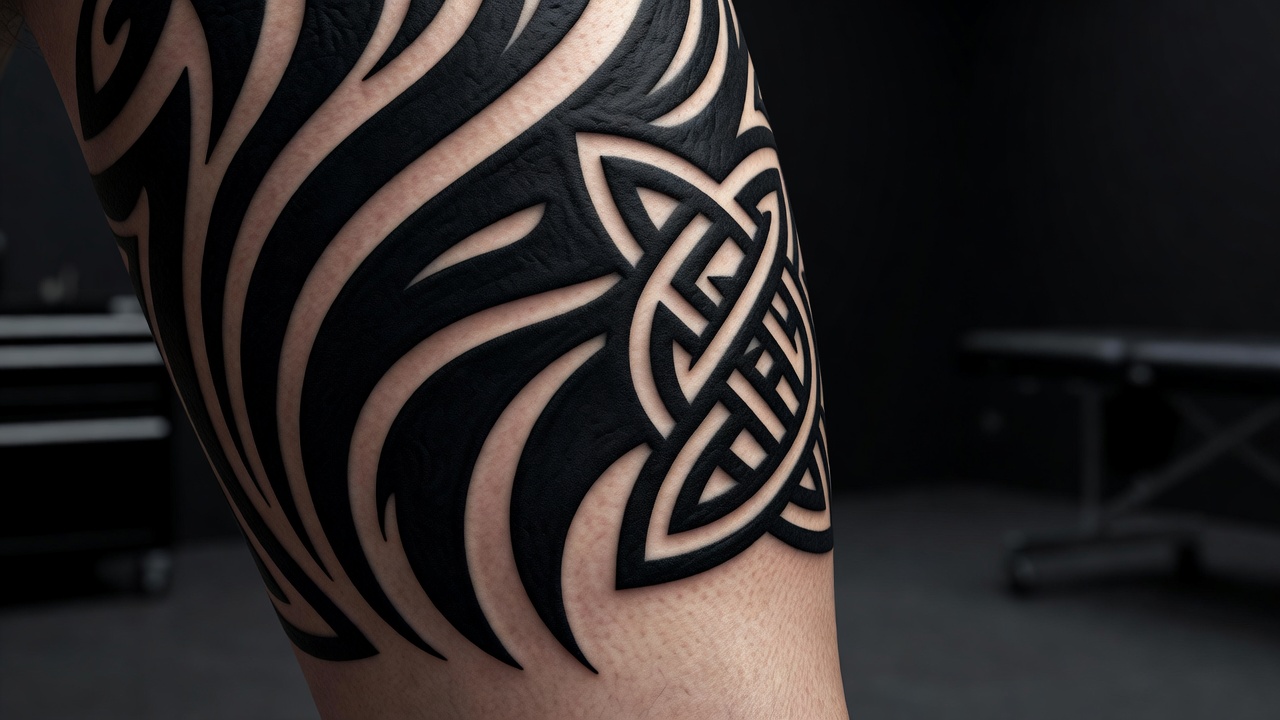
Is AI Actually Good at Tribal Tattoo Designs?
AI handles the visual mechanics of tribal tattooing well. Bold black shapes, mirrored curves, and repeating patterns are exactly the kind of structured, high-contrast imagery AI models render confidently and consistently across many variations — if you ask for a symmetrical Polynesian-inspired armband, you'll typically get clean, usable results quickly.
Where it's genuinely more complicated is cultural depth. Traditions like Tā moko aren't a generic aesthetic — specific patterns and placements can carry personal, family, or tribal meaning that a Maori practitioner assigns to an individual, and that context can't be replicated by describing "Maori pattern" to an AI model. The same caution applies more broadly: a generator can produce something that looks tribal, but it doesn't know the cultural weight a specific curve or motif might carry within a living tradition. The honest way to use these tools is to treat AI tribal output as a starting point for exploring a bold, pattern-based aesthetic — and if you specifically want a design rooted in Polynesian, Maori, or another cultural tradition, that's a conversation to have with an artist trained in that practice, not something to finalize from a generator alone.
Compare that to something like geometric tattooing, which AI renders very consistently because the instruction — stay symmetrical, keep spacing even — is purely structural. Tribal style sits in between: the shapes themselves are something AI handles well, but the cultural specificity behind certain motifs is something a generator can't verify or guarantee, which makes the "starting point, not final word" approach the right way to think about it.
How to Prompt an AI Tattoo Generator for Tribal Results
A few habits make the difference between a tribal prompt that comes back bold and cohesive and one that comes back muddy or generic:
- Pick an aesthetic first. Polynesian-inspired, Celtic knotwork, Borneo-style curves, or modern tribal fusion — starting from a clear direction keeps the pattern from feeling scattered.
- Name the style directly. Say "tribal," "bold blackwork," or the specific tradition you're drawing inspiration from so the AI applies the right line weight and pattern logic.
- Describe the placement. Mention "bicep armband," "full sleeve," or "shoulder to elbow" so the design is shaped to flow with that specific body part instead of sitting flat.
- Ask for symmetry where it matters. Tribal bands and knotwork usually read best mirrored or evenly repeated — say so explicitly if that's the look you want.
- Edit instead of restarting. If one section of the pattern feels disconnected, use an AI tattoo editor to adjust that part rather than regenerating the whole piece.
Tribal Tattoo Styles Worth Trying
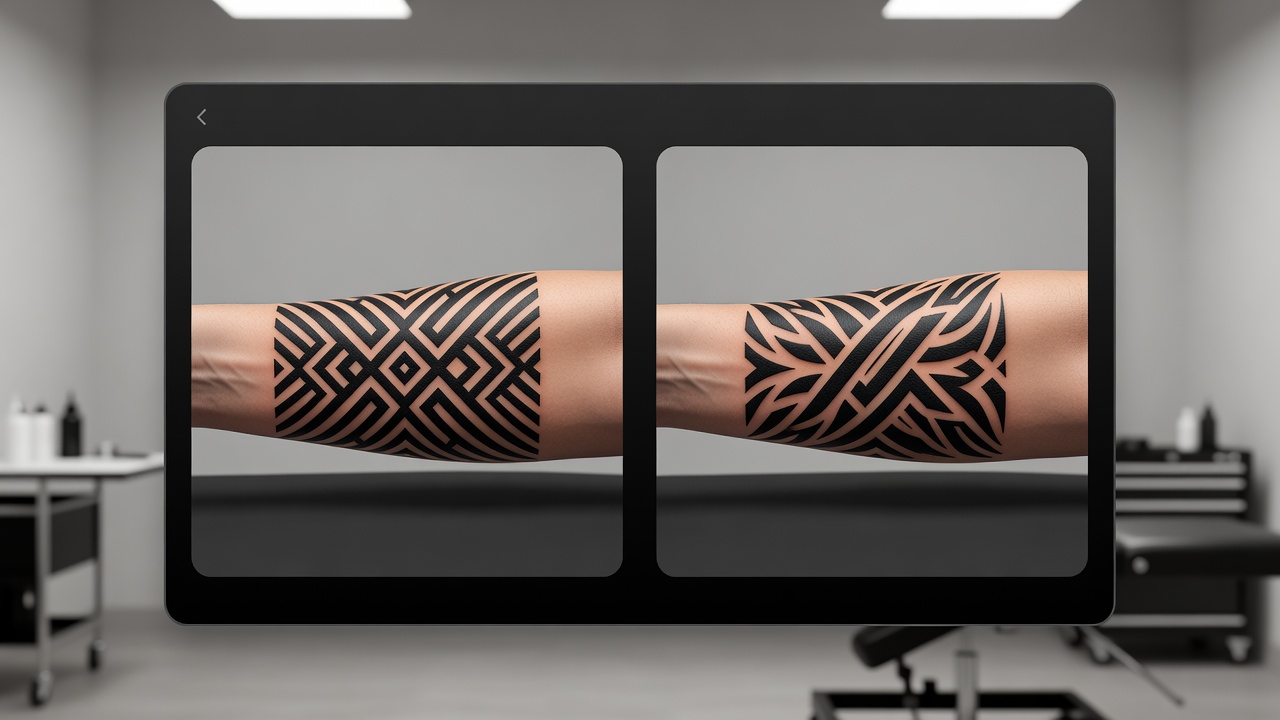
Because "tribal" spans several distinct traditions and a broad modern fusion category, it's worth trying a handful of directions to see which fits the look and meaning you're after:
- Polynesian-inspired — bold spearheads, ocean waves, and repeating geometric bands, generally the most requested tribal look in Western tattoo shops.
- Celtic knotwork — continuous interlocking lines with no visible start or end point, popular for armbands, sleeves, and wrist pieces. The Celtic knot tradition has its own long visual history worth exploring if this is the direction you want.
- Borneo-style curves — flowing, hook-like shapes derived from Dayak tattoo traditions, often used for larger sleeve or back pieces.
- Modern tribal blackwork fusion — a contemporary, non-culturally-specific take that blends bold shapes with abstract patterning, popular for people who want the look without tying it to a specific tradition.
- Tribal-geometric hybrid — tribal curves combined with precise geometric elements for a piece that feels both bold and modern.
Where Do Tribal Tattoos Look Best?
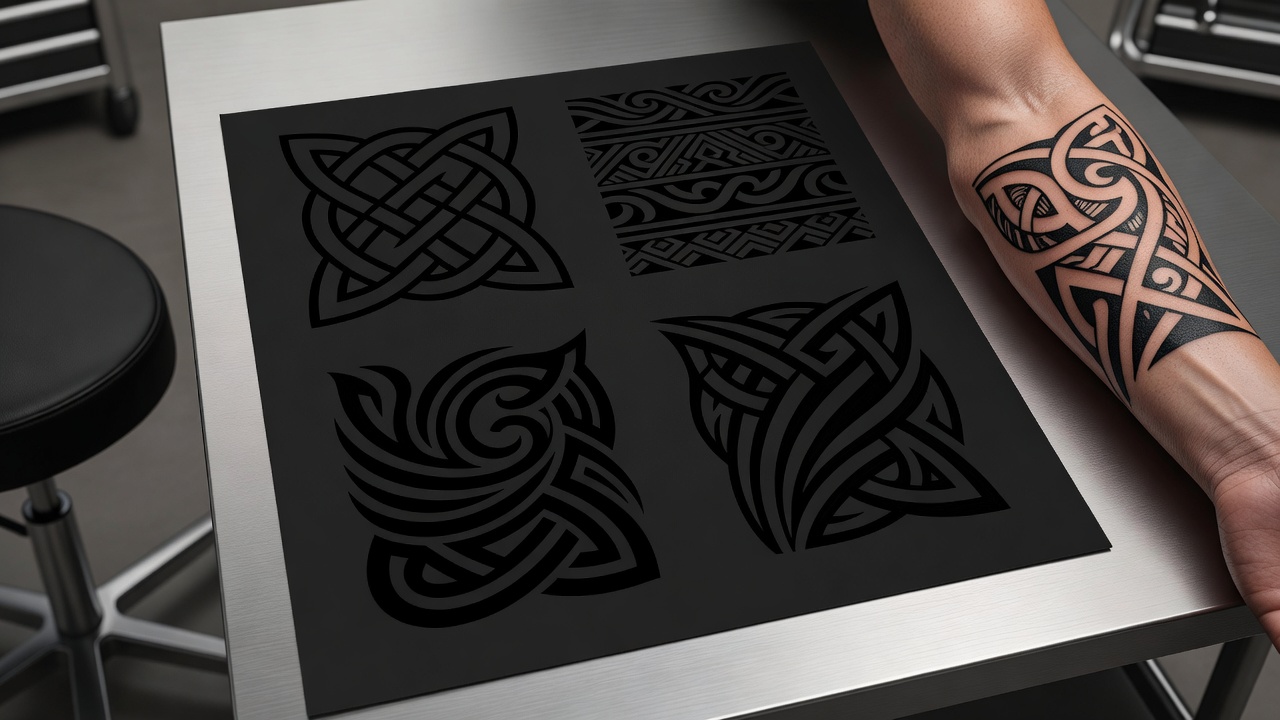
Tribal designs are built to wrap and flow with the body, which makes placement a bigger part of the design process than it is for flatter styles.
- Bicep and shoulder — the classic spot for a tribal armband; the muscle's curve gives the pattern natural taper.
- Full or half sleeve — larger tribal compositions flow continuously from shoulder to wrist or elbow.
- Calf — a strong, visible spot for a bold pattern that follows the muscle's shape.
- Back and shoulder blades — plenty of flat space for a large, symmetrical tribal piece.
- Wrist and forearm — a smaller-scale option for Celtic knotwork or a compact tribal band.
Our best tattoo placements guide covers pain levels and visibility for every area of the body, and our AI tattoo sleeve generator guide is worth a look if you're planning a full-arm tribal composition rather than a single band.
Designing Your Tribal Tattoo with AI
Tribal tattoos live or die on how well the pattern fits the body, which is exactly where designing with AI helps most. With INK you can describe your idea in plain language ("a bold Polynesian-inspired armband, thick blackwork, tapering at the elbow"), compare a Celtic knot sleeve against a modern tribal-geometric hybrid, or test how a shoulder piece would flow before anyone picks up a machine.
Because you can iterate freely, you can try a dense, heavily patterned design against a simpler, more open one, check how the shape wraps your specific arm or calf, and AR-preview it on your own skin before committing to anything. When you're ready, you bring your artist a clear, considered reference instead of a vague description. New to the process? Our first tattoo guide walks through what to expect from start to finish.
Choosing Your Tribal Design
Tribal tattooing rewards boldness, but it also rewards a bit of research — knowing which tradition a pattern draws from, and whether that pattern carries meaning beyond the visual, makes for a design you'll feel good about wearing for decades.
What is a tribal AI tattoo generator? A tool that renders bold blackwork, symmetrical patterns, and flowing linework in the tribal aesthetic, based on your description or reference photo.
Is AI good at tribal designs? Yes for the visual mechanics — bold shapes and symmetry — but cultural specificity in traditions like Tā moko still calls for a practitioner trained in that tradition.
How do I get the best results? Name your aesthetic, describe the placement, ask for symmetry, and generate several variations to compare flow and line weight.
Where does it look best? Bicep, shoulder, full sleeve, calf, or back — tribal patterns are designed to wrap and flow with the body's curves.
Whatever direction you land on, take the time to understand where the pattern comes from before you commit. Choose your style and placement deliberately, and you'll end up with a tribal piece that carries real intention.
Design Your Tribal Tattoo Free
Describe your tribal design, explore styles and placements, and AR-preview it on your body before you commit — all in INK. No sign-up needed.
Try INK Free →

Create Your Perfect Tattoo Design
Use AI to generate unique tattoo designs and preview them on your body before committing to ink.
Start Designing for FreeWritten by

Laura Schmitz
Tattoo Content Lead, INK
Laura Schmitz leads tattoo content at INK. She has spent years researching tattoo styles, symbolism and aftercare, and works directly with the AI tattoo generator to test how each style translates from prompt to skin — so every guide here reflects designs that are actually tattooable, not just images that look good on screen.
More about the author