
Tribal Tattoo Designs: A Guide to Polynesian, Maori & Celtic Art
Generate authentic tribal tattoo designs with AI. Polynesian, Maori, Celtic, and modern tribal patterns. Create custom tribal art for any body part.

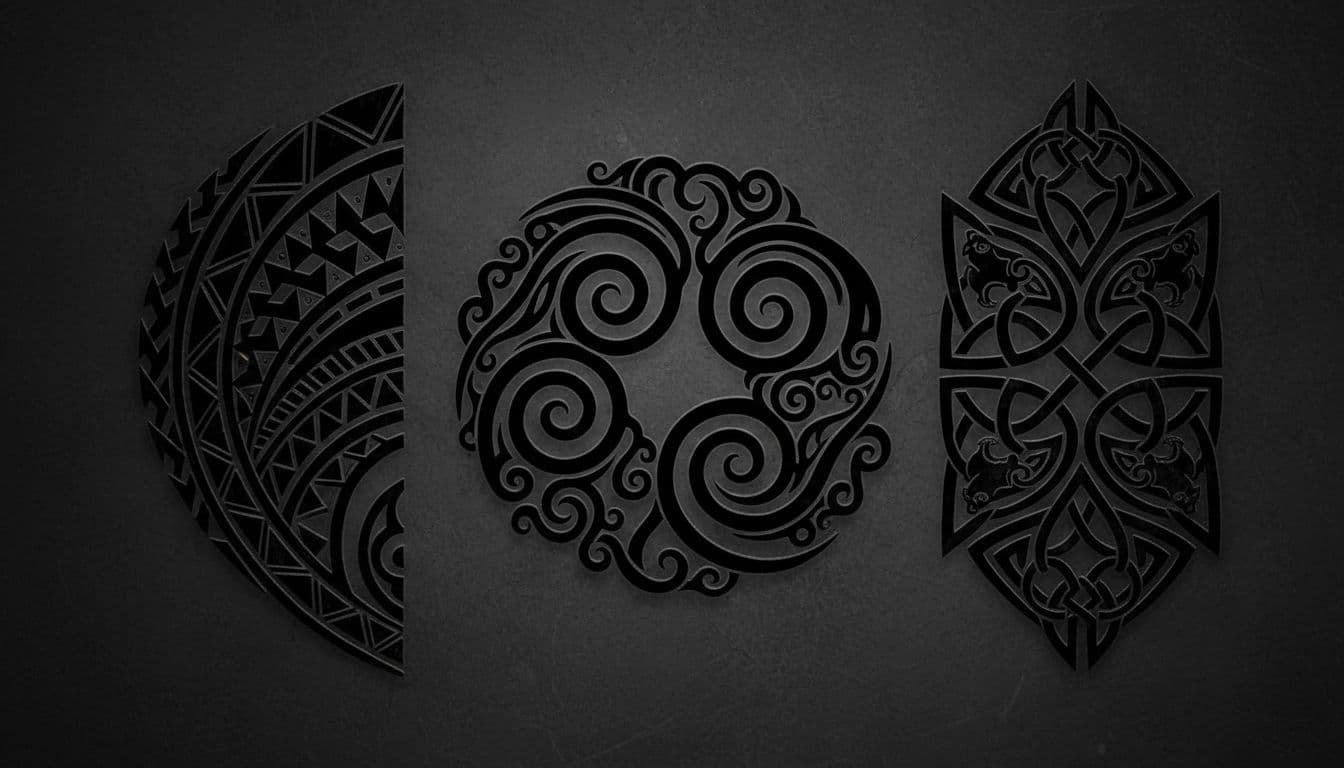
Tribal tattoos carry something that most modern designs don't: thousands of years of human history etched into their patterns. These aren't just aesthetic choices—they're visual languages developed by cultures across the world to tell stories, mark achievements, declare identity, and connect the wearer to something larger than themselves.
Walk into most tattoo shops in the 1990s and tribal was everywhere. Bold black bands wrapping around biceps. Abstract flame-like patterns climbing up shoulders. The style became so ubiquitous it eventually became a punchline—the "barbed wire armband" era that many people look back on with either nostalgia or regret.
But here's the thing: that explosion of generic tribal work actually did a disservice to the genuine traditions it borrowed from. Real tribal tattooing—Polynesian, Maori, Celtic, and others—has depth, meaning, and cultural significance that goes far beyond looking tough. And there's a growing movement to approach these designs with the respect and understanding they deserve.
The Ancient Roots of Tribal Tattooing
Tattooing is one of the oldest art forms humans have practiced. Archaeological evidence suggests people were marking their skin with permanent designs at least 5,000 years ago—and probably much longer. According to historical research compiled by Wikipedia, tattooed mummies have been found across the world, from the Alps to Egypt to Siberia.
What's remarkable is how independently cultures developed tattooing practices. Polynesians didn't learn from Celts. Maori traditions evolved separately from Japanese Irezumi. Yet nearly every major civilization developed some form of permanent body marking. The urge to decorate and signify through skin seems fundamentally human.
In most tribal traditions, tattoos weren't decorative accessories—they were earned. A young warrior might receive marks for successful battles. A navigator might earn patterns representing islands discovered. A chief might wear designs indicating lineage and authority. The tattoo wasn't just art; it was a public record, a spiritual protection, and a statement of belonging.
National Geographic's coverage of tattoo history notes that in many cultures, being without tattoos could actually be shameful—evidence that you hadn't accomplished anything worth commemorating.
Polynesian Tribal: Ocean Stories in Ink
When most people think "tribal tattoo," Polynesian designs often come to mind first. These bold, geometric patterns originating from Hawaii, Samoa, Tahiti, Tonga, and other Pacific islands have become some of the most recognizable tattoo styles in the world.
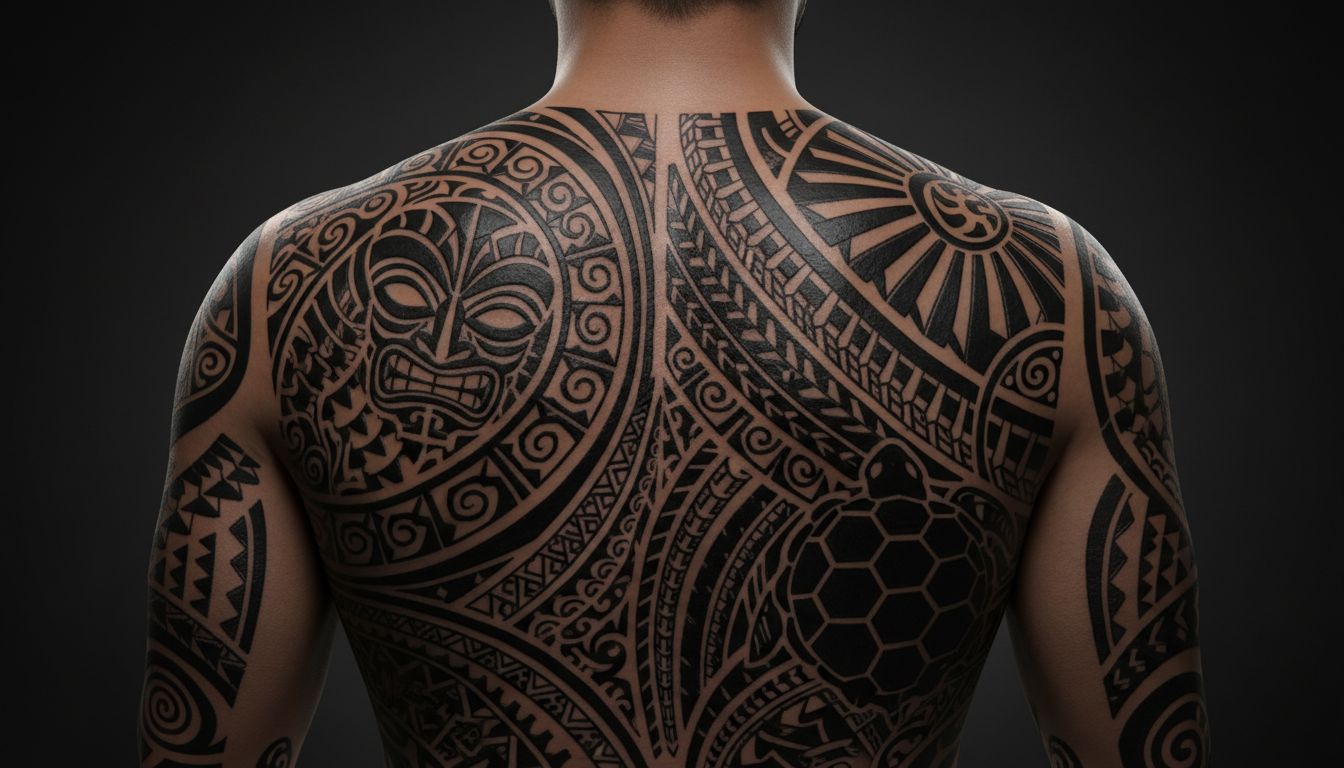
Key Polynesian elements and their meanings:
Shark teeth (niho mano). One of the most common motifs, representing protection, guidance, strength, and adaptability. Sharks were revered as powerful spirits and guardian ancestors throughout Polynesia.
Ocean waves. Patterns representing water symbolize life, change, and the continuity of existence. For island cultures, the ocean was everything—source of food, pathway to other lands, and sacred space.
Spearheads. Triangular patterns often represent courage, strength in battle, and the warrior spirit. These might be earned through actual combat or other tests of bravery.
Tiki figures. Representing ancestral spirits, these designs connect the wearer to those who came before. They're often associated with protection and spiritual guidance.
Turtle shells (honu). Sea turtles represent longevity, wellness, and peace. The shell pattern itself can contain other symbols, creating layered meaning.
Sun and rays. Symbols of leadership, brilliance, and positive energy. Rising suns often represent new beginnings or rebirth.
Traditional Polynesian tattooing was done with bone or tusk tools, literally tapping ink into skin in a process called "tatau"—which is where our word "tattoo" actually comes from. The experience was intentionally painful; enduring it was part of the meaning.
Maori Ta Moko: Identity Written on Skin
Of all tribal tattoo traditions, Maori ta moko may be the most sacred and culturally specific. These intricate facial and body tattoos from New Zealand weren't just decorations—they were literally a person's identity, containing information about genealogy, tribal affiliation, social status, and personal achievements.
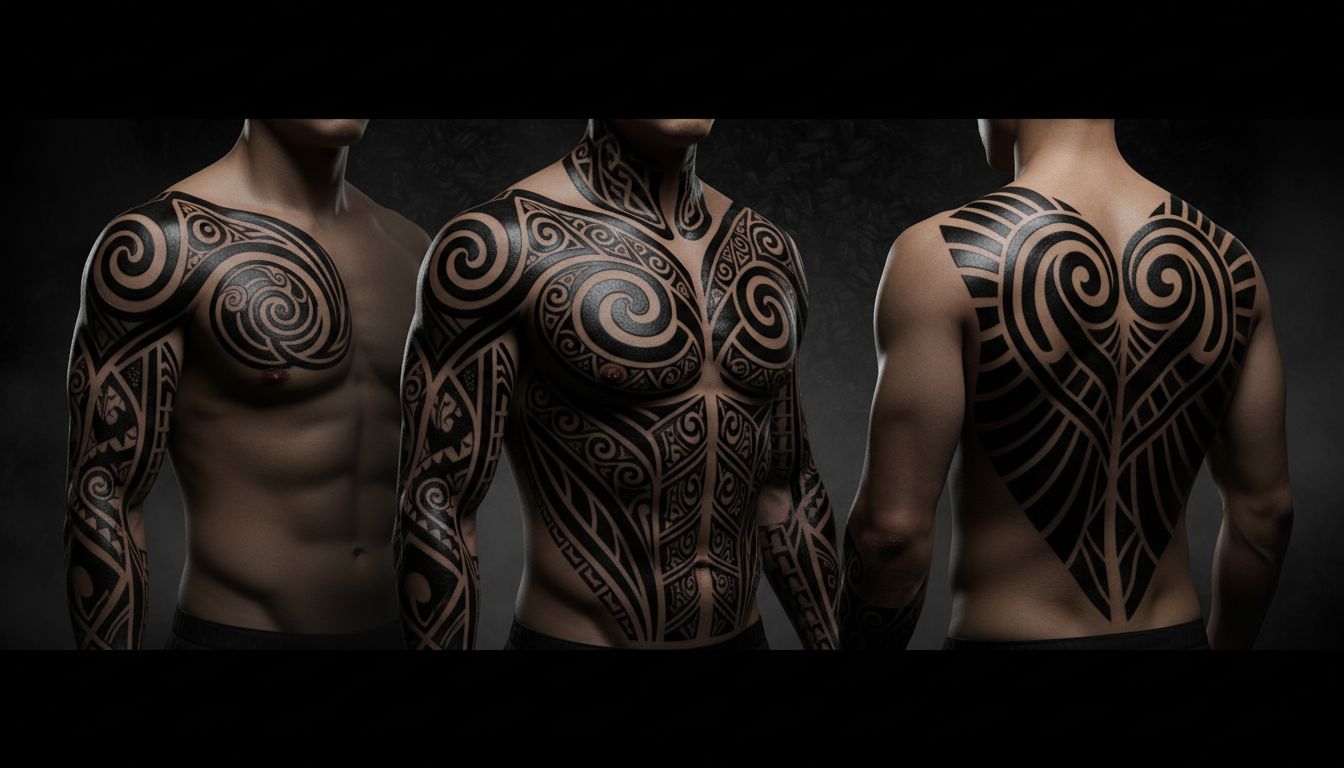
Distinctive Maori design elements:
Koru (spiral). Based on the unfurling fern frond, this spiral represents new life, growth, and new beginnings. It's one of the most recognizable Maori symbols and carries deep spiritual significance.
Manawa (heart). Designs representing the heart symbolize life force, spirit, and emotional center. These often appear over the chest or other central body locations.
Hikuaua (mackerel tail). These flowing patterns represent prosperity, especially from the sea. They often appear in designs celebrating successful fishing or ocean-related accomplishments.
Pakati (dog skin cloak patterns). Representing warriors and those who serve, these stepped patterns were traditionally worn by fighters and protectors.
Facial placement. In traditional ta moko, specific areas of the face held specific meanings. The forehead might represent social standing. The cheeks might indicate profession. The chin might reveal marital status. Reading someone's face was reading their biography.
Here's where cultural sensitivity becomes critical: ta moko belongs to Maori people. As the Smithsonian notes, there's ongoing discussion about non-Maori wearing these designs. Many argue that while Maori-inspired body tattoos (kirituhi) can be appropriate, actual facial moko patterns should be reserved for those with Maori heritage and cultural connection.
Create Custom Tribal Designs
Generate unique tribal patterns inspired by world traditions. Explore Polynesian, Celtic, and modern fusion styles tailored to your vision.
Design Tribal Tattoo →

Celtic Tribal: Eternal Knots and Ancient Wisdom
Celtic tribal designs come from an entirely different tradition than Pacific Island work, yet share the same quality of encoding meaning into pattern. Originating with the ancient Celts of Ireland, Scotland, Wales, and parts of mainland Europe, these designs are characterized by intricate interlacing patterns that seem to have no beginning or end.
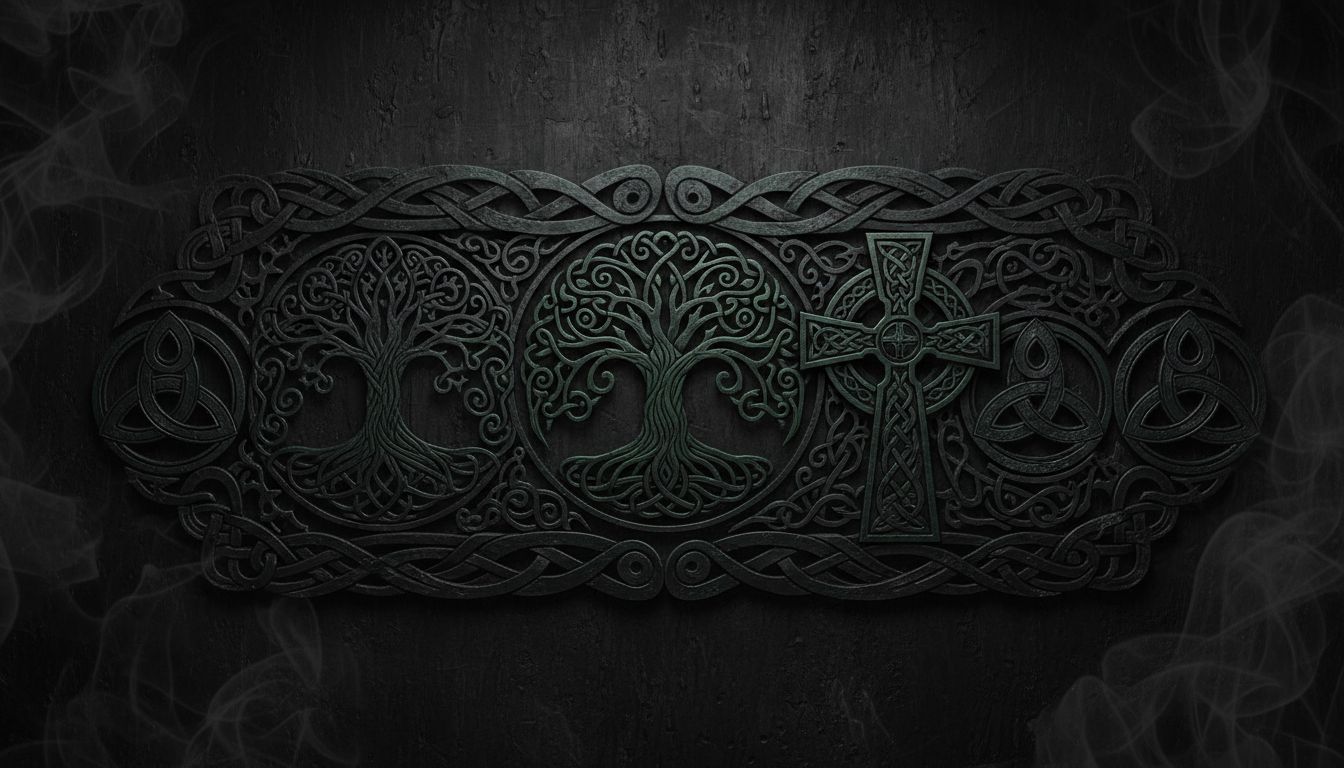
Core Celtic design elements:
Celtic knots. These interwoven patterns symbolize eternity, the interconnectedness of all things, and the cyclical nature of life. The fact that they have no clear start or end represents concepts that transcend time.
Triquetra (Trinity knot). Three interlocked arcs forming a triangular shape. Originally representing the triple goddess (maiden, mother, crone), it was later adopted by Christians to represent the Holy Trinity. Either way, it speaks to the power of three.
Tree of Life (Crann Bethadh). Oak trees were sacred to the Celts, representing strength, wisdom, and connection between earth and sky. Celtic tree of life designs often show roots and branches mirroring each other.
Celtic cross. Combining the Christian cross with a surrounding circle, this symbol merges pagan and Christian traditions. The circle may represent the sun, eternity, or the wholeness of God.
Spirals and triskeles. Three-armed spirals (triskeles) represent motion, cycles, and progress. Single spirals often represent growth and cosmic energy. These patterns appear throughout Celtic art, from ancient stone carvings to medieval manuscripts.
Animals and zoomorphics. Celtic art frequently incorporates stylized animals—dogs representing loyalty, horses representing freedom, serpents representing rebirth. These creatures are often rendered with interlacing patterns woven through their forms.
Celtic designs translate beautifully to tattoos because they're already graphic and high-contrast. The interlacing patterns work at various scales and adapt well to different body placements. If you're considering a larger piece, our sleeve design guide covers how tribal patterns can flow with body contours.
Modern Tribal Fusion: Tradition Meets Innovation
Contemporary tattoo artists have spent decades developing new approaches to tribal work. These modern fusion styles take elements from traditional sources and recombine them in ways that honor the aesthetic while creating something new.
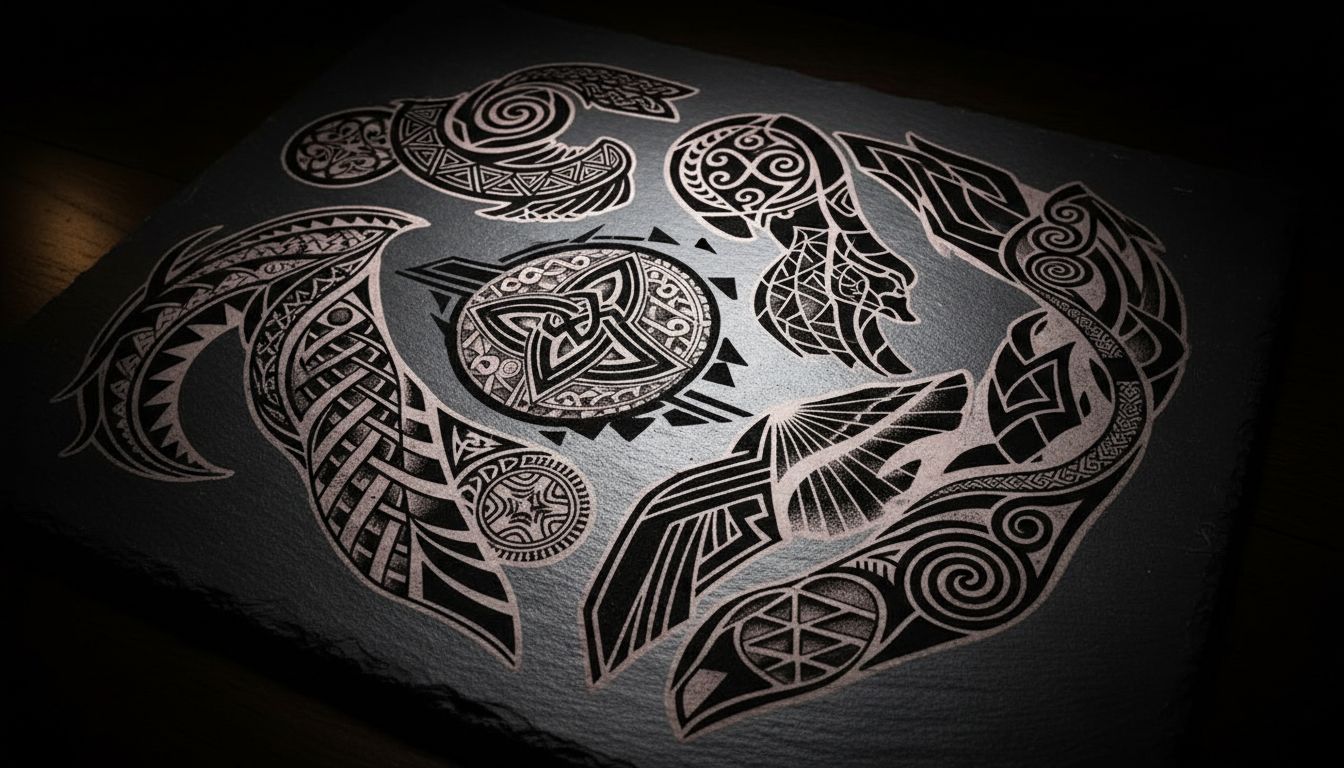
Modern tribal approaches:
Blackwork tribal. Taking the bold blacks of traditional tribal and applying them to completely original designs. These might incorporate tribal-style geometric patterns without directly copying any specific cultural tradition.
Dotwork tribal. Using dotwork techniques to create tribal-style patterns with softer edges and more textural complexity. This fusion creates work that feels both ancient and contemporary.
Bio-mechanical tribal. Combining organic tribal patterns with mechanical or technological elements. The contrast between ancient-feeling organic shapes and futuristic machinery creates striking designs.
Watercolor tribal. Adding color splashes and painterly effects to traditionally black tribal patterns. This contemporary approach keeps the structure of tribal work while adding modern artistic flair.
Geometric fusion. Mixing tribal patterns with precise geometric forms—sacred geometry, optical illusions, or architectural elements. The contrast between organic tribal flow and mathematical precision creates visual tension.
For ideas on how to blend styles, explore our tattoo style gallery.
Placement for Tribal Designs
Tribal tattoos work differently depending on where they're placed. Traditional placements often follow specific cultural rules, but modern tribal can adapt to virtually any body area.
Upper arm and shoulder. Classic tribal territory. Patterns can wrap around the deltoid, creating the "tribal armband" look when done in rings, or flow down toward the elbow for half-sleeve coverage.
Full sleeve. Tribal patterns excel at full-arm coverage because they can flow with body contours while maintaining visual coherence. The geometric nature allows sections to connect seamlessly.
Chest and back. Large tribal pieces on the torso allow for symmetrical designs that use the body's center line. These placements work especially well for Polynesian and Maori-inspired work.
Leg and calf. Lower leg tribal work has gained popularity. The calf provides a good canvas for contained designs, while full-leg sleeves allow for extensive storytelling.
Forearm. More visible placement that works well for smaller, standalone tribal pieces or the beginning of sleeve work.
Check our tattoo placement guide for detailed information on each body area.
Creating Respectful Tribal Designs
Here's where we need to talk honestly about cultural appropriation. Tribal tattoos from specific cultures aren't costumes—they're meaningful traditions that belong to living communities.
Guidelines for respectful approach:
Do your research. Understand what symbols mean before wearing them. A pattern that seems purely decorative might carry specific cultural significance you're not aware of.
Consider your connection. If you have heritage linking you to a tribal tradition, explore that connection. If you don't, consider whether you're honoring or appropriating.
Avoid sacred elements. Some patterns—particularly Maori facial moko—are considered deeply sacred and inappropriate for outsiders. Respect these boundaries.
Create original fusion. Rather than copying traditional designs directly, work with artists to create original work inspired by tribal aesthetics. This approach honors the visual tradition while creating something genuinely yours.
Support indigenous artists. When possible, seek out artists from tribal traditions. They can guide you toward appropriate designs and ensure your tattoo respects cultural boundaries.
Use AI as exploration. AI tattoo generators can help you explore tribal-inspired concepts and develop original designs. Generate variations, refine your vision, then work with a skilled artist to bring it to life respectfully.
Designing Your Tribal Tattoo
AI tools offer interesting possibilities for tribal design exploration. You can experiment with different tribal traditions, fusion approaches, and placement options before committing to anything permanent.
Effective prompts for tribal generation:
- "Polynesian-inspired tribal pattern with shark teeth and ocean wave motifs, designed for shoulder placement"
- "Celtic knot armband design incorporating tree of life elements, continuous interlacing pattern"
- "Modern blackwork tribal half-sleeve with geometric accents, bold blacks with negative space"
- "Fusion tribal design combining Polynesian patterns with contemporary geometric elements"
Remember that AI-generated designs are starting points for conversation with tattoo artists. A skilled tribal specialist can refine generated concepts, ensure cultural appropriateness, and adapt designs perfectly to your body.
Tribal tattoos at their best represent something timeless—the human urge to mark our bodies with meaning, to carry our stories on our skin, to connect ourselves to traditions larger than any individual. Whether you're drawn to the ocean symbolism of Polynesia, the eternal knots of Celtic tradition, or modern fusion approaches, the key is approaching these powerful designs with both creativity and respect.
Design Your Tribal Masterpiece
Explore tribal-inspired designs from world traditions. Generate custom patterns for any body placement, from armbands to full sleeves.
Create Tribal Design Free →
Create Your Perfect Tattoo Design
Use AI to generate unique tattoo designs and preview them on your body before committing to ink.
Start Designing for FreeWritten by

Laura Schmitz
Tattoo Content Lead, INK
Laura Schmitz leads tattoo content at INK. She has spent years researching tattoo styles, symbolism and aftercare, and works directly with the AI tattoo generator to test how each style translates from prompt to skin — so every guide here reflects designs that are actually tattooable, not just images that look good on screen.
More about the author