
AI Tattoo Sleeve Generator: Design Full & Half Sleeves with AI
Plan your tattoo sleeve with AI. Generate cohesive full-arm or half-sleeve designs and visualize how multiple tattoos flow together.

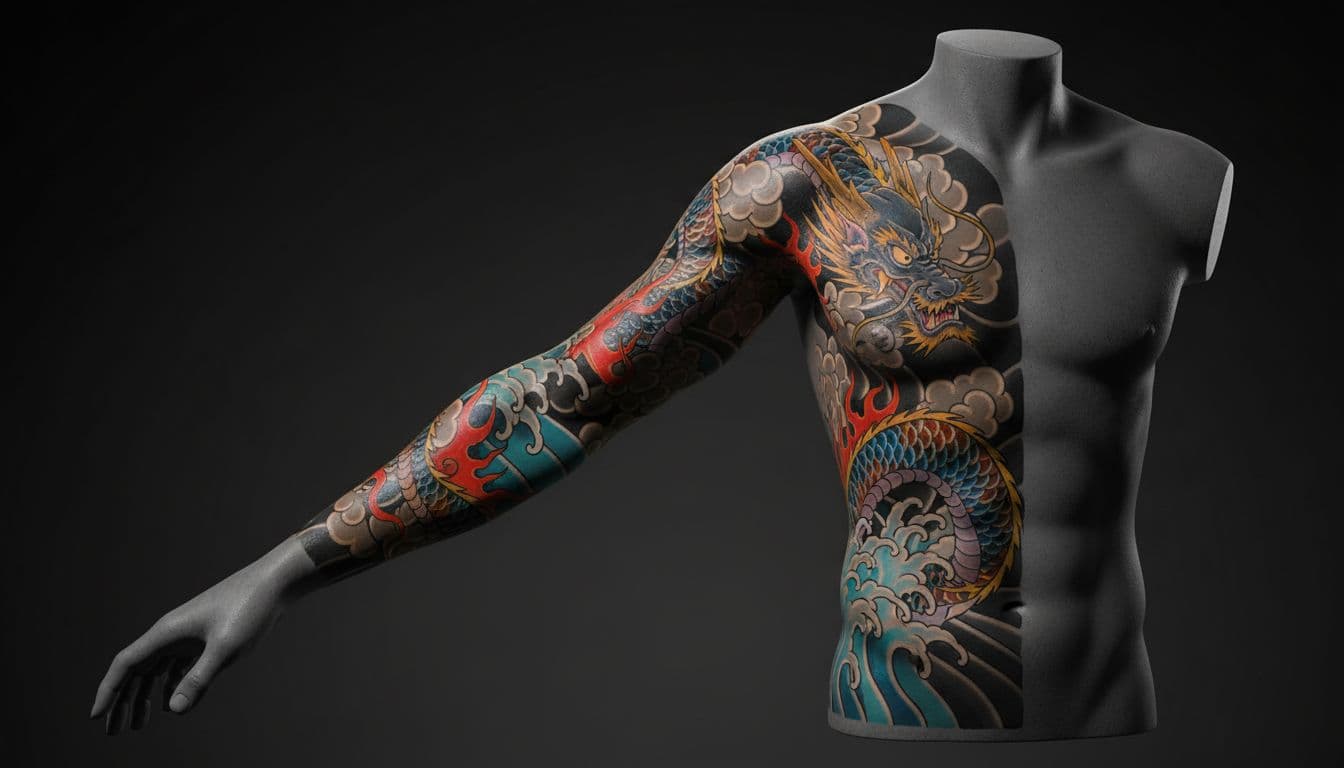
A tattoo sleeve is one of the most ambitious body art projects you can undertake. We're talking dozens of hours in the chair, thousands of dollars invested, and a permanent transformation that becomes part of your identity. No pressure, right?
Here's the thing about sleeves that trips people up: it's not just about picking pretty designs. A great sleeve tells a story. Every element needs to work with everything around it. The spacing, the flow, the transitions—there's a lot more strategy involved than most people realize when they start.
That's exactly why AI tattoo generators have become such a game-changer for sleeve planning. Instead of trying to describe your vision to an artist (and hoping they understand), you can actually see it first. Test different compositions. Try various styles. Figure out what works before your arm becomes the canvas.
Planning Your Sleeve: Why AI Actually Makes Sense
Traditional sleeve planning usually goes like this: you have a vague idea, you try to explain it to an artist, they draw something up, you sort of like it but aren't sure, and then you're making major decisions about permanent body art based on imagination and hope.
Not exactly ideal for something this significant.
AI sleeve generators flip this process. You can experiment freely, generate dozens of concepts, test different themes, and actually see how elements might look together. All before spending a single dollar or sitting down in anyone's chair.
The real benefits come from:
- Visual exploration - See actual images instead of imagining
- Style testing - Try Japanese, blackwork, neo-traditional, and see what resonates
- Composition planning - Understand how main elements and fillers work together
- Communication tool - Show artists exactly what you're envisioning
- Commitment confidence - Make major decisions with more certainty
This isn't about replacing tattoo artists—great artists bring irreplaceable skills to the table. It's about coming to them with clarity instead of confusion.
Full Sleeve vs Half Sleeve: Which is Right for You?
Before generating anything, you need to decide on scope. Full sleeve or half sleeve? This isn't just an aesthetic choice—it affects everything from cost to commitment to design approach.
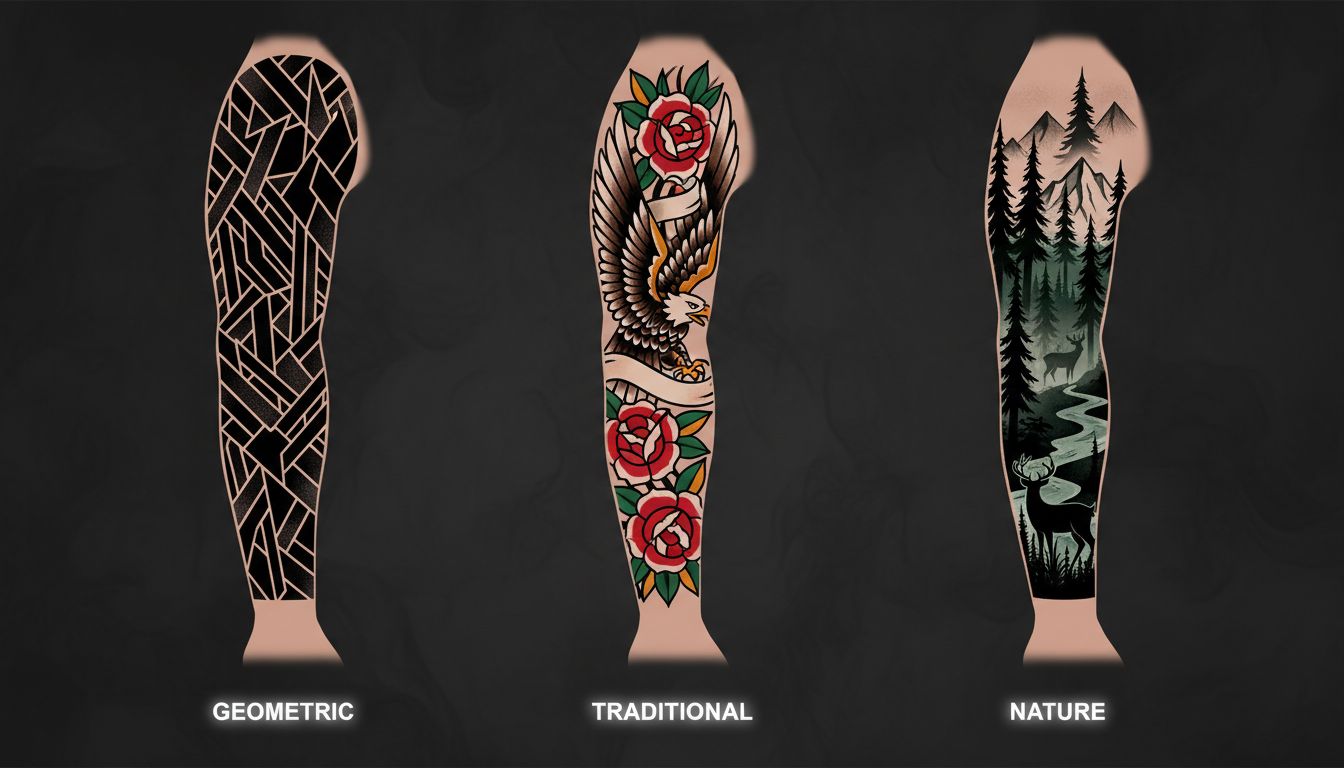
Full Sleeve (Shoulder to Wrist)
Time commitment: 25-50+ hours across multiple sessions
Cost range: $2,000 - $10,000+ depending on artist and detail
Best for: Dedicated collectors, those wanting maximum visual impact
Full sleeves provide the most canvas for storytelling. You can incorporate multiple major elements, extensive backgrounds, and create truly immersive pieces that draw the eye. They're also the most visible sleeve option—which can matter depending on your career and lifestyle.
Half Sleeve (Shoulder to Elbow OR Elbow to Wrist)
Time commitment: 10-25 hours
Cost range: $1,000 - $4,000
Best for: First-time sleeve getters, those wanting professional concealment options
Upper half sleeves (shoulder to elbow) are easily hidden under short-sleeve shirts. Lower half sleeves (elbow to wrist) are more visible but still concealable with long sleeves. Many people start with a half sleeve and extend later.
Check out our tattoo pricing guide for detailed cost breakdowns on sleeves and other major pieces.
Creating Cohesive Sleeve Designs with AI
Here's where AI really shines. Generating cohesive sleeve artwork requires understanding how different elements work together—something that's hard to visualize in your head but easy to see in generated images.
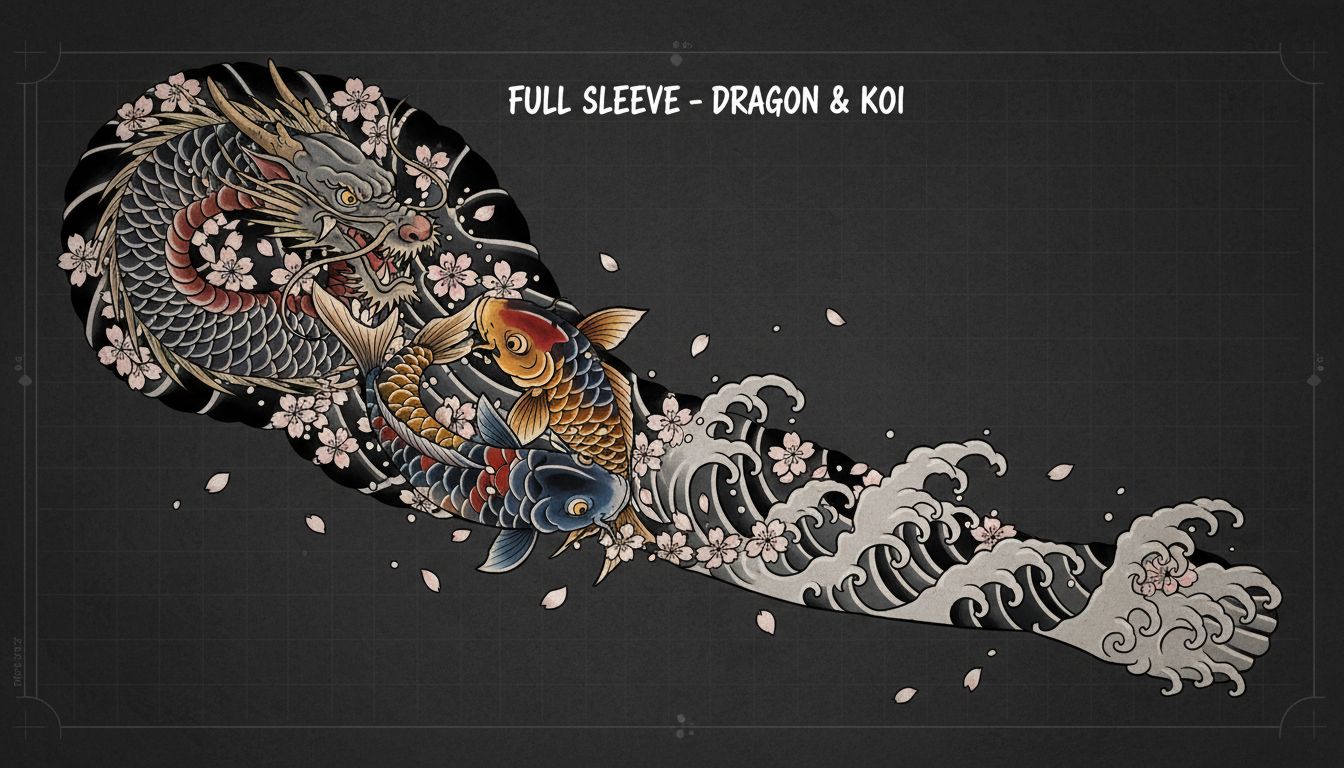
Effective sleeve prompts include:
- Theme direction: "Japanese mythology sleeve" or "biomechanical arm"
- Main elements: "Dragon as focal point with koi fish below"
- Background specification: "Waves and clouds connecting all elements"
- Style consistency: "Traditional Japanese irezumi style throughout"
- Flow direction: "Movement flowing from shoulder downward"
The key is thinking holistically. Individual pieces are cool, but a sleeve is about the complete picture. How does your shoulder piece transition to your bicep? What fills the gaps? How do colors balance from one section to the next?
Start Planning Your Sleeve
Generate complete sleeve concepts and see how different elements work together. Free on iOS and Android.


Popular Sleeve Themes and Styles
Not sure what direction to take? Here are some of the most popular sleeve themes and what makes each work well as full-arm compositions.
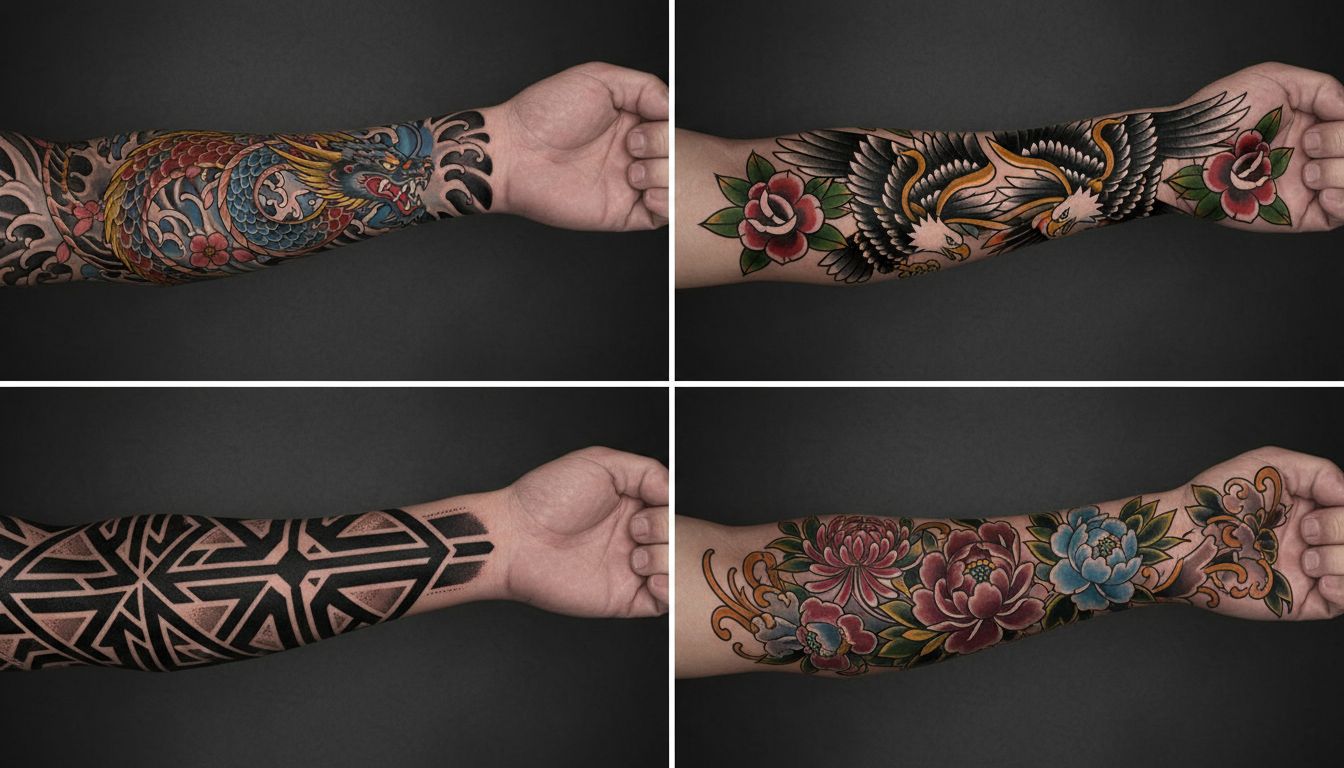
Japanese Irezumi
Perhaps the most classic sleeve style. Japanese sleeves typically feature dragons, koi fish, tigers, or phoenixes as central subjects, with waves, clouds, wind bars, and cherry blossoms filling the background. The style has centuries of tradition behind it, with specific rules about composition and meaning.
Learn more about the symbolism in our Japanese tattoo meaning guide.
American Traditional
Bold lines, limited color palettes, and iconic imagery. Traditional sleeves often combine multiple standalone pieces—eagles, roses, daggers, ships, pin-ups—connected by backgrounds or simply clustered together. There's a classic, timeless quality that never goes out of style.
Blackwork and Geometric
Modern, striking, and increasingly popular. Blackwork sleeves can range from sacred geometry patterns to dotwork mandalas to heavy black coverage with negative space designs. These sleeves often make the biggest visual impact and photograph incredibly well.
Neo-Traditional
Takes the bold approach of traditional tattooing but adds more colors, details, and artistic freedom. Neo-traditional sleeves often feature more complex compositions with deeper shading and more elaborate designs while maintaining that classic tattooed look.
Realistic/Portrait
Sleeves composed of realistic imagery—portraits, animals, landscapes, or combinations. These require highly skilled artists and tend to be more expensive, but the results can be genuinely stunning. Common themes include wildlife, family tributes, or cinematic scenes.
Explore all available options in our tattoo styles gallery.
Making Elements Flow Together
This is where amateur sleeves and professional ones diverge. Good sleeves have flow—your eye naturally travels across the arm, each element leads to the next, and there's a sense of visual harmony.
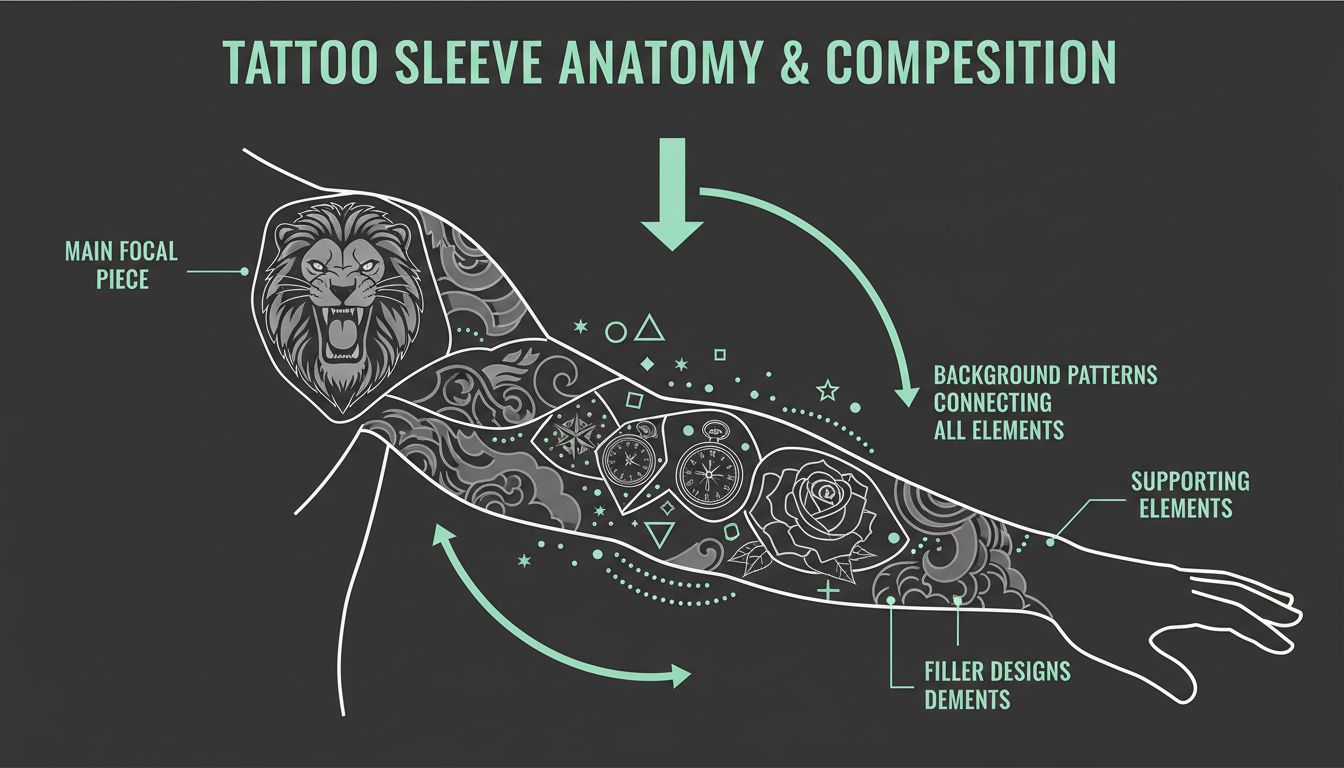
Key flow principles:
- Directional movement: Elements should guide the eye, usually flowing down the arm or wrapping around it
- Size hierarchy: Larger focal pieces anchor the design while smaller elements support them
- Background continuity: Waves, clouds, smoke, or patterns that run throughout create cohesion
- Strategic spacing: Negative space (skin showing through) is as important as the ink
- Color balance: Distribute colors throughout so nothing feels weighted to one area
According to Inked Magazine's sleeve guide, one of the biggest mistakes people make is treating a sleeve as a collection of individual tattoos rather than one integrated piece. Even if you're building a sleeve over time, having a cohesive plan from the start makes all the difference.
When using AI to plan, generate full-arm concepts rather than individual pieces. Look at how the AI handles transitions between elements. Notice where backgrounds appear and how space is used. This gives you a blueprint for discussing your vision with an artist.
From AI Design to the Tattoo Shop
You've generated sleeve concepts you love. Now what?
Step 1: Save your favorites. Keep multiple concepts—even ones you're not 100% sure about. Showing an artist several AI-generated images communicates your vision more effectively than trying to describe it verbally.
Step 2: Find the right artist. Different artists excel at different styles. If you've landed on Japanese, find someone who specializes in it. Your AI-generated concepts help identify which artist style matches your vision. Browse portfolios looking for work that resonates with what you generated.
Step 3: Have a consultation. Most reputable sleeve artists offer consultations before committing. Bring your AI images. Explain what you love about each. Be open to their professional input—good artists will tell you what works on skin versus what only works in images.
Step 4: Plan your sessions. Most sleeves happen across multiple sessions, typically 3-8 depending on complexity. Your artist will help map out which areas to tackle first and how to pace the work for optimal healing and composition.
Step 5: Trust the process. Once you're in the chair, let your artist do their thing. The AI gave you vision clarity; the artist brings it to life with skill and experience only humans can provide.
For placement considerations and pain expectations, check out our tattoo placement guide.
Common Sleeve Mistakes to Avoid
Planning with AI helps you sidestep these frequent sleeve pitfalls:
- Starting without a plan: Getting a shoulder piece with no thought to what comes next often leads to awkward additions later
- Mixing incompatible styles: Japanese waves don't naturally flow into geometric patterns—AI helps you see style clashes before they're permanent
- Ignoring anatomy: Sleeves need to work with your arm's shape. Good AI generation accounts for how designs wrap
- Skipping backgrounds: Floating elements without connecting backgrounds look choppy rather than cohesive
- Rushing the process: Sleeves are marathons, not sprints. Planning thoroughly now prevents regret later
Ready to Design Your Dream Sleeve?
Stop imagining and start seeing. Generate full sleeve concepts, test different themes, and find your perfect composition with AI. Free to try—no commitment required.
Generate Sleeve Concepts →
Create Your Perfect Tattoo Design
Use AI to generate unique tattoo designs and preview them on your body before committing to ink.
Start Designing for FreeWritten by

Laura Schmitz
Tattoo Content Lead, INK
Laura Schmitz leads tattoo content at INK. She has spent years researching tattoo styles, symbolism and aftercare, and works directly with the AI tattoo generator to test how each style translates from prompt to skin — so every guide here reflects designs that are actually tattooable, not just images that look good on screen.
More about the author