
Chicano AI Tattoo Generator: Fine Line, Lettering & Motifs
How a Chicano AI tattoo generator renders fine-line black-and-grey portraits, script lettering, and classic religious motifs — where AI gets it right, where a human artist still matters, and how to prompt it well.
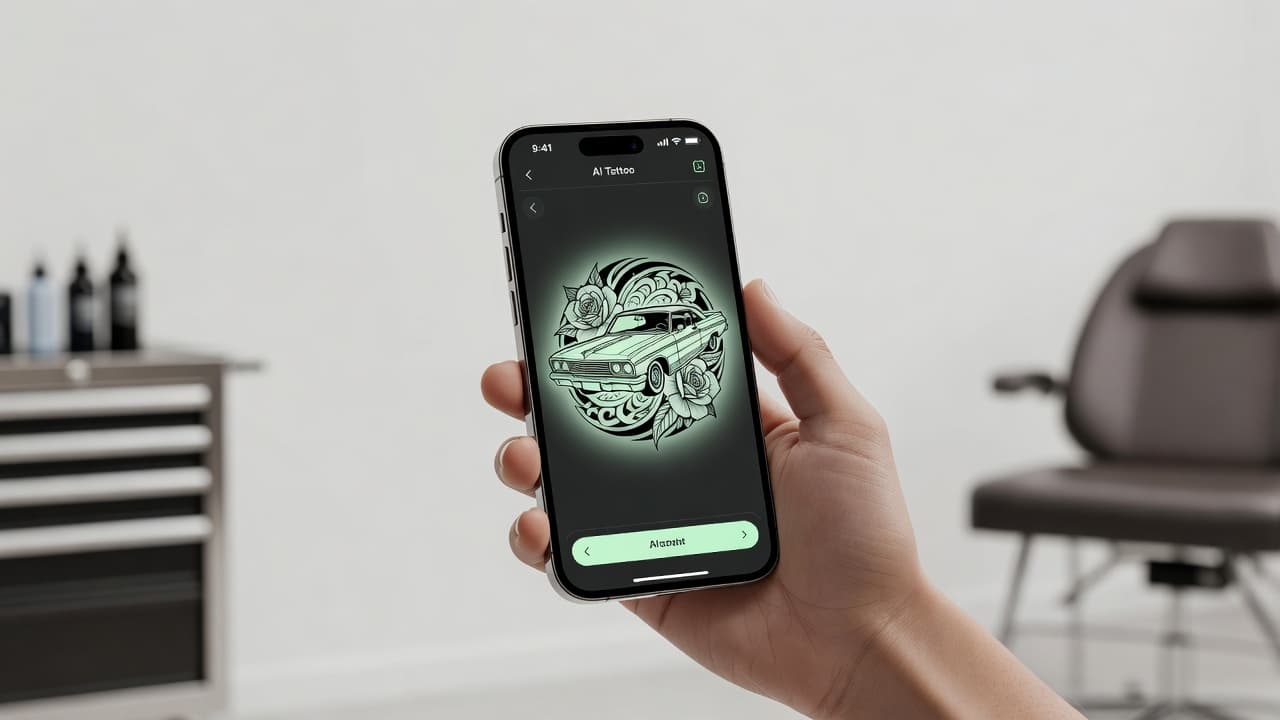
Chicano tattooing built one of the most influential visual languages in the entire craft out of just black and grey ink — soft, photographic shading, elegant script, and devotional imagery that reads as intimate rather than loud. A Chicano AI tattoo generator gives you a fast way to explore that language before committing to ink: describe a fine-line portrait, a script banner, or a Sacred Heart rendered in classic black-and-grey shading, and see a well-composed layout rendered in seconds instead of sketching every gradient by hand.
In short: a Chicano AI tattoo generator is an AI tattoo tool set to the Chicano aesthetic — fine black-and-grey linework, soft realistic shading, religious and devotional motifs, and elegant script lettering, built without the bold color or thick outlines common to other styles. You describe or upload a reference, select a Chicano-leaning style, and the AI produces artwork you can refine and preview on your own body before booking an appointment. This guide covers how these generators render Chicano style, where AI is strong and where a human artist's precision still matters, and how to prompt one for results that respect the tradition instead of flattening it.
What Is Chicano Tattooing?
Chicano tattooing grew out of Mexican-American communities in the American Southwest, particularly Los Angeles, through the mid-20th century — shaped early on by the Pachuco subculture and, significantly, by informal tattooing done inside prisons, where ink was applied with makeshift single-needle machines using whatever black ink was available. That limitation became a defining style: soft, photographic black-and-grey shading built from careful needle work rather than color, capable of rendering portraits, religious imagery, and script with a delicacy that bold traditional tattooing didn't attempt. The Smithsonian American Art Museum has documented how this visual language grew into a broader Chicano art movement spanning murals, prints, and tattooing.
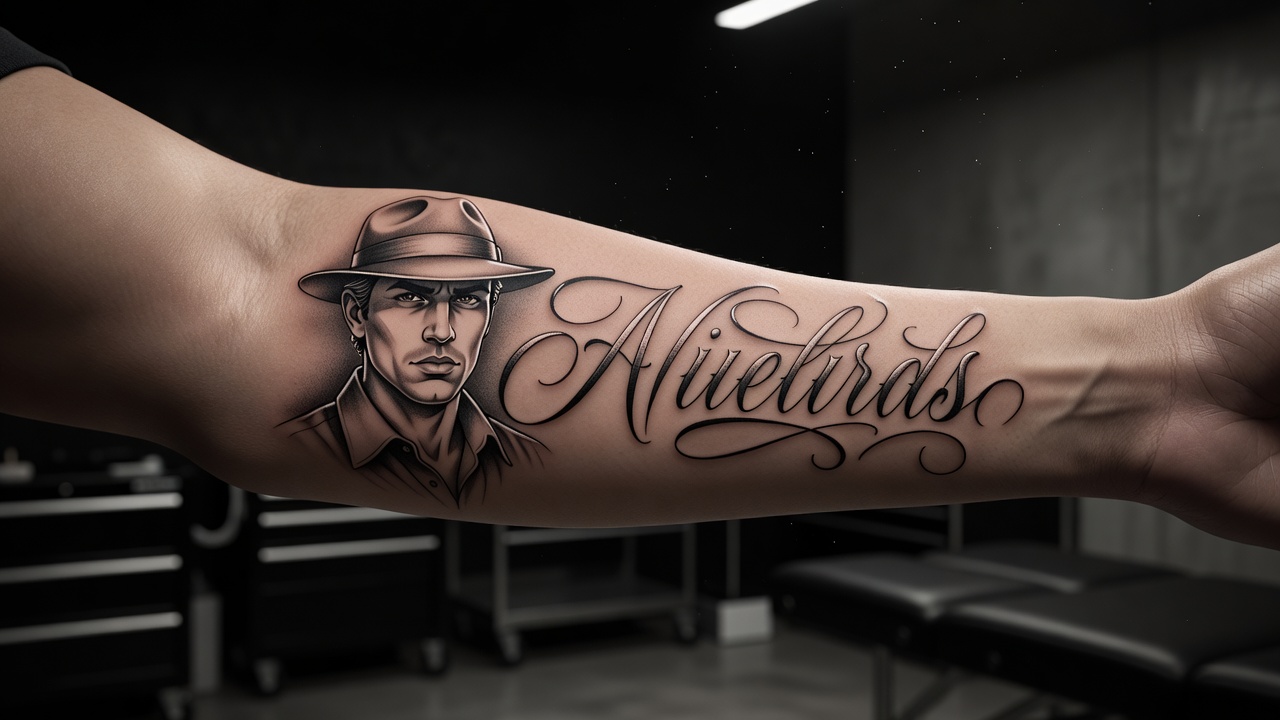
The style is instantly recognizable: fine-line portraits of family members or loved ones, religious imagery like the Sacred Heart or the Virgin of Guadalupe, elegant script lettering for names and dedications, and cultural symbols like the "smile now, cry later" theater masks representing the duality of life. Black-and-grey shading — sometimes called black and gray realism — remains the technical foundation of the entire style, and it's since spread far beyond its Los Angeles origins to influence realism tattooing worldwide.
How Does a Chicano AI Tattoo Generator Work?
An AI tattoo generator renders an image from your description or reference photo, and selecting a Chicano-leaning style tells the model to favor soft black-and-grey shading, fine linework, and the style's signature motifs over bold color or thick outlines. You can steer it toward a specific direction — a fine-line portrait, a script lettering piece, or a religious motif like a rosary or praying hands — or toward a more general "Chicano black and grey" look that blends elements freely.
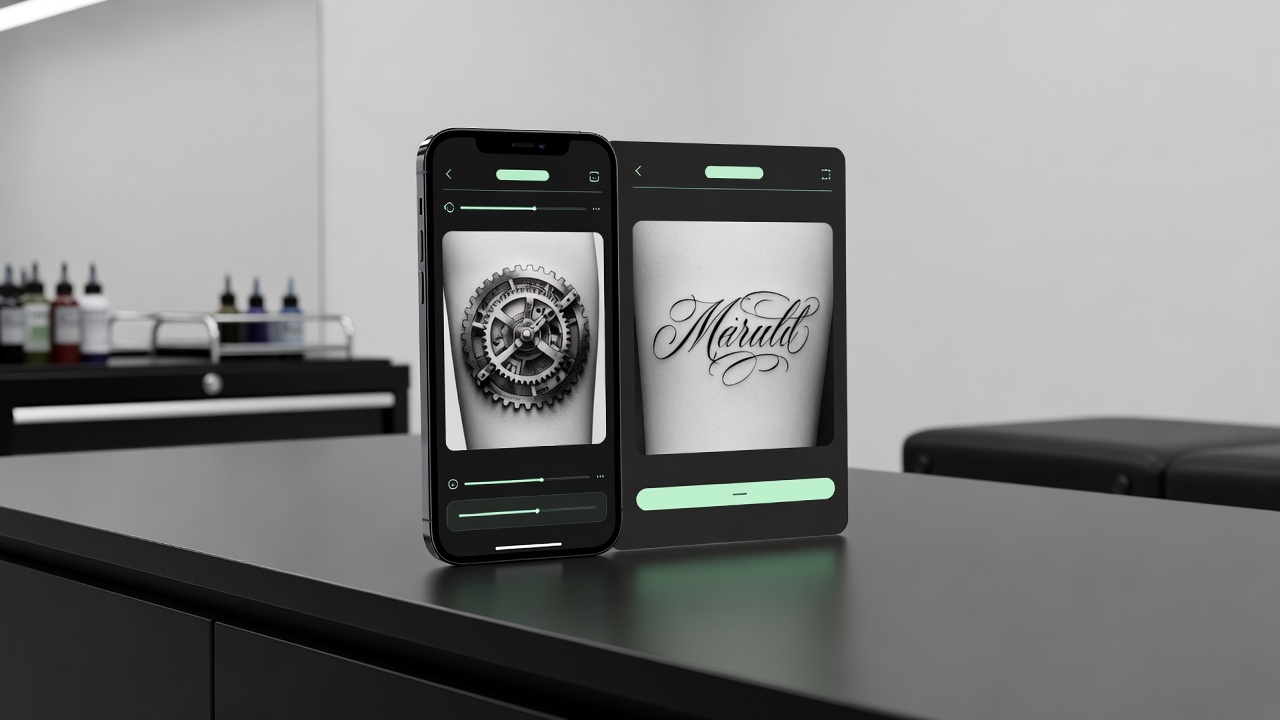
In INK, you can generate the same idea from a typed prompt or an uploaded reference photo, choose a Chicano-leaning style, and compare several variations side by side. Because so much of the style's impact depends on how smoothly the shading transitions from dark to light, it's worth generating a few versions and paying close attention to where the gradient feels photographic versus where it looks flat, rather than judging the first result alone.
Is AI Actually Good at Chicano Tattoo Designs?
AI is convincing at the overall black-and-grey palette, composition, and general mood of Chicano-style pieces — the restrained color, soft contrast, and classic motifs are a recognizable visual pattern the model has plenty of reference for. Ask for a Chicano-style rose with fine-line shading or a Sacred Heart in black and grey, and you'll typically get a striking, well-composed image on the first few tries.
Where it's genuinely weaker is on two things the tradition is famous for: lettering and facial likeness. Script tattoos depend on exact, legible letterforms, and AI image models frequently garble text — extra strokes, inconsistent spacing, or letters that don't quite form real words. Fine-line portraiture has the same problem in reverse: getting a face to actually resemble a specific reference photo, rather than a generic face in the right style, is one of the hardest things for any image generator to nail consistently. Treat AI output here as a strong reference for composition and shading direction, not a literal final design for lettering or a portrait's exact likeness.
How to Prompt an AI Tattoo Generator for Chicano Results
A few habits make the difference between a Chicano prompt that comes back cohesive and one that comes back looking like generic black-ink tattoo art:
- Pick a direction first. Fine-line portrait, script lettering, or a religious motif — starting from a clear idea keeps the composition from feeling generic.
- Name the style directly. Say "Chicano tattoo," "black and grey fine line," or "Chicano lettering" so the AI favors soft realistic shading over bold color or thick outlines.
- Describe the placement. Mention "forearm," "chest," or "calf" so the design is shaped to fit that specific area instead of sitting as a generic flat shape.
- Be specific about the subject. For lettering, describe the script style and keep the phrase short; for a portrait, describe the expression and framing rather than just "a face."
- Edit instead of restarting. If the shading feels too flat or the lettering looks off, use an AI tattoo editor to adjust that part rather than regenerating the whole piece.
Chicano Tattoo Motifs Worth Trying
The style draws from a well-established set of motifs, and it's worth trying a handful of directions to see which fits the meaning and scale you're after:
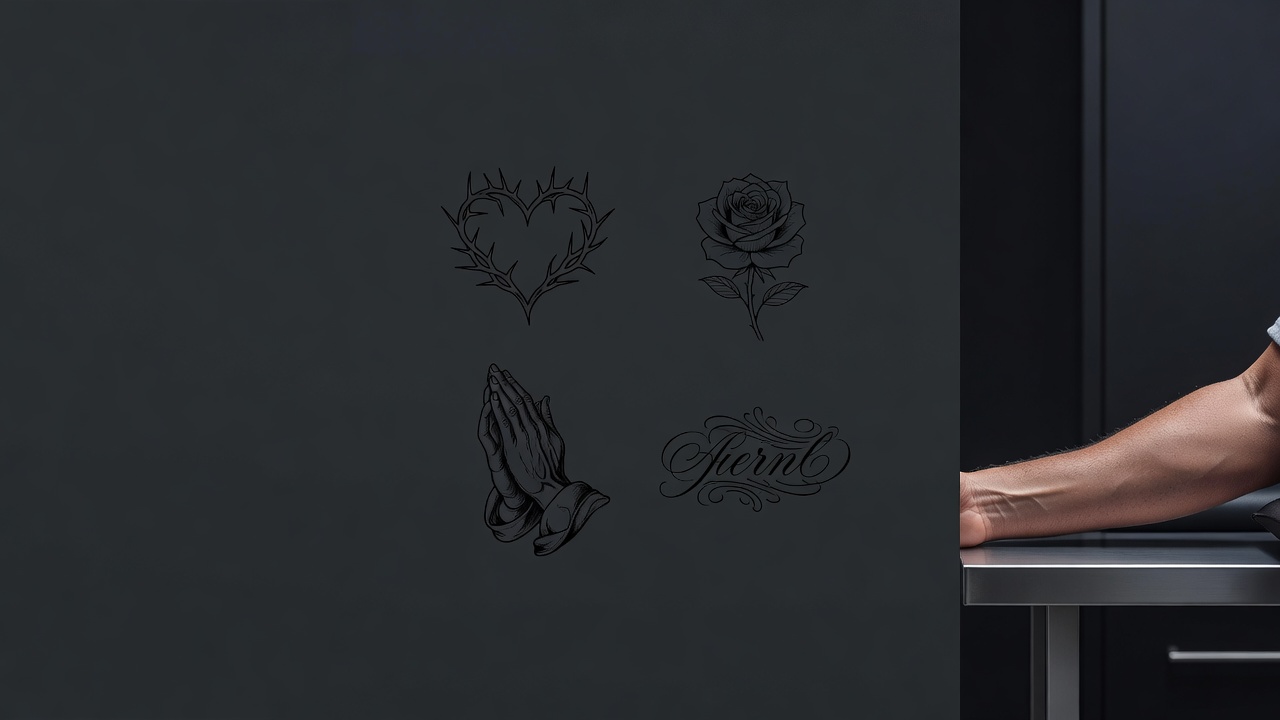
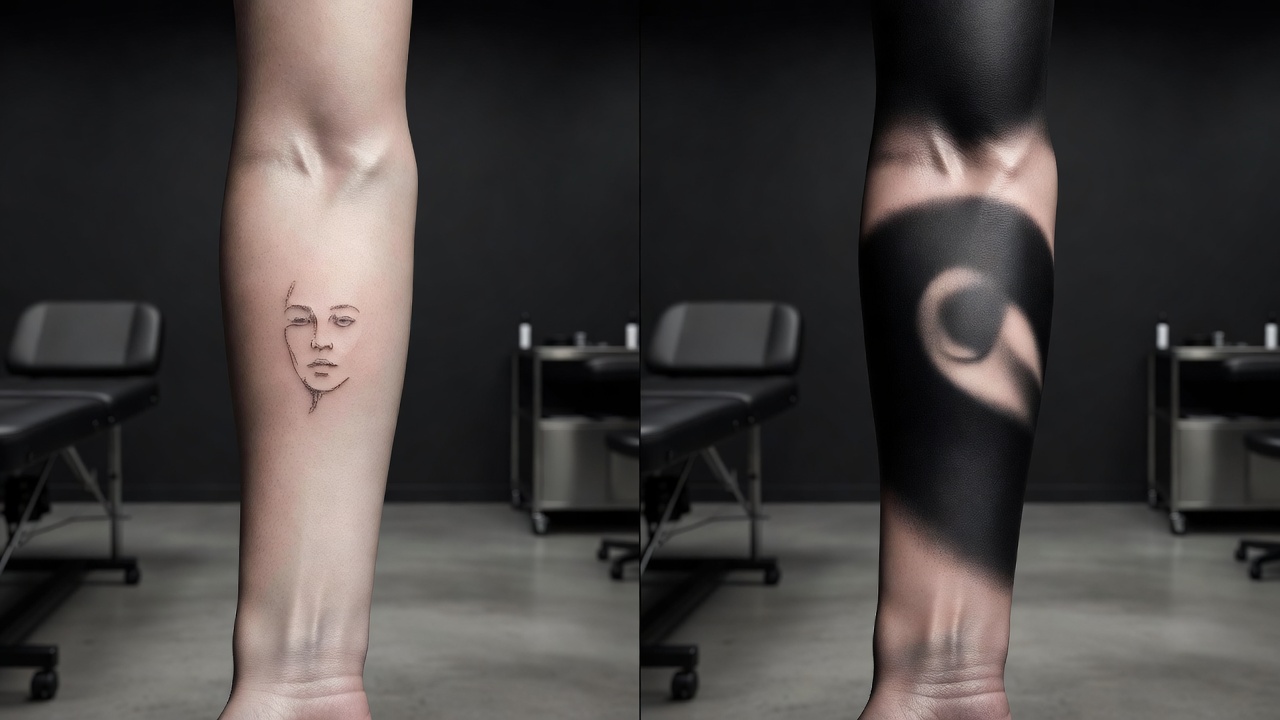
- Fine-line portraits — family members, loved ones, or cultural icons rendered in soft, photographic black-and-grey shading.
- Sacred Heart and religious imagery — devotional motifs like the Sacred Heart, praying hands, or the Virgin of Guadalupe, rooted in Catholic tradition.
- Script lettering — elegant, flowing text for names, dates, or dedications, often the centerpiece of a piece rather than an accent.
- "Smile now, cry later" masks — the classic theater-mask pairing representing the duality of joy and hardship in life.
- Roses in black and grey — a recurring motif across the style, often paired with a portrait or lettering as a framing element.
Chicano vs. Traditional Black-and-Grey: What's the Difference?
The two get lumped together constantly, and for good reason — both work primarily in black ink with grey-wash shading rather than color. The distinction is really about lineage and motif rather than pure technique. Chicano tattooing specifically carries the cultural and historical weight of its Los Angeles Mexican-American origins, with a recurring set of motifs — Sacred Hearts, script lettering, "smile now, cry later" masks — that reflect that specific community and history. General black-and-grey realism, by contrast, is a broader technical category that any subject can be rendered in, from a lion portrait to a landscape, without carrying Chicano's specific cultural motifs or history.
A piece can absolutely sit in the overlap — a fine-line black-and-grey portrait done in a Chicano-influenced style is common — but naming the tradition specifically when you prompt an AI generator, rather than just saying "black and grey," is what steers the result toward the actual Chicano motifs and composition instead of generic realism.
Who Does a Chicano Tattoo Suit?
Chicano tattooing tends to appeal to people drawn to restrained, photographic detail over bold color, and to designs that carry personal or cultural meaning rather than pure decoration. If you want a portrait of someone specific, a dedication in elegant script, or a religious motif rendered with real depth and subtlety, Chicano style is usually the direction people land on after trying a few AI-generated options side by side. Because so much of the tradition centers on family, faith, and personal history, it's a style that often works best when the subject itself already has meaning to you.
It's also a technically demanding style to tattoo well, which matters when you're choosing an artist. Fine-line portraiture and precise script lettering are two of the hardest skills in the craft — not every studio has an artist who specializes in either. Bringing a clear AI-generated reference to a consultation is a good way to confirm upfront whether a shop has the specific black-and-grey or lettering experience your design needs, rather than finding out mid-session.
Where Do Chicano Tattoos Look Best?
Chicano pieces read best where there's enough flat space for fine shading and lettering to stay legible, which makes placement a bigger part of the decision than it is for smaller, simpler styles.
- Forearm and upper arm — plenty of even space for portraits and script to sit clearly and stay visible.
- Chest and back — the go-to spot for larger devotional pieces like a Sacred Heart or a detailed portrait.
- Ribs and shoulder — enough room for script lettering or a smaller portrait with clean negative space around it.
- Calf and thigh — strong, visible areas that suit bold black-and-grey compositions.
- Hands and fingers — fine detail here fades faster than elsewhere on the body, so simpler, higher-contrast lettering tends to age better than delicate shading.
Our best tattoo placements guide covers pain levels and visibility for every area of the body, and if this is your first large piece, our first tattoo guide walks through what to expect before you book. If you're planning a lettering-focused piece, our AI tattoo lettering generator guide goes deeper into getting script right. Because fine-line black-and-grey work depends on precise healing to stay crisp, the American Academy of Dermatology's tattoo aftercare guidance is worth reading before a large session, and our own tattoo aftercare guide covers what to expect during healing.
Designing Your Chicano Tattoo with AI
Chicano tattooing lives on the quality of its shading and the legibility of its lettering, which is exactly where designing with AI helps most before you sit down with an artist. With INK you can describe your idea in plain language ("a fine-line black and grey portrait with a rose and script banner underneath"), compare a Sacred Heart against a simpler lettering piece, or test how a forearm design would read before anyone picks up a machine.
Because you can iterate freely, you can try a more detailed composition against a simpler one, check how it wraps your specific arm, chest, or leg, and AR-preview it on your own skin before committing to anything. If you want to see how AI tools stack up more broadly before you choose one, our AI tattoo generator comparison guide is a useful next stop. When you're ready, you bring your artist a clear, considered reference instead of a vague description.
Choosing Your Chicano Design
Chicano tattooing rewards patience in equal measure to its history — a design that looks striking needs its shading deliberate and its lettering legible, not just stylish. Getting that balance right before you sit down for a session is exactly what makes prototyping with AI worth the extra step.
What is a Chicano AI tattoo generator? A tool that renders fine black-and-grey linework, religious motifs, and script lettering in the Chicano aesthetic, based on your description or reference photo.
Is AI good at Chicano designs? It's convincing at overall shading and composition, though exact lettering and facial likeness still need a skilled artist to finalize.
How do I get the best results? Name your direction, describe the placement, be specific about the subject, and generate several variations to compare shading and lettering quality.
Where does it look best? Forearm, chest, back, ribs, calf, or thigh — anywhere with enough flat space for fine shading and lettering to stay legible.
Whatever direction you land on, take the time to compare a few variations before you commit. Choose your motif, shading, and placement deliberately, and you'll end up with a Chicano piece that reads as intentional and personal rather than generic.
Design Your Chicano Tattoo Free
Describe your Chicano design, explore fine-line shading and lettering, and AR-preview it on your body before you commit — all in INK. No sign-up needed.
Try INK Free →

Create Your Perfect Tattoo Design
Use AI to generate unique tattoo designs and preview them on your body before committing to ink.
Start Designing for FreeWritten by
INK Team