
Sun Tattoo Meaning: Symbolism, Sun Gods & Design Ideas
What a sun tattoo really means — power, rebirth and divine light — its roots in solar deities like Ra and Amaterasu, tribal and Aztec symbolism, and the styles that carry each meaning best.

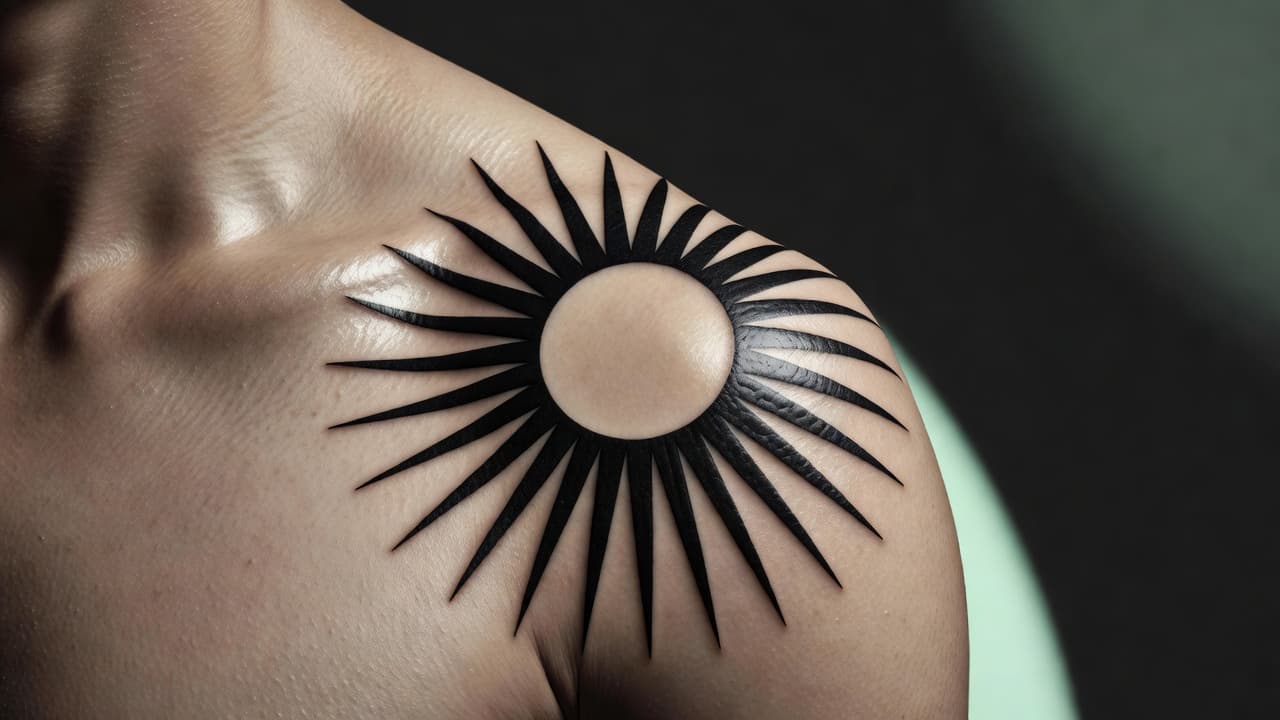
Sun tattoo meaning runs deeper than a cheerful summer symbol — it's one of the oldest images in human art, tied to gods, calendars, and survival itself long before anyone thought to put it on skin. From Egyptian sun disks to Aztec stone carvings to bold tribal rays, the sun has stood in for whatever a culture valued most: power, time, guidance, or life itself.
In short: a sun tattoo most often symbolizes life, power, and rebirth, but the specific meaning shifts depending on which cultural tradition and companion imagery it draws from — a tribal sun reads as strength and guidance, an Aztec sun stone reads as time and sacrifice, and a sun paired with a moon reads as balance and duality. This guide walks through where those different meanings come from, what the major solar deities and traditions represent, and which styles and placements suit each version of the symbol.
What Does a Sun Tattoo Symbolize? (Quick Answer)
At its core, a sun tattoo symbolizes life, power, and rebirth — the same association nearly every ancient culture attached to the one object responsible for daylight, warmth, and the growing season. From that single root, the symbolism branches depending on the details: a plain radiant sun usually reads as energy and positivity; a sun built from bold tribal rays leans toward strength and guidance; a detailed Aztec or Egyptian sun disk points to a specific deity and cosmology; and a sun paired with a moon becomes a statement about balance between opposing forces. Everything else in this guide builds on that same base idea of the sun standing in for life-giving power in whichever cultural language you choose to render it.
A Short History of the Sun as a Tattoo Symbol
Long before tattooing carried it, the sun was already the most widely worshipped image in human history — nearly every ancient civilization built a religious or calendrical system around it, from Stonehenge's solstice alignment to the pyramids of Egypt and Mesoamerica. That universal reverence made the sun a natural fit once tattooing spread globally, since almost every tattooing culture already had its own solar iconography to draw from, whether Polynesian, Native American, Japanese, or Mesoamerican.
What makes sun tattoos unusual among symbol tattoos is how many distinct, well-documented traditions feed into the same basic image. A rose or a heart carries mostly one cultural throughline; a sun tattoo can just as easily reference Ra, Amaterasu, Inti, or a Polynesian solar rosette, each with its own visual grammar and meaning, covered in the next section.
Sun Gods and Goddesses: Ra, Amaterasu, Inti & More
Many sun tattoos draw directly on the imagery of specific solar deities, and knowing the source makes the design far more intentional than a generic "sunburst."
- Ra — the Egyptian sun god, often depicted as a falcon-headed figure crowned with a solar disk, representing supreme power, creation, and the daily cycle of life and death as the sun crossed the sky. Read more at Wikipedia's entry on Ra.
- Amaterasu — the Japanese sun goddess and one of the most important deities in Shinto belief, associated with order, prosperity, and imperial legitimacy. See Wikipedia's entry on Amaterasu for more background; our Japanese tattoo meaning guide covers how solar imagery fits into the broader irezumi tradition.
- Inti — the Inca sun god, central to Incan religion and agriculture, celebrated at the Inti Raymi festival marking the winter solstice and the start of a new farming cycle.
- Tonatiuh — the Aztec sun god, tied to the Aztec calendar stone and a cosmology built around sacrifice sustaining the sun's daily journey, covered in more depth below.
- Helios and Sol Invictus — the Greek and later Roman sun gods, whose radiate crown imagery directly influenced how the sun is still drawn today, rays extending outward from a central face or disk.
Tribal and Aztec Sun Tattoo Meaning
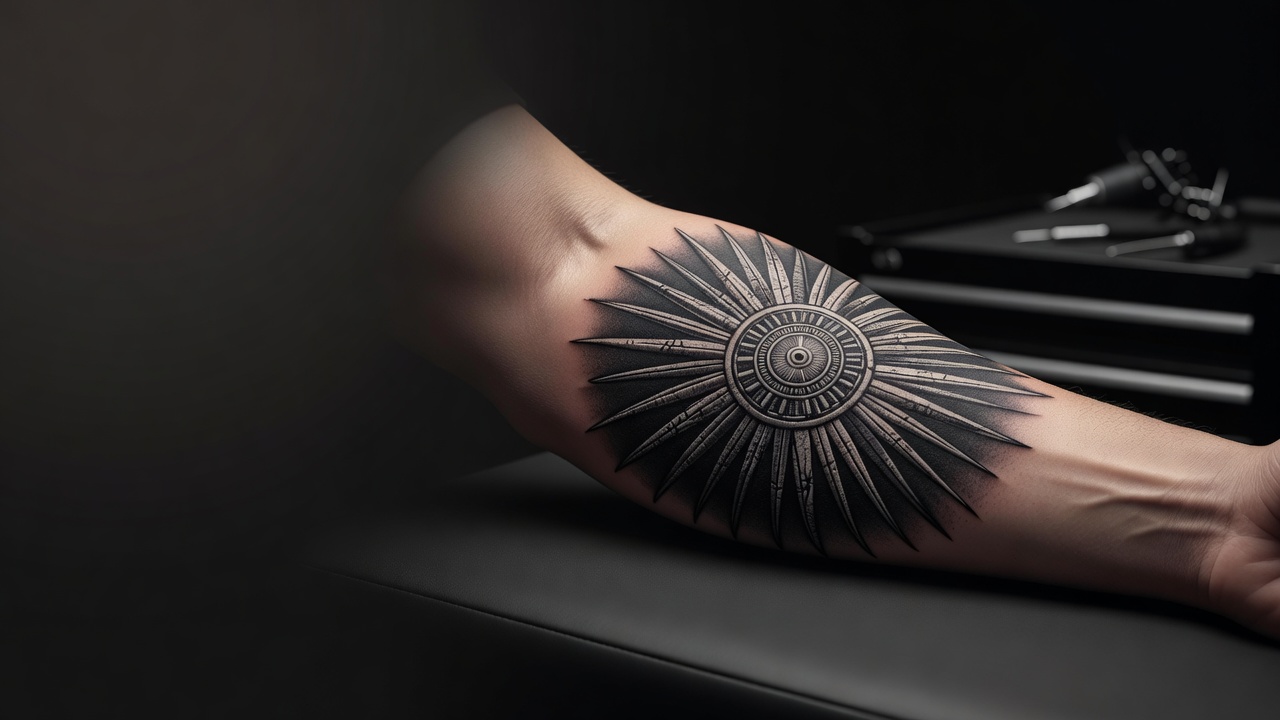
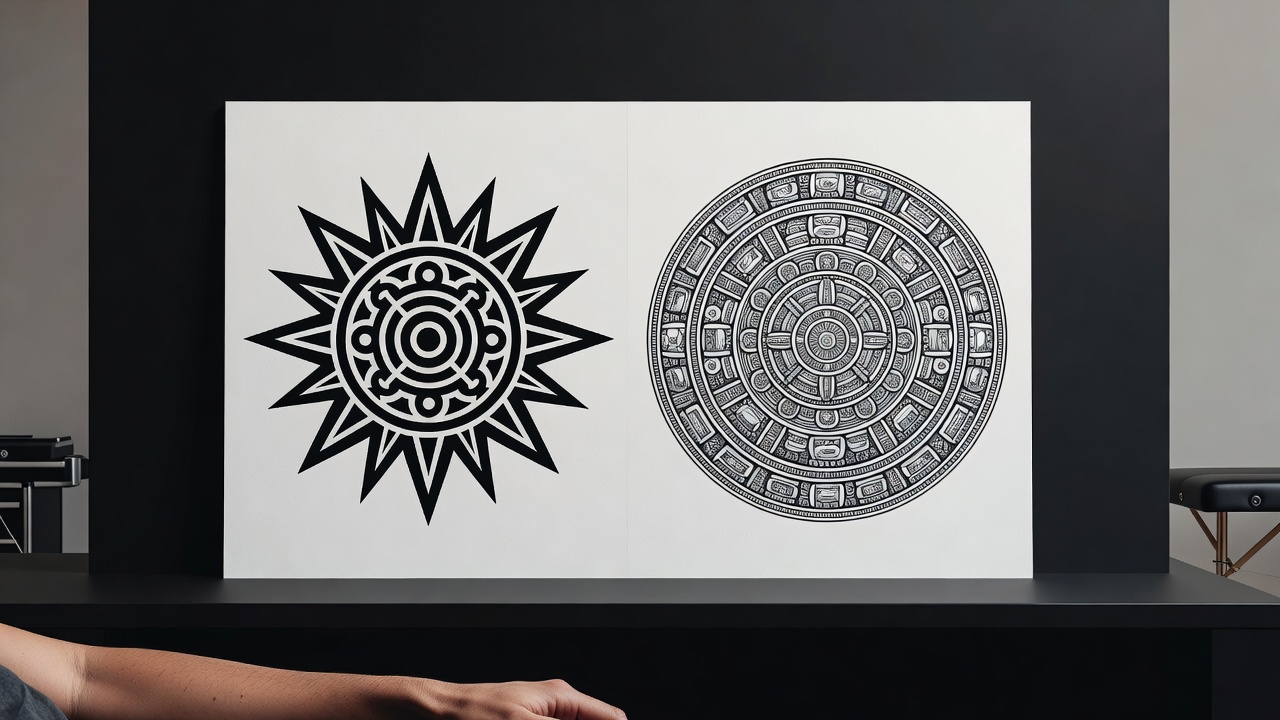
A tribal sun tattoo, built from bold black geometric rays radiating outward from a central point, is one of the most requested sun designs and generally represents strength, guidance, and life-giving energy. The style draws heavily on Polynesian and Native American tattoo traditions, where solar imagery marked navigational guidance, seasonal cycles, and spiritual protection — worth researching the specific tradition a design references rather than treating "tribal" as one interchangeable look, since the visual language differs significantly between cultures.
An Aztec sun tattoo usually depicts the Aztec sun stone (often mistakenly called an "Aztec calendar") or Tonatiuh himself, and represents time, sacrifice, and the cyclical nature of life and death central to Aztec cosmology. Because it carries deep religious and cultural weight, it is frequently chosen deliberately to honor Mexican or Indigenous heritage, and it pairs naturally with other Mesoamerican imagery like eagles or serpents.
The sun rarely looks the same twice across cultures — a Polynesian sun reads as guidance, an Aztec sun reads as sacrifice and time, and an Egyptian sun reads as supreme power. The tradition you draw from shapes the meaning as much as the shape itself.
Sun and Moon Tattoo Meaning
Pairing a sun with a moon is one of the most popular ways to render the symbol, and it typically stands for balance and duality — light and dark, day and night, masculine and feminine energy, or two halves that only feel whole together. It is a frequent choice for matching or couples tattoos, since the imagery naturally splits into two complementary pieces; our couples tattoo ideas guide covers more pairings like it.
Beyond romance, a sun-and-moon design can also represent internal balance — the coexistence of opposite qualities within one person, such as strength and softness, or logic and intuition. Some designs merge the two into a single half-sun, half-moon face; others keep them fully separate and place one on each wrist or shoulder.
Popular Sun Tattoo Styles
The sun has been reinterpreted across nearly every major tattoo style without losing its core radiant shape:
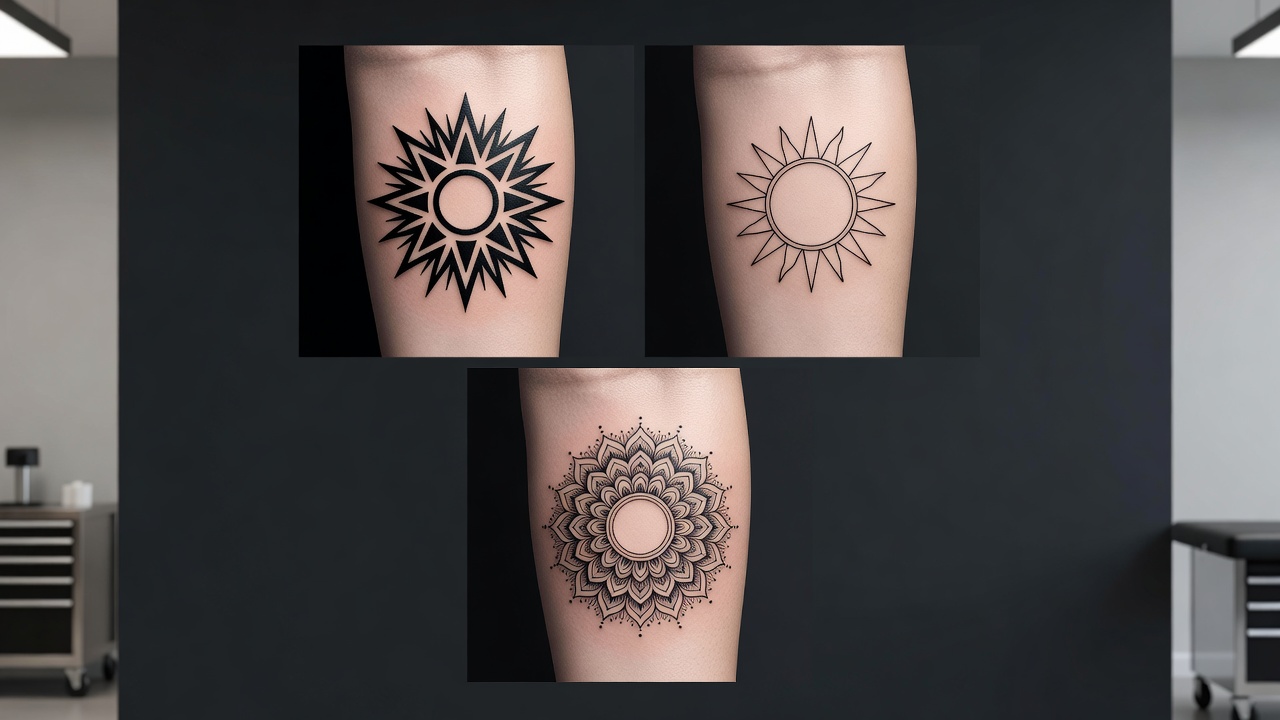
- Tribal and geometric — bold black rays and clean symmetrical patterns radiating from a center point. Our geometric tattoo designs guide covers this approach in more depth.
- Traditional Americana — a simplified sun face with solid color fills, often paired with roses, banners, or nautical imagery. See our traditional tattoo style guide for the broader look.
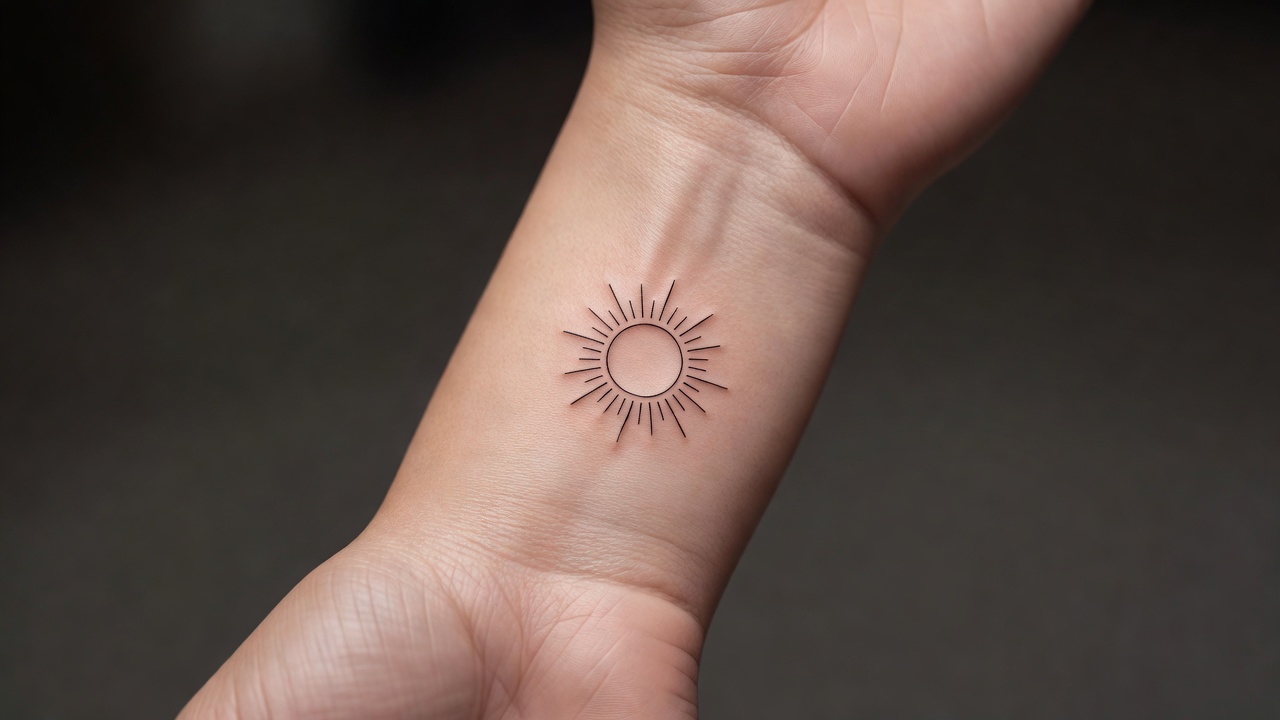
- Fine-line minimalist — a single clean outline with simple rays and no shading, popular for small wrist or finger pieces.
- Mandala-style sun — a highly detailed, symmetrical sun built from intricate geometric patterning, closely related to the spiritual symbolism covered in our mandala tattoo meaning guide.
- Aztec and Egyptian detailed — culturally specific renderings of the sun stone or solar disk, rich in fine detail and symbolic elements.
Best Placements for a Sun Tattoo
Placement mostly comes down to how much detail the design carries and how visible you want it to be:
- Shoulder or upper back — the most popular spot for tribal and mandala-style suns, with enough curved surface for rays to wrap naturally.
- Forearm — good visibility for a mid-sized sun, whether tribal, Aztec, or paired with a moon on the opposite wrist.
- Wrist or finger — best suited to a small, simple sun outline with minimal ray detail.
- Chest or full back — better suited to larger, highly detailed pieces like an Aztec sun stone or an elaborate mandala sun. Check our best tattoo placements guide for pain levels and sizing at each spot.
Designing Your Sun Tattoo with AI
Because so much of a sun tattoo's meaning comes from which cultural tradition it draws on — tribal, Aztec, Egyptian, or a simple modern sunburst — it helps to see several versions side by side before deciding. With INK, you can describe the sun you have in mind ("a bold tribal sun with sharp geometric rays, sized for the shoulder") and generate multiple takes in seconds, comparing a tribal design against an Aztec sun stone or a minimalist line-art take without committing to any of them.
You can also test how pairing the sun with a moon, adding mandala-style detail, or switching between color and pure black linework changes the overall feel, and use AR try-on to see the design at true scale on your own shoulder, forearm, or wrist before you ever sit down with an artist. If this is your first tattoo, our AI tattoo generator from text guide and our first tattoo guide both walk through what to expect.
Choosing Your Sun
A sun tattoo carries thousands of years of meaning packed into one radiant shape, and that is exactly why it still works: whether you're drawing on Ra's power, Amaterasu's order, Aztec sacrifice, or simply the everyday feeling of warmth and new beginnings, the core idea of the sun standing in for life itself translates cleanly into ink. Decide which layer of that meaning matters most to you, then let the cultural reference, style, and placement follow from there.
What does a sun tattoo mean? Most commonly life, power, and rebirth, with the exact meaning shifting based on cultural tradition and companion imagery like a moon.
Does it reference a specific god? It can — Ra, Amaterasu, Inti, and Tonatiuh are the most commonly referenced solar deities in tattoo art.
What does pairing it with a moon add? Usually balance and duality, between light and dark, day and night, or two people who complement each other.
Where does it look best? Shoulder and upper back for a larger, detailed piece, wrist and finger for something small and simple.
Design Your Sun Tattoo Free
Describe your sun, test tribal, Aztec, and mandala-style details, and AR-preview the design on your body before you commit — all in INK. No sign-up needed.
Try INK Free →

Create Your Perfect Tattoo Design
Use AI to generate unique tattoo designs and preview them on your body before committing to ink.
Start Designing for FreeWritten by

Laura Schmitz
Tattoo Content Lead, INK
Laura Schmitz leads tattoo content at INK. She has spent years researching tattoo styles, symbolism and aftercare, and works directly with the AI tattoo generator to test how each style translates from prompt to skin — so every guide here reflects designs that are actually tattooable, not just images that look good on screen.
More about the author