
How Much Do Tattoo Artists Make? Salary Guide by Experience & Location
A clear look at tattoo artist salaries — from apprentice to established studio artist — plus the factors that actually move the number: experience, location, booth rent, and specialty.
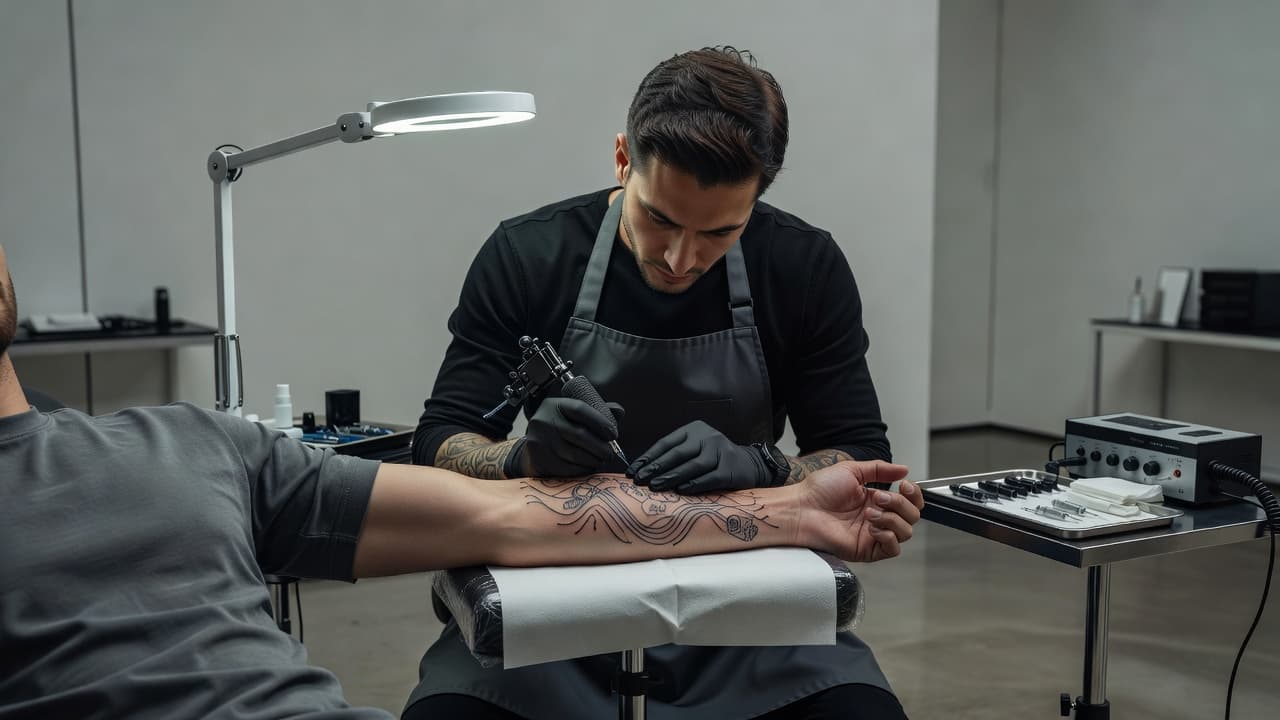
Most people asking how much do tattoo artists make expect a single number, but the honest answer is a wide range shaped by experience, location, and how an artist is paid. This guide breaks down real salary figures by career stage, explains what actually eats into an artist's take-home pay, and looks at what pushes the highest earners well above the average.
In the United States, tattoo artists typically earn between $35,000 and $90,000 a year, with a commonly cited average around $50,000–$60,000. Apprentices earn little to nothing while training, mid-career artists in a stable studio tend to land in the middle of that range, and established artists with a strong client waitlist — especially in major cities — regularly earn six figures. The rest of this guide explains exactly why that range is so wide.
Average Tattoo Artist Salary by Experience Level
The U.S. Bureau of Labor Statistics groups tattoo artists under its broader "craft and fine artists" occupational data, and independent industry surveys of working studios consistently show a similar shape: pay climbs steeply with reputation, not just years on the job. Here is a realistic breakdown by career stage:
| Career Stage | Typical Annual Income | What Changes |
|---|---|---|
| Apprentice | $0–$15,000 | Often unpaid or a small stipend; some pay the studio instead |
| Entry-level (0–2 yrs licensed) | $25,000–$40,000 | Building a portfolio, mostly walk-ins and flash work |
| Mid-career (3–7 yrs) | $45,000–$70,000 | Steady bookings, growing specialty, some custom clients |
| Established / in-demand | $70,000–$150,000+ | Waitlist of clients, premium hourly rate, strong portfolio |
| Celebrity / convention-circuit | $150,000–$500,000+ | Guest spots, brand deals, book months out |
These figures describe gross income before booth rent, supplies, and taxes — which, as the next section covers, can take a meaningful bite out of what an artist actually keeps.
What Actually Moves a Tattoo Artist's Income
Two artists with the same number of years behind the machine can have wildly different incomes. The variables below explain most of that gap.
Experience and Reputation
Early in a career, income is capped by how many hours an artist can physically work. Once an artist builds a recognizable style and a waiting list, they can raise their hourly rate without losing bookings — reputation, more than raw skill, is usually what pushes income into the higher brackets.
Location
Artists in large metro areas — Los Angeles, New York, Miami, London — can typically charge $150–$300+ per hour once established, versus $75–$150 per hour in smaller cities and towns. Higher-cost cities also mean higher booth rent and living expenses, so the gap in take-home pay is smaller than the gap in the sticker price.
Commission vs. Booth Rent
Most studios pay artists one of two ways. Under a commission arrangement, the artist keeps roughly 50–70% of what each client pays, with the studio taking the rest to cover space, front-desk staff, and marketing. Under booth rent, the artist pays a fixed weekly or monthly fee for their station and keeps 100% of what they charge — a better deal for a busy, established artist, but riskier for someone still building a client base, since the rent is due whether or not the chair is booked.
Specialty and Style
Artists known for a specific, in-demand style — fine-line, realism, large-scale Japanese work — can often charge more per hour than a generalist, because clients are seeking out that specific artist rather than the next available chair. Large custom pieces booked across multiple sessions, like a full sleeve, also tend to pay more per hour than single-session flash work.

How Much Do Tattoo Apprentices Make?
Most tattoo apprentices earn little to nothing during their training, and it is common for an apprentice to pay their mentoring studio a fee to cover materials, mentorship, and shop time rather than receive a wage. Apprenticeships typically run one to three years and focus on fundamentals — sterilization, line work, shading, working with skin — rather than income. Some studios offset the cost with tip-based work on friends and family, or a small stipend once the apprentice starts tattooing paying clients under supervision, but treating an apprenticeship as an investment rather than a job is the realistic expectation.
Our first tattoo guide covers what to expect from the client side of a studio visit, and our breakdown of how tattoo machines work gives a sense of the technical skill an apprenticeship is actually training toward.
How the Highest-Paid Tattoo Artists Earn More
At the top of the income range, a few factors compound on top of a strong reputation:
- Guest spots — traveling to tattoo at other studios or conventions, often at a premium day rate, exposes an artist to a new client base and commands higher pricing for a limited-availability booking.
- Large custom projects — multi-session sleeves and back pieces are typically quoted at a day rate or higher hourly rate than single-session flash work, since they require sustained planning across appointments.
- Social media reach — a large, engaged following turns into a longer waiting list and pricing power, letting artists raise rates without losing bookings.
- Merchandise and licensing — some in-demand artists supplement tattooing income with flash sheet sales, apparel, or brand collaborations built around their style.
Our guide on how tattoos are made walks through the full process a client experiences, which helps explain why larger, more technical pieces command a higher price per hour than a quick flash design.
The Business Side: What Artists Actually Keep
Gross income and take-home pay are not the same thing. Beyond commission or booth rent, working artists typically cover:
- Needles, ink, gloves, and other single-use supplies for every session
- Self-employment tax, since most artists are independent contractors rather than salaried employees
- Equipment — machines, power supplies, and chairs — which need periodic replacement
- Licensing and continuing education requirements, which vary by state or country
- Slow weeks with no guaranteed income, since most artists are paid per client rather than a fixed salary
These costs are a big part of why booth rent versus commission is such a consequential decision early in a career — a fixed weekly rent is a real financial risk before an artist has a reliable client base, even though it eventually pays off for a busy chair.
Where AI Tattoo Design Fits Into an Artist's Workflow
None of this income depends on replacing the artist — the needle work still requires trained human hands, and that is not changing. Where AI tattoo design genuinely helps is earlier in the process, on the consultation side. Clients who arrive with a clear, specific reference spend less of an artist's unpaid time on back-and-forth sketching, which means more of each session's booked hours go toward actual tattooing.
With INK, a client can describe their idea or upload a reference photo, generate a design in a specific style, and preview it on their own skin with AR try-on before ever sitting in the chair. That turns a vague "something with a wolf, maybe geometric" into a concrete starting point an artist can quote and refine quickly. Our deeper look at AI tattoo design vs. human artists covers exactly where the line sits between visualization tools and the artist's craft, and our guide for working studios on using an AI tattoo generator as a professional goes further into flash concepts, mockups, and stencil-stage line art.

How to Become a Tattoo Artist
For anyone weighing the income numbers above against a potential career change, the general path looks like this: build a strong drawing portfolio first, since most reputable studios want to see fundamentals before offering an apprenticeship; secure an apprenticeship with a licensed studio, which typically runs one to three years; meet your state or country's licensing requirements, which usually include bloodborne pathogen training; and start building a client base with flash and walk-in work before specializing. According to the U.S. Bureau of Labor Statistics, craft and fine artists broadly are not required to hold a specific degree, but tattoo licensing itself is regulated at the state or local level in the U.S., so requirements vary by where you plan to work.
The Bottom Line
How much a tattoo artist makes depends far more on reputation, location, and how they are paid by their studio than on years alone — a talented artist with a strong following in a major city can out-earn a more experienced artist in a smaller market several times over. Apprentices should expect to earn little to nothing while training, and established artists' income climbs mainly through pricing power once a waitlist forms. If you are exploring the client side of that process, INK lets you design and preview tattoo ideas for free before you ever sit down with an artist.
Design Your Next Tattoo Idea Free in INK
Describe your idea or upload a photo, explore 40 styles, and preview the design on your own body before you book with an artist. No sign-up needed.
Try INK Free →

Create Your Perfect Tattoo Design
Use AI to generate unique tattoo designs and preview them on your body before committing to ink.
Start Designing for FreeWritten by
INK Team