
Blackwork Tattoo Style Guide: Meaning, Sub-Styles & What to Know
What a blackwork tattoo actually is, the sub-styles worth knowing, how it heals, why it's harder to remove, and how to find an artist who can pull it off.
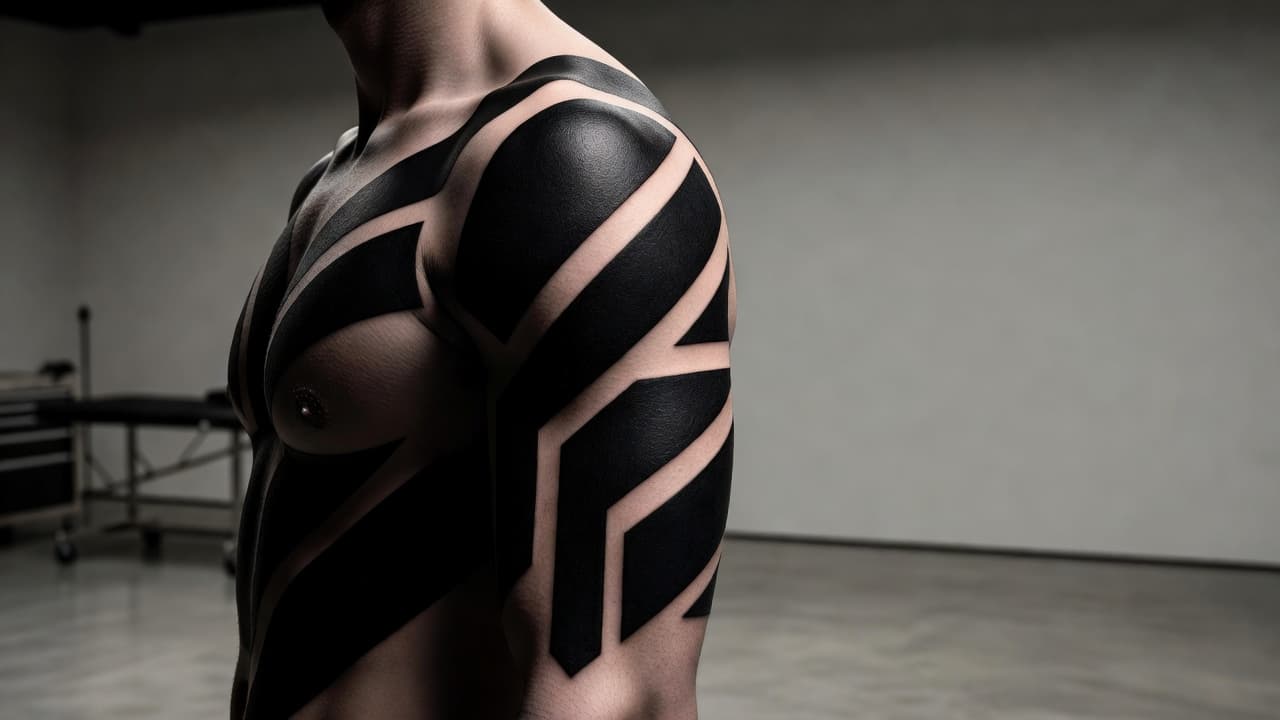
A blackwork tattoo is built entirely from black ink — no color, usually no soft grey-wash shading — using solid fills, bold linework, or dense patterning to do all the visual work through contrast alone. It's one of the boldest, most graphic corners of modern tattooing, and also one of the most permanent decisions you can make on skin, which is exactly why it's worth understanding before you book.
This guide covers what actually counts as blackwork, the sub-styles worth knowing before you talk to an artist, how it heals and ages differently from color or fine-line work, why it's notoriously hard to remove, and how to spot an artist who can actually pull off flawless, even saturation.
What Is a Blackwork Tattoo? (Quick Answer)
Blackwork is a tattoo style built entirely from black ink, using solid fills, bold linework, or dense patterning instead of color or soft shading to create depth. It's an umbrella term — it covers everything from a single thick-lined geometric shape to a fully blacked-out sleeve — and what unites every version of it is the same core idea: the contrast between solid ink and bare skin carries the design, not gradients or hue.
What Actually Makes a Tattoo "Blackwork"?
Blackwork gets confused with a couple of neighboring styles, so it helps to draw clear lines. It is not the same as black-and-grey realism, which uses diluted black ink to build smooth tonal gradients that mimic photography — realism is about subtlety, blackwork is about contrast. It also isn't identical to tribal tattooing, though the two overlap heavily: tribal styles like Polynesian and Māori patterning are specific cultural traditions with their own history and meaning, while "blackwork" as used in Western tattoo culture today is a broader, style-agnostic label that borrows visual techniques from those traditions alongside geometric art, illustration, and modern graphic design.
What defines blackwork, in practice, is a short list of traits: no color, minimal or no gradient shading, heavy reliance on negative space, and a willingness to commit to large, saturated areas of solid ink. That combination is what gives the style its unmistakable, graphic punch.
Popular Blackwork Sub-Styles
"Blackwork" covers more ground than most people expect. A few directions worth knowing before you start collecting reference images:
- Solid-fill blackwork — large, unbroken blocks of black ink, often used for bold silhouettes or to anchor a bigger composition.
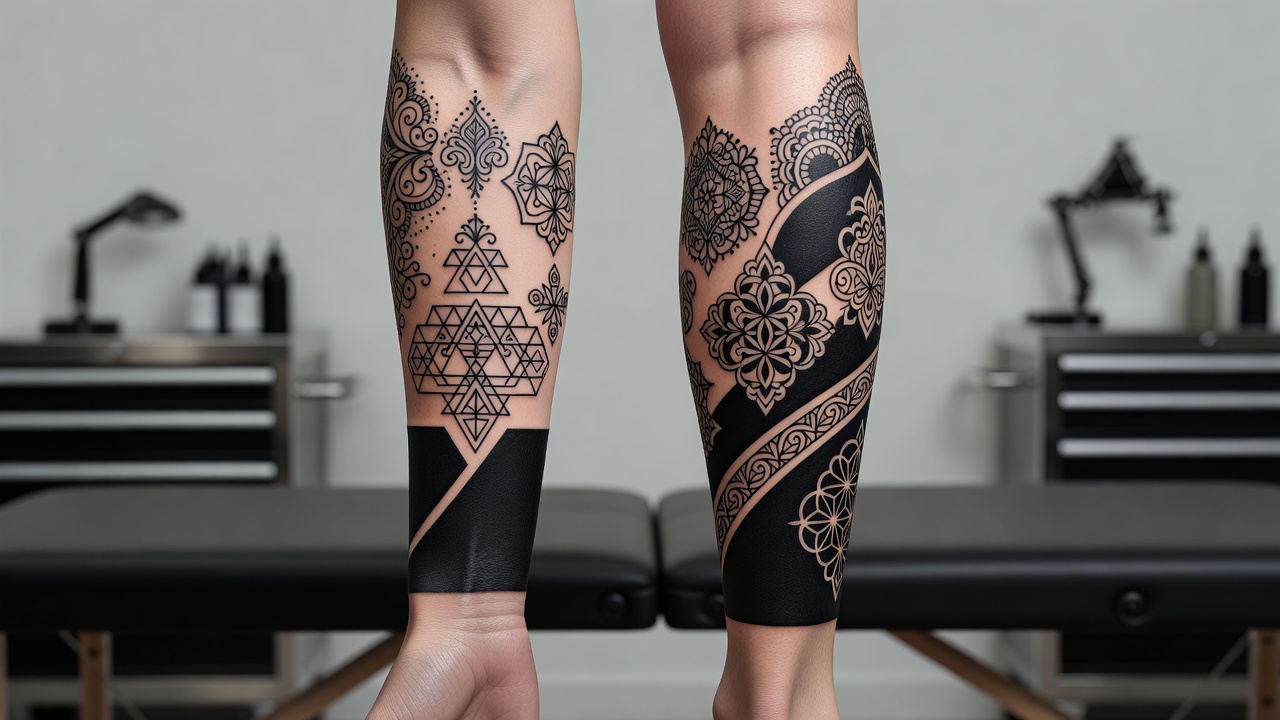
- Ornamental blackwork — lace-like or mandala-inspired patterning that treats a limb or the back as a canvas for repeating decorative motifs.
- Sacred geometry blackwork — precise geometric shapes and symmetrical patterns rooted in sacred geometry, built from clean lines and fills rather than freehand shapes.
- Illustrative blackwork — figures, animals, or full scenes rendered in bold black linework and fills instead of color or realism.
- Dotwork-blended blackwork — shading and texture built from dense stippling, giving a softer gradient within an otherwise black-only palette.
- Blackout — the most extreme version: entire sections of a limb, hand, or torso covered in solid black, sometimes deliberately over old tattoos.
How Blackwork Gets Its Signature Saturation
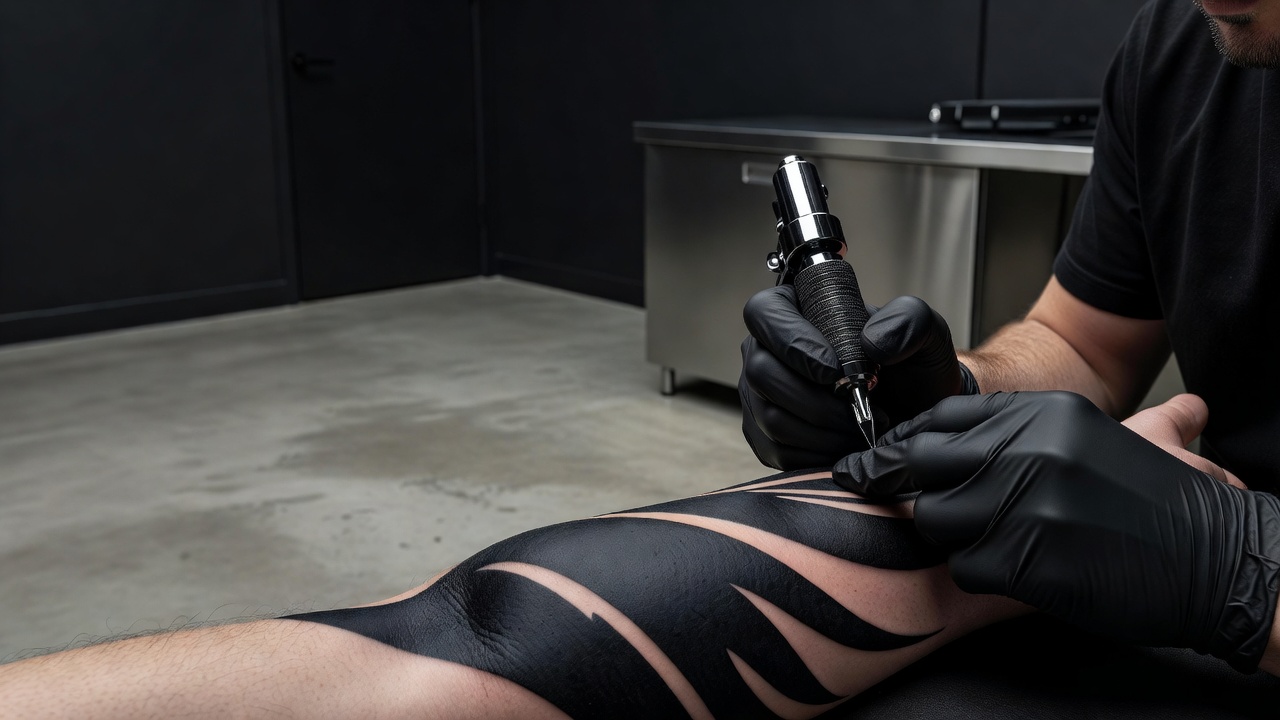
A fine-line tattoo can look finished after a single, clean pass with the needle. Solid blackwork can't — building an even, opaque black fill means going over the same area multiple times so the ink sits densely and consistently under the skin. That repeated saturation is what gives blackwork its flat, poster-like look once healed, but it also means large pieces take real technical skill to execute evenly. Uneven pressure or inconsistent passes show up later as patchy, mottled sections instead of one clean block of black — a flaw that's much harder to hide in blackwork than in a style that already has color or texture doing some of the visual work.
Does a Blackwork Tattoo Hurt More Than Other Styles?
Not sharper — longer. The moment-to-moment sensation of getting tattooed is largely the same regardless of style; what changes with blackwork is how much of it you're signing up for. Because solid fills need multiple passes to reach full saturation, a large blackwork piece usually keeps you under the needle considerably longer than a same-sized tattoo built from thin outlines and light shading. Placement still matters more than style for how intense any single session feels — see our tattoo pain chart for how different body areas compare — but plan for longer sessions, or multiple sessions, if you're going big on solid black.
Healing and Aftercare for Solid Black Ink
Dense blackwork saturates more skin than fine-line or lightly shaded work, and that changes healing in a few practical ways. Expect more noticeable scabbing and peeling over large solid sections, and take moisturizing seriously during the first two to three weeks — uneven aftercare on a big blackwork piece can leave faint patchiness where scabbing pulled ink unevenly. Sun exposure matters just as much here as with color work: black ink doesn't shift hue the way color does, but years of unprotected sun exposure will still soften and grey out even the densest blackwork over time. Our full tattoo aftercare guide covers the healing timeline in detail if this is your first large piece.
Why Blackwork Is Harder to Remove Than Other Styles
Laser tattoo removal works by breaking ink particles into fragments small enough for the body's immune system to clear away gradually, session by session. That process depends on the laser reaching ink at different depths and breaking down a manageable amount of pigment at a time — and dense blackwork simply has far more pigment packed into the skin than a fine-line tattoo of the same size. In practice, that means solid blackwork pieces typically need noticeably more removal sessions to fade meaningfully, and very thick, heavily saturated sections sometimes never clear completely. If there's any chance you'll want the option to remove or lighten a piece later, that's worth weighing seriously before committing to a fully solid design.
Covering Old Ink With Blackwork (Blast-Overs)
Because blackwork saturates so densely, it's also one of the most effective ways to visually bury a tattoo you no longer want — a technique commonly called a "blast-over." Rather than lightening the old design with laser sessions first, a skilled artist tattoos a new blackwork piece directly over it, using the density of solid black to absorb the old lines and shading underneath. It's not a fix for every situation — very dark or heavily saturated existing ink can still show through if the new piece isn't planned carefully — but for tattoos that no longer fit who you are, it's often faster and less costly than removal. If you're weighing your options, our AI tattoo cover-up guide walks through how to plan a cover-up design, blackwork or otherwise.
How to Find a Skilled Blackwork Artist
Because so much of blackwork's success comes down to even saturation, the gap between a good and a mediocre artist shows up more clearly here than in almost any other style. A few things worth checking before you book:
- Ask for healed photos, not just fresh ones. Solid black ink that heals patchy is invisible on day one and obvious six months later — a specialist who shares healed work at the 6-12 month mark is showing you their real track record.
- Ask how they handle saturation on large areas. A confident blackwork artist can explain their process and will often recommend splitting a big piece into multiple sessions rather than rushing full coverage in one sitting.
- Look for a blackwork-heavy portfolio. Artists who specialize in the style tend to have a sharper eye for negative space and flow than someone who tattoos it occasionally alongside everything else.
- Talk through placement and flow in detail. Bring reference images and discuss how the design will wrap your specific arm, back, or leg before the stencil is finalized — blackwork reads very differently on a flat sketch than it does on a curved, moving body.
Designing Your Blackwork Tattoo with AI
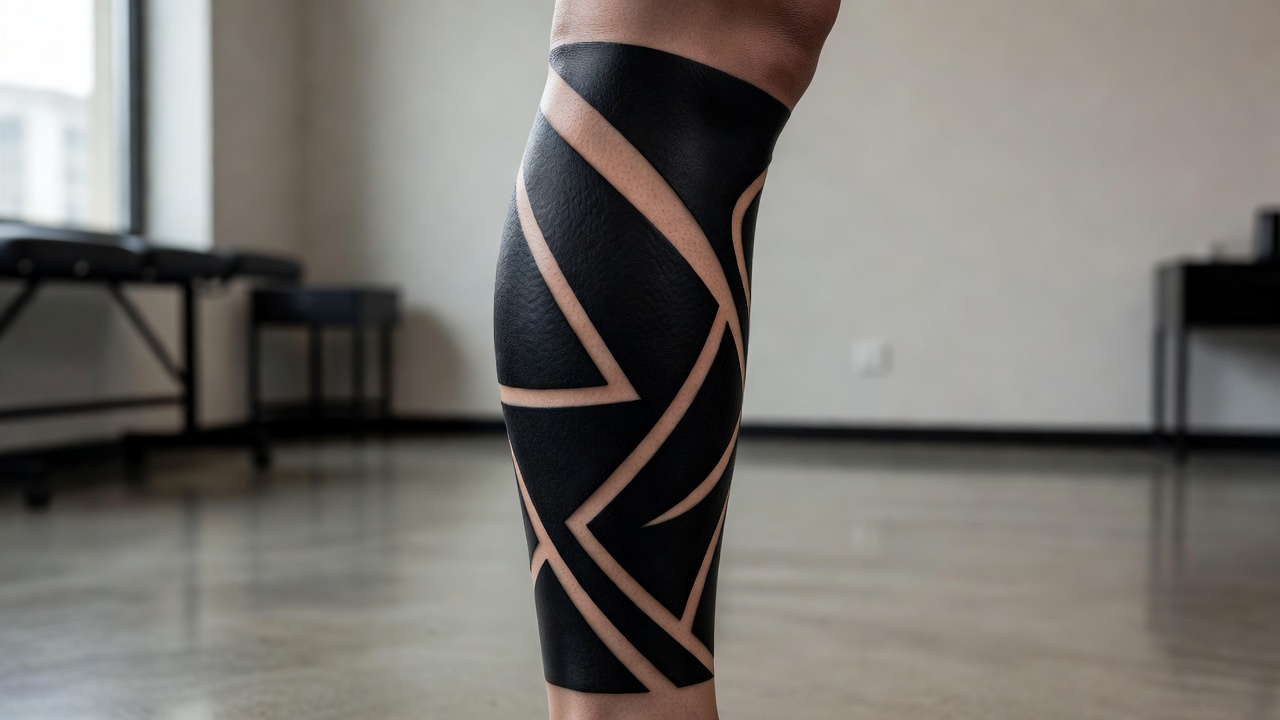
Because blackwork lives or dies on the balance between solid ink and open skin, it's genuinely useful to see a design rendered before committing to it. With INK, you can describe your idea in plain language, compare a denser solid-fill composition against a more open ornamental one, and preview how it would actually sit on your body with AR try-on before anyone picks up a machine. If you want a deeper look at how AI specifically handles the blackwork aesthetic, our blackwork AI tattoo generator guide covers prompting tips and style variations in more depth. Either way, walking into your appointment with a clear reference — rather than a vague description — makes it much easier for your artist to plan saturation and flow correctly from the start.
Blackwork Tattoo FAQ
What is a blackwork tattoo? A tattoo built entirely from black ink — solid fills, bold linework, or dense patterning — with no color and typically no soft shading.
Does it hurt more than other styles? Not more intensely, but usually for longer, since solid fills need multiple passes to reach full saturation.
Why is it so hard to remove? Dense blackwork packs far more pigment into the skin than fine-line tattoos, so laser removal typically needs many more sessions to fade it.
What's a blast-over? A new blackwork design tattooed directly over an old tattoo, using solid saturation to visually absorb it instead of removing it first.
Blackwork rewards patience twice over — once in finding an artist who can execute it evenly, and again in caring for it properly while it heals. Get both right, and it's one of the most striking, longest-lasting styles in modern tattooing.
Design Your Blackwork Tattoo Free
Test solid fills, ornamental patterns, and geometric layouts, then AR-preview the result on your body before you commit — all in INK. No sign-up needed.
Try INK Free →

Create Your Perfect Tattoo Design
Use AI to generate unique tattoo designs and preview them on your body before committing to ink.
Start Designing for FreeWritten by
INK Team