
Neo-Traditional AI Tattoo Generator: Design Bold, Illustrative Tattoos
How a neo-traditional AI tattoo generator renders bold outlines, painterly shading and illustrative detail — what it gets right, where an artist's touch still matters, and how to prompt it for authentic results.

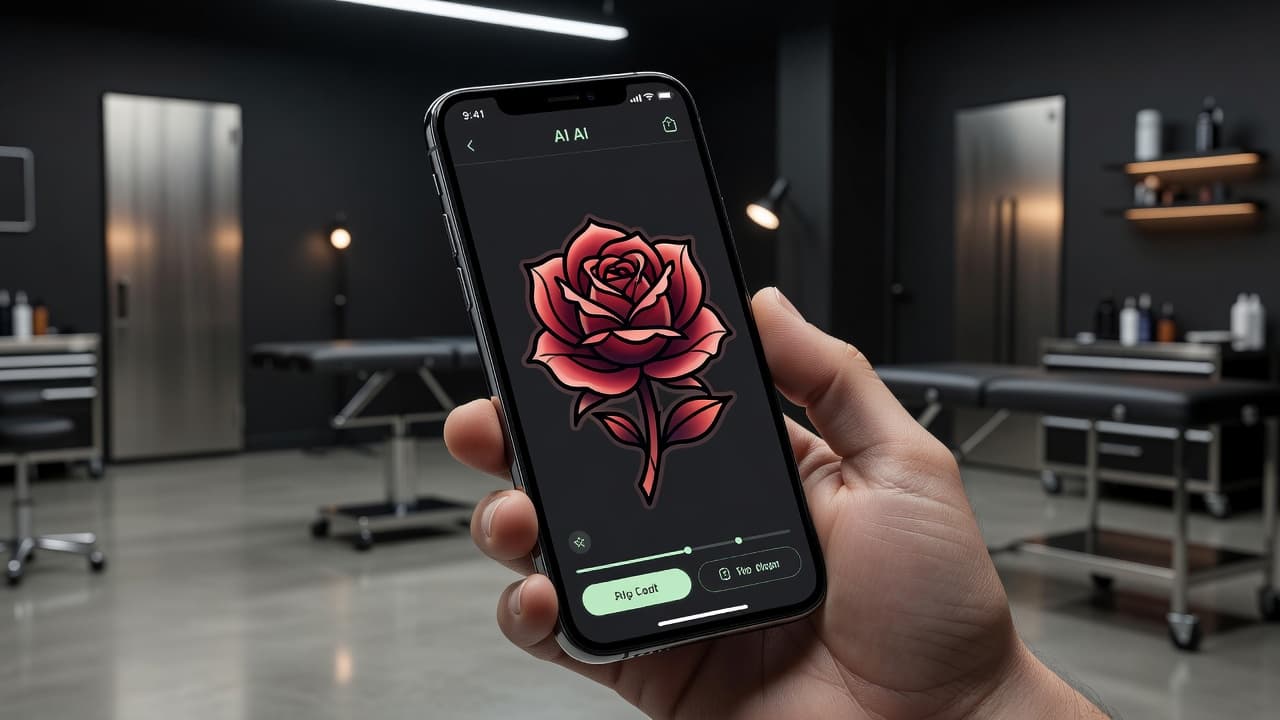
Neo-traditional tattoos ask for something specific from a design: a bold, confident outline that won't blur out over the years, paired with richer color and shading than old-school American traditional ever allowed. A neo-traditional AI tattoo generator lets you test that balance before you book a chair — describe a subject, name the style, and see how the AI handles the mix of bold structure and painterly detail in seconds.
In short: a neo-traditional AI tattoo generator is an AI tattoo tool set to render bold black outlines combined with gradient shading, an expanded color palette, and more illustrative subject matter than classic American traditional. You describe your idea, select the neo-traditional style, and the AI produces a design you can refine and preview on your own skin before committing to a session. This guide covers how these generators actually render the style, where AI gets the balance right, where it still falls short, and how to prompt one for results that look genuinely neo-traditional instead of a generic illustration.
What Is Neo-Traditional Tattooing?
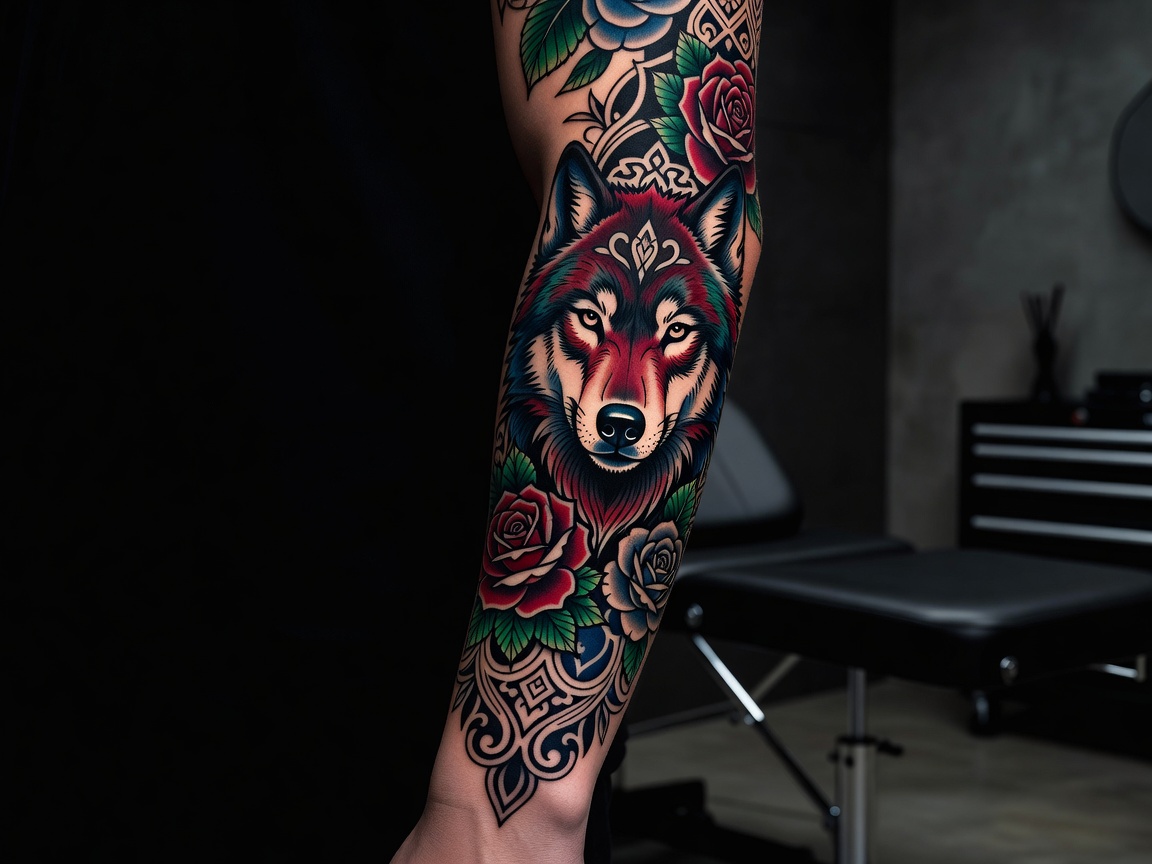
Neo-traditional tattooing is a modern evolution of American traditional — it keeps the style's bold, confident black outline as its structural backbone but adds realistic shading, a wider color palette, and more elaborate, illustrative subject matter. Where a classic traditional rose is rendered in two or three flat colors, a neo-traditional rose might carry a full gradient of pinks and shadow, still held together by that same unmistakable heavy line. For the full breakdown of what separates neo-traditional from both traditional and new school, our neo-traditional tattoo style guide covers it in depth; this piece focuses specifically on generating designs in the style with AI.
How Does a Neo-Traditional AI Tattoo Generator Work?
An AI tattoo generator renders an image from a written description or a reference photo, and selecting neo-traditional tells the model to combine two things that don't always come naturally together: a bold, uniform outline and gradient, painterly shading inside it. That combination is really what defines the style, so a generator that only nails one half — thick lines with flat color, or soft shading with no real outline — ends up producing something closer to traditional or fine line instead of a true neo-traditional look.
In INK, you can start from a typed description or an uploaded reference photo, select neo-traditional from the style list, and generate several variations of the same subject. Because the style depends on getting that outline-to-shading balance right, comparing a handful of versions side by side is worth doing here — one generation might lean too far toward flat traditional color, another might soften the outline enough to blur the neo-traditional identity entirely.
Is AI Actually Good at Neo-Traditional Tattoo Designs?
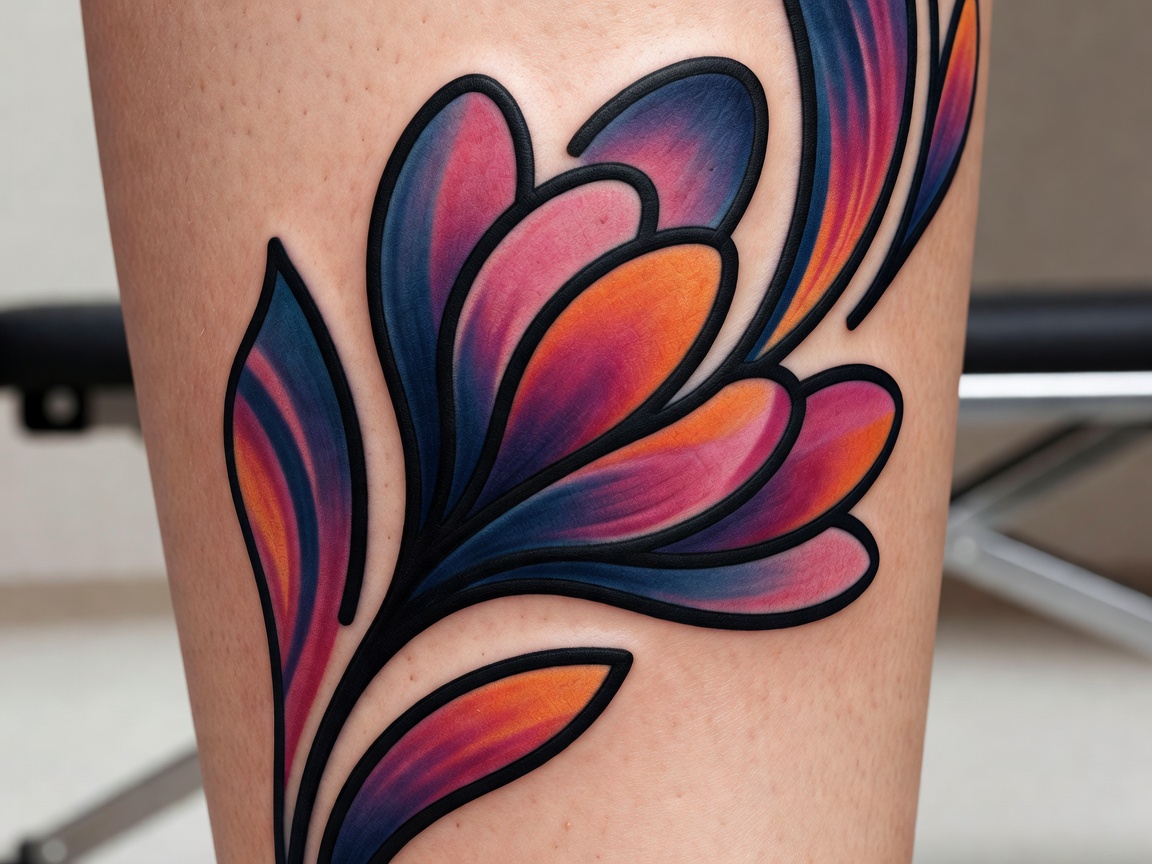
Mostly yes, and it's one of the more interesting styles to test because it sits between two things AI handles differently. Bold, structural outlines are the kind of consistent, repeatable element AI models render reliably. Painterly gradient shading is closer to the more expressive, painting-like territory where AI can genuinely shine, producing rich color blends and depth that would take real time to sketch by hand. Put together, a well-prompted neo-traditional generation can look convincingly close to the illustrative, Art Nouveau-influenced references many neo-traditional artists work from.
Where it gets less reliable is consistency of line weight. Traditional and neo-traditional tattooing both depend on the outline staying a deliberate, even thickness throughout the piece — that's part of what makes the style age well. AI-generated linework can vary in weight from one section of the design to another in ways that look fine as a flat image but would need to be corrected before an artist could actually tattoo it as a stencil. It's also worth comparing directions: pushing a prompt further toward fine line softens the outline and drifts away from neo-traditional, while pushing too far toward flat, single-tone color slides back toward classic American traditional.
Composition is the other place a careful eye still matters. Neo-traditional pieces often use ornamental framing — banners, florals, drapery — borrowed from the same Art Nouveau posters that shaped the style's illustrative sensibility. AI handles individual ornamental elements well but can sometimes crowd or unbalance a composition when asked to combine several at once, so it's worth generating the main subject and the framing separately and judging whether they'd actually sit well together on a real body part before finalizing anything.
How to Prompt an AI Tattoo Generator for Neo-Traditional Results
A few habits consistently produce cleaner neo-traditional results:
- Name the style and the outline explicitly. Say "neo-traditional" and add "bold black outline, consistent line weight" so the AI doesn't default to a softer or flatter style.
- Describe the shading you want. Mention "gradient shading," "painterly," or "realistic color blending" to push past traditional's flat color fills.
- Reference the illustrative influence if you want it. Mentioning "Art Nouveau-inspired" or "ornamental framing" nudges the AI toward the decorative borders and flowing linework common in the style.
- Generate several variations and compare the balance. Look specifically at whether the outline stayed bold and even, and whether the shading actually reads as gradient rather than flat.
- Refine instead of restarting. If the outline weight is inconsistent in one area, use an AI tattoo editor to adjust that section rather than regenerating the whole design.
Neo-Traditional Tattoo Ideas Worth Trying
Certain subjects tend to showcase what neo-traditional does best — combining a strong outline with enough shading to add real depth:
- Animal portraits. Wolves, owls, and big cats rendered with dimensional fur and shading instead of flat traditional color.
- Florals with drapery or banners. A rose or peony wrapped in ornamental framing, closer to an illustrated poster than a flash sheet.
- Female figures. A recurring neo-traditional subject drawing directly on the Art Nouveau tradition of decorative, flowing portraiture.
- Reimagined traditional motifs. A classic swallow, dagger, or ship redrawn with gradient shading and a richer palette than the original flash version.
- Nature scenes. Moths, snakes, and botanical subjects that let the AI show off smooth color transitions inside a bold outline.
Previewing Neo-Traditional Placement Before You Commit
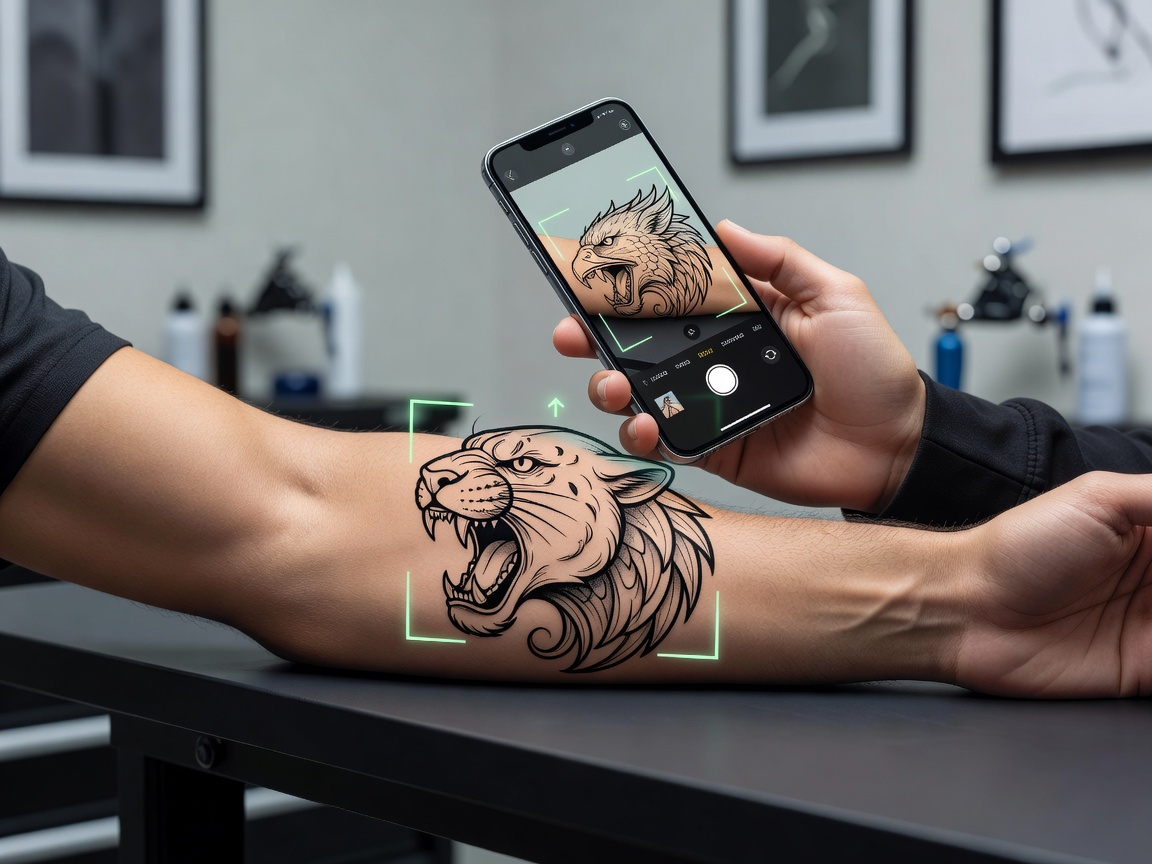
Because neo-traditional pieces tend to be more detailed than classic traditional, they read differently at different sizes — a densely shaded design that looks balanced full-size on a screen can lose definition once shrunk down for a forearm or wrist. Using AR try-on to place a generated design directly on a photo of your own body, at the actual size and spot you're considering, is the fastest way to catch that before you're in a tattoo chair rather than after.
INK's try-on feature lets you do exactly that — see the shading and outline weight at real scale on your actual skin, not just centered on a white background.
From AI Design to a Real Neo-Traditional Tattoo
Once you have a neo-traditional design you're happy with, the next step is finding an artist who specializes in the style specifically, since executing it well requires holding a bold, even outline while also laying in smooth gradient shading — a combination of skills that traditional-only or fine-line-only artists may not have practiced as much. Bring a high-resolution export of your AI-generated design as a reference.
A specialist will typically adjust line weight for how it will actually hold up in skin over the years, since AI has no way to account for how a design specifically ages — heavier lines and bolder color blocking tend to stay legible longer than fine gradient detail, which is why an experienced neo-traditional artist will often thicken or simplify certain elements even when working from a polished reference.
Does Neo-Traditional Aftercare Need Special Care?
Neo-traditional tattoos follow the same core aftercare guidance as any other tattoo — keep the area clean, moisturized, and out of direct sun while it heals — but the heavier color saturation and denser shading common to the style mean there's simply more surface area holding fresh ink. Picking at scabbing or over-exposing a large shaded area to the sun during healing can dull the gradient work specifically, which is one of the details that makes neo-traditional pieces look worth the extra color. For the full healing timeline, see our tattoo aftercare guide.
The Final Word
A neo-traditional AI tattoo generator won't replace an artist's hand for holding a bold line steady across a shaded, illustrative design, but it will get you to a genuinely style-accurate concept faster than sketching outline-and-shading balance from scratch. Name the style and the shading explicitly, generate a handful of variations, and preview the result on your own skin before you bring it to an artist who can adapt it for how it will actually age.
Generate Your Neo-Traditional Tattoo Free in INK
Describe your idea, pick the neo-traditional style, and preview the design on your body before you ink. No sign-up needed.
Try INK Free →

Create Your Perfect Tattoo Design
Use AI to generate unique tattoo designs and preview them on your body before committing to ink.
Start Designing for FreeWritten by

Laura Schmitz
Tattoo Content Lead, INK
Laura Schmitz leads tattoo content at INK. She has spent years researching tattoo styles, symbolism and aftercare, and works directly with the AI tattoo generator to test how each style translates from prompt to skin — so every guide here reflects designs that are actually tattooable, not just images that look good on screen.
More about the author