
Tree of Life Tattoo Meaning: Symbolism, Styles & Placement Ideas
What a tree of life tattoo really means — growth, family, and the connection between earth and sky — plus how the symbol shifts across Celtic, Norse, and modern readings, and where it looks best on the body.

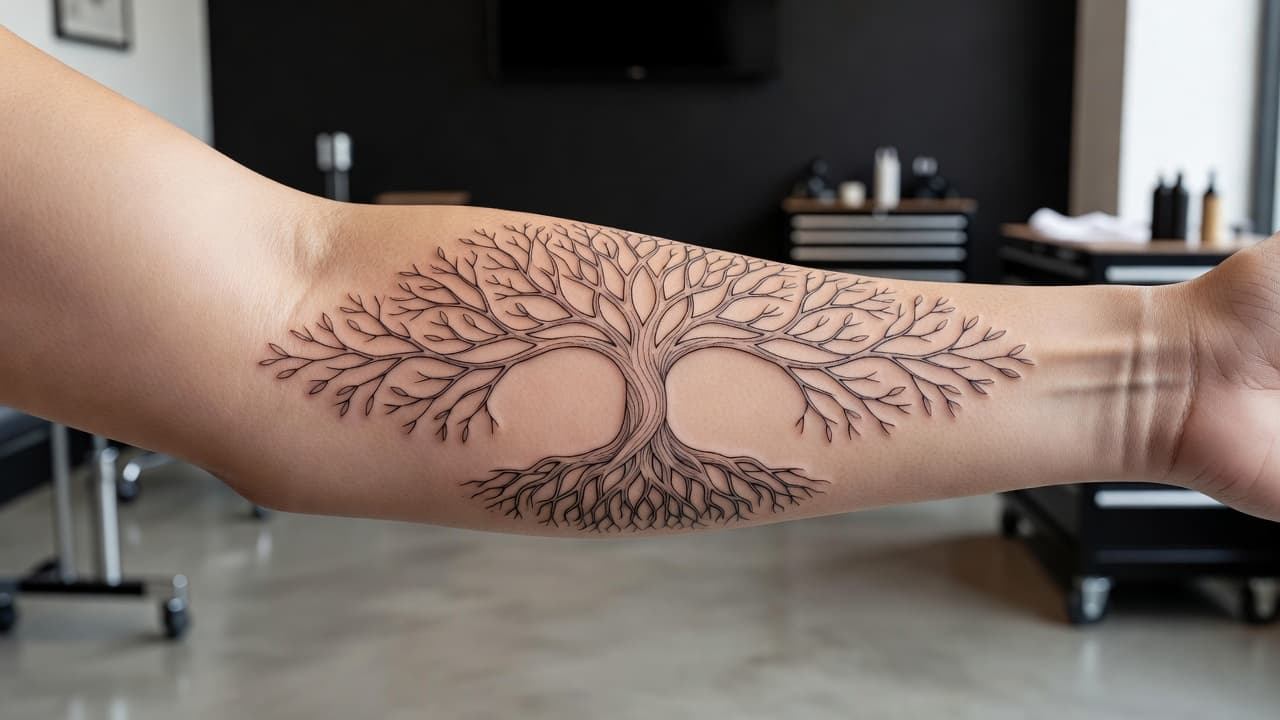
The tree of life tattoo meaning comes from a single image that shows up, almost unchanged, across dozens of unrelated cultures: a tree whose branches reach toward the sky while its roots dig deep into the earth, standing in for a life connected to everything above and below it. That dual reach is why the tree of life has become one of tattooing's most enduring symbols of growth, family, and interconnection — though the exact meaning shifts depending on whether the design leans Celtic, Norse, biblical, or purely secular.
If you are weighing a tree of life for your next piece, this guide breaks down what the symbol really represents, how the meaning changes across Celtic, Norse, and other traditions, which design choices change the message, and the styles and placements that let a tree do its best work. By the end you will be able to choose a version that says exactly what you want it to.
What Does a Tree of Life Tattoo Mean? (Quick Answer)
A tree of life tattoo most commonly means growth, family, and interconnection. The symbolism comes directly from the tree's shape — branches spreading upward into the sky while roots dig downward into the earth — which is why it reads almost universally as a single life bound to everything around it, past and future, above and below. Layered on top, the specific meaning is shaped by which tradition the design leans on: Celtic, Norse (Yggdrasil), biblical, or a modern, secular reading focused on family and personal growth.
Tree of Life Tattoo Symbolism: The Core Meanings
Before getting into cultural specifics, it helps to know the handful of ideas that nearly every tree of life tattoo draws on. Most designs are some combination of the following.
Family and Heritage
This is the most common reason people choose the symbol today. The roots represent ancestors and family history, the trunk represents the present, and the branches represent children, future generations, or personal ambitions still unfolding — a single image that holds an entire family story.
Growth and Personal Development
A tree grows slowly, visibly, and in response to what it survives — storms, drought, seasons. A tree of life tattoo can mark ongoing personal growth, a major life change, or the idea that who you are now is the product of everything you have already been through, in the same way people reach for meaningful tattoo symbols of transformation more broadly.
Connection Between Earth and Sky
Because its roots and branches reach in opposite directions at once, the tree of life is read across many traditions as a bridge between the physical and spiritual worlds — the grounded, material self below and the aspirational, spiritual self above, joined by a single trunk.
Strength and Resilience
A tree that has weathered years of wind and weather without losing its shape is a natural stand-in for resilience. Many people choose an asymmetrical, windswept tree of life specifically to mark surviving something difficult and still standing afterward.
Balance and Wholeness
When the roots and branches are drawn as mirror images of each other, the design emphasizes balance — the idea that where you come from and where you are going carry equal weight, and that a full life needs both halves.
Tree of Life Tattoo Meaning Across Cultures and Religions
Few symbols appear as independently in as many unrelated traditions as the tree of life. Knowing the background lets you choose a design that is both beautiful and meaningful.
Celtic Tradition
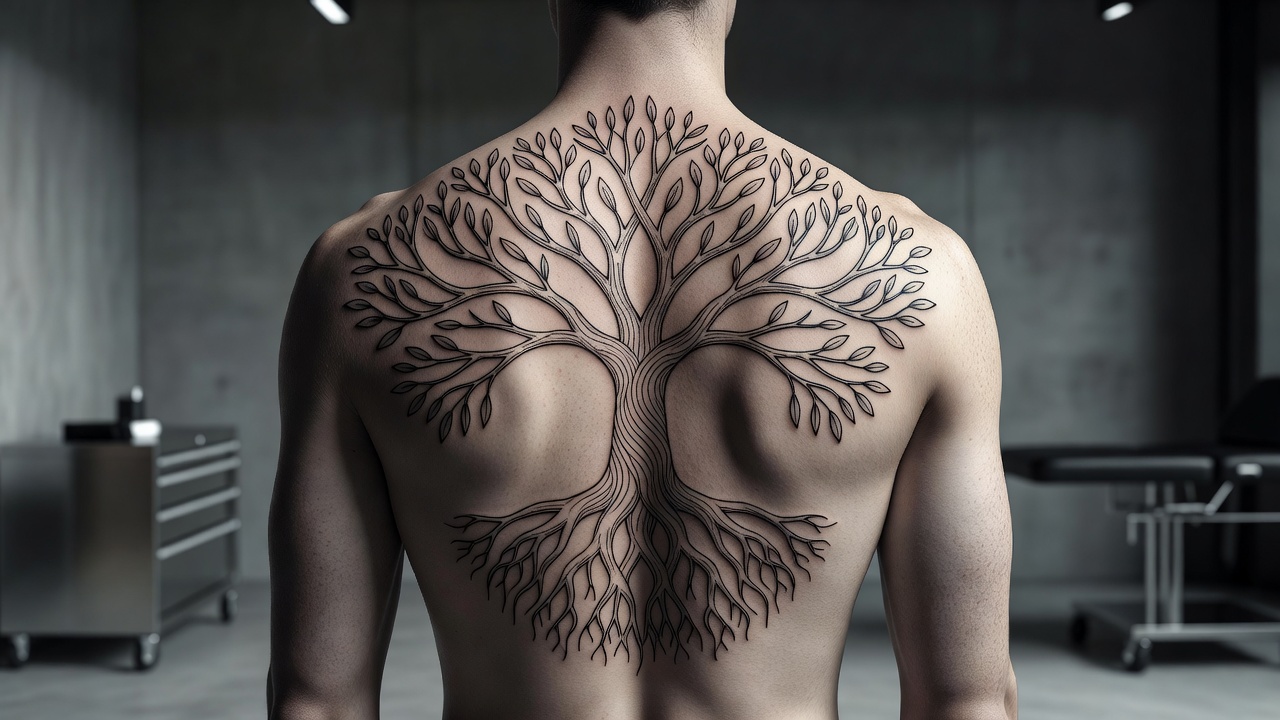
In Celtic belief the tree of life, or Crann Bethadh, represented the connection between the human, natural, and spiritual worlds. When clearing land to build a settlement, the Celts reportedly left one large tree standing at the center of the field as a literal meeting point between those realms — cutting it down was considered a serious offense. Celtic tree of life tattoos typically mirror the branches and roots into a continuous, interlocking shape, often incorporating knotwork to emphasize that everything is connected without beginning or end.
Norse Mythology: Yggdrasil
Norse mythology has its own, more specific version: Yggdrasil, an immense cosmic ash tree said to connect nine worlds along its branches and roots, including the realms of gods, giants, and humans. A Yggdrasil tattoo carries that specific mythological weight rather than the more general symbolism of a standard tree of life, and designs drawing on this tradition are often paired with runes, ravens, or other Norse imagery.
Judeo-Christian and Biblical Symbolism
The tree of life appears in the Book of Genesis, standing in the Garden of Eden alongside the tree of knowledge, and reappears later in the Book of Revelation as a symbol of eternal life. In this reading the tree represents immortality, divine gift, and a connection to paradise, which is why the symbol still carries strong spiritual weight for many wearers with a Christian or Jewish background.
Modern, Secular Symbolism
Outside any specific religious or mythological framework, the tree of life has become a widely secular symbol of family, personal growth, and staying grounded while still reaching for more. This is the reading most modern wearers connect with — less about a specific deity or cosmology, more about their own roots and the life they are building on top of them.
A tree cannot grow taller without growing its roots deeper first. That single fact is why the symbol has meant family and personal growth to nearly every culture that has ever stood beneath one.
Popular Tree of Life Tattoo Designs and What They Mean
Most tree of life tattoos pair the symbol with a second element, and that pairing sharpens the meaning. Here are some of the most requested variations and how they read.
- Tree of life inside a circle — the circle reinforces the idea of wholeness and the endless cycle of life, similar to how a mandala tattoo uses a circular frame to represent balance and the universe.
- Tree of life with birds — often used to represent children or family members who have left home but remain connected to their roots.
- Tree of life with a sun or moon — pairs the symbol's earthbound roots with a celestial element, emphasizing the bridge between the physical and spiritual worlds.
- Family tree of life — a variation with names, initials, or a set number of branches representing specific family members, turning the symbol into a personalized family tree tattoo.
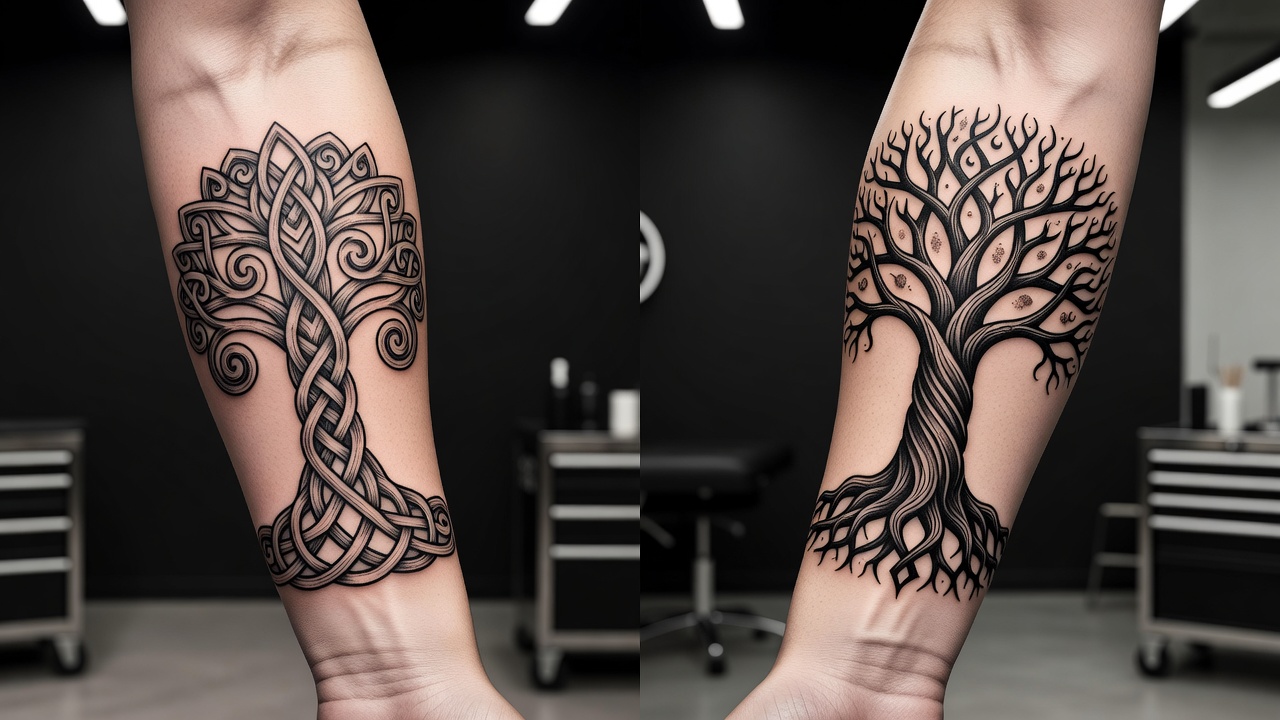
- Celtic knotwork tree — replaces the smooth trunk and branches with continuous interlacing knots, emphasizing eternity and interconnection.
- Windswept or asymmetrical tree — a tree bent by wind but still rooted, a common way to symbolize resilience through hardship rather than untroubled growth.
Best Tattoo Styles for a Tree of Life
The tree of life adapts well across a wide range of tattoo styles. The style you choose changes the mood as much as the meaning.
Fine Line and Minimalist
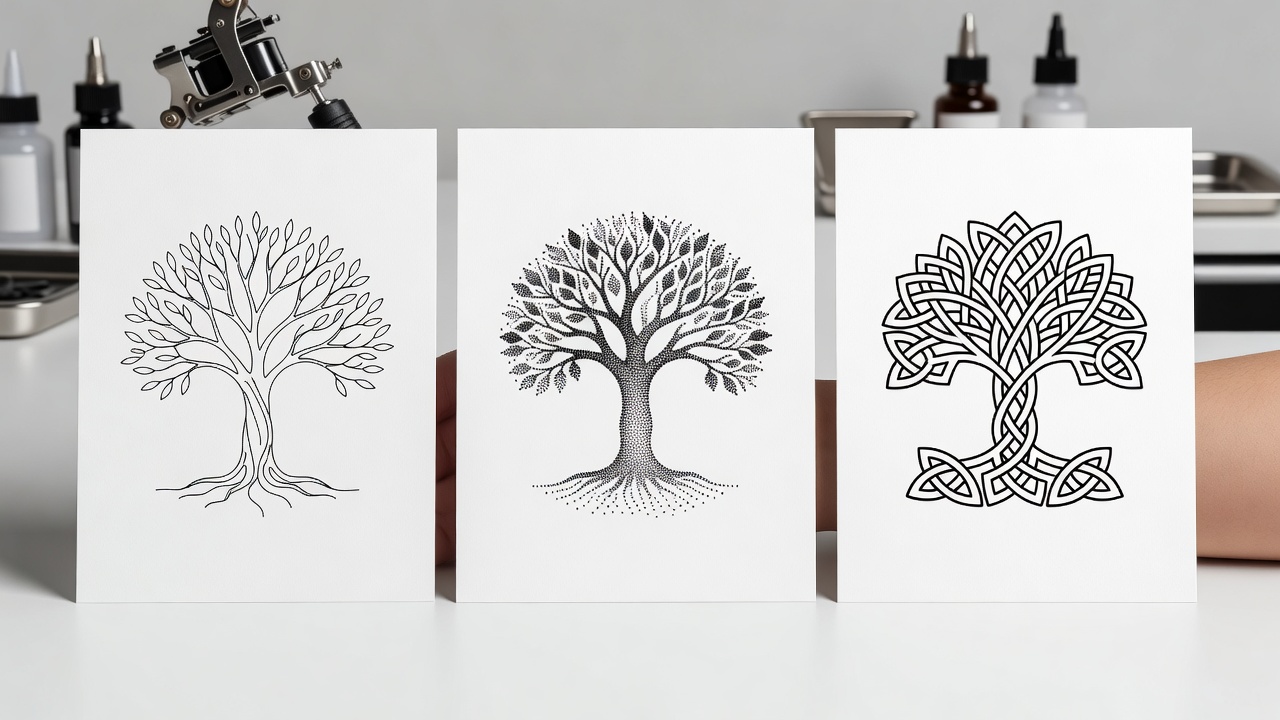
A single-needle tree with thin, clean branches is one of the most popular ways to wear the symbol today — quiet and elegant, and easy to place almost anywhere. Explore the approach further in our fine line tattoo guide.
Dotwork and Geometric
Dotwork shading gives the canopy and root system real depth and texture without relying on solid black fills, while a more geometric interpretation trades organic curves for a structured, symmetrical silhouette.
Blackwork and Celtic Knotwork
Bolder blackwork versions favor solid, high-contrast branches and roots, and lend themselves naturally to Celtic knotwork variations where the trunk and limbs are replaced with continuous interlacing patterns.
Watercolor
Watercolor tree of life tattoos trade hard outlines for soft washes of green, gold, or autumn tones bleeding into one another, giving the design a painted, seasonal feel rather than a graphic one.
Where Do Tree of Life Tattoos Look Best?
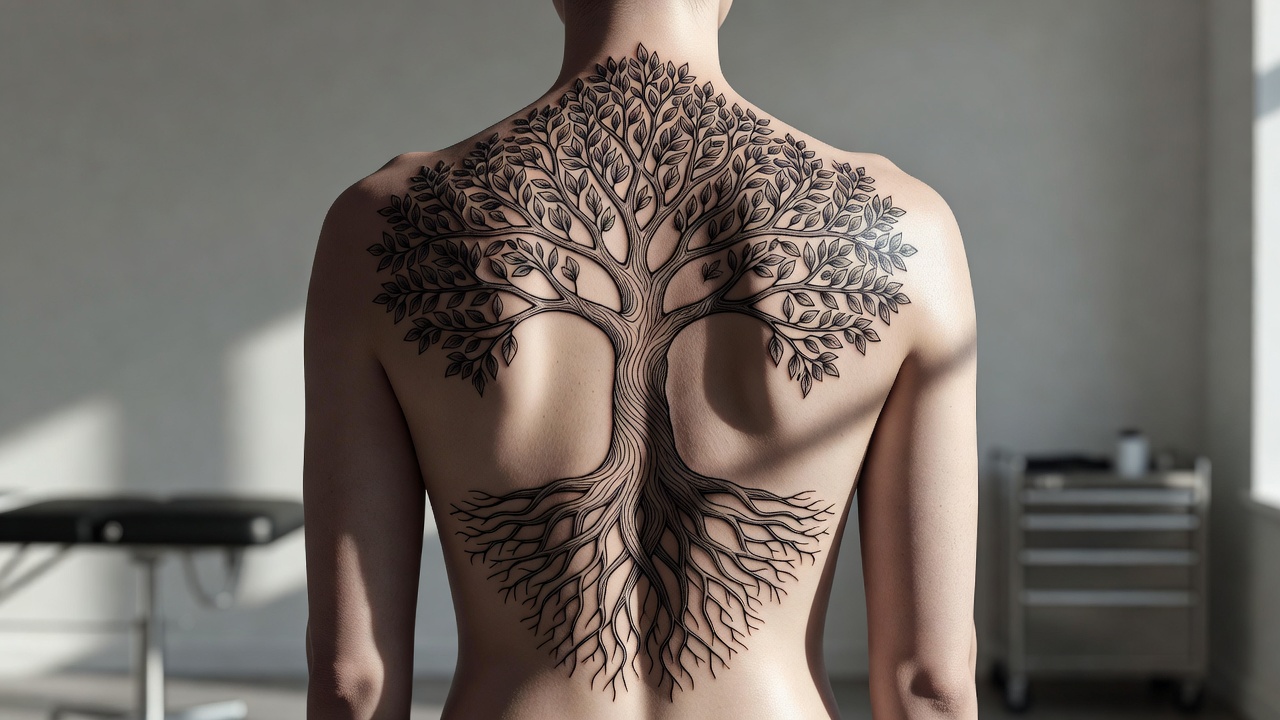
Because the tree of life reads top-to-bottom by nature — branches at one end, roots at the other — vertical placements tend to suit it best, though smaller versions work well almost anywhere.
- Spine or back — a striking vertical placement with room for a full canopy and root system to unfold.
- Forearm — a popular choice that keeps the tree visible while giving the branches and roots enough length to read clearly.
- Ribs or thigh — larger, more private placements suited to a bigger, more detailed composition.
- Calf — a naturally vertical canvas that echoes a tree's own proportions.
- Wrist or ankle — best for a small, simplified single-line version. Our best tattoo placements guide covers pain levels and visibility for each of these spots.
How to Choose Your Tree of Life Tattoo Design (Step by Step)
With so many traditions, pairings, and styles to choose from, it helps to work through the decision in order rather than all at once.
- Decide what the tree should represent for you. Anchor the design in one core meaning — family, personal growth, spiritual connection, or resilience — so every other choice reinforces it instead of diluting it.
- Pick a cultural lens. Decide whether you want the design to lean Celtic, Norse, biblical, or a modern secular reading, since that shapes which companion symbols and details feel authentic.
- Choose how symmetrical to make the roots and branches. A mirrored tree emphasizes balance; a windswept, asymmetrical tree emphasizes resilience.
- Match the style to the mood you want. Fine-line keeps it quiet, dotwork adds texture, and blackwork or Celtic knotwork makes it bolder.
- Pick a placement that suits the size. A small tree reads well on the wrist or ankle, while a larger piece has room to breathe along the spine, back, or ribs.
Designing Your Tree of Life Tattoo with AI
A tree of life is a deceptively detailed symbol — the balance between roots and branches, the level of symmetry, and the amount of texture in the canopy all have to feel intentional, or the design can read as generic rather than meaningful. This is where designing with AI helps. With INK you can describe your tree in plain language ("a fine-line tree of life with roots and branches mirrored into a circle, small enough for the forearm"), test how it looks in different styles, and compare a minimalist single-line version against a fuller dotwork rendering before committing to either.
Because you can iterate freely, you can try the same tree as a small wrist piece or a larger spine-length composition, see how Celtic knotwork or a family-tree variation changes the story, and AR-preview the design on your own body before any ink is permanent. New to the process? Our first tattoo guide walks through what to expect.
Choosing Your Tree of Life
The tree of life rewards a little thought before the needle touches skin. The same symbol can mean quiet family devotion or hard-won resilience, and the difference comes down to the tradition, symmetry, and style you choose to build the design around. Decide what you want your tree to stand for first, then let the rest of the design follow from that meaning.
What does a tree of life tattoo mean? Most often growth, family, and interconnection, symbolized by branches reaching skyward while roots dig into the earth.
Which culture should I draw from? Celtic tradition emphasizes connection between worlds; Norse mythology's Yggdrasil ties the tree to cosmic realms; biblical symbolism ties it to eternal life; modern use leans secular, focused on family and growth.
Does symmetry matter? Yes — a mirrored tree emphasizes balance between heritage and growth, while an asymmetrical, windswept tree emphasizes resilience.
Where does it look best? Vertical placements work best — spine, forearm, or calf — though a simplified version suits the wrist or ankle just as well.
Whatever meaning you land on, take your time with the design. Choose your cultural reference and symmetry deliberately, and you will end up with a tree of life that carries real depth for a lifetime.
Design Your Tree of Life Tattoo Free
Describe your tree, explore styles and pairings, and AR-preview the design on your body before you commit — all in INK. No sign-up needed.
Try INK Free →

Create Your Perfect Tattoo Design
Use AI to generate unique tattoo designs and preview them on your body before committing to ink.
Start Designing for FreeWritten by

Laura Schmitz
Tattoo Content Lead, INK
Laura Schmitz leads tattoo content at INK. She has spent years researching tattoo styles, symbolism and aftercare, and works directly with the AI tattoo generator to test how each style translates from prompt to skin — so every guide here reflects designs that are actually tattooable, not just images that look good on screen.
More about the author