
Snake Tattoo Meaning: Symbolism, Cultures, Styles & Design Ideas
What a snake tattoo really means — from rebirth and healing to protection and temptation — plus cultural symbolism, popular designs, styles and placement ideas.

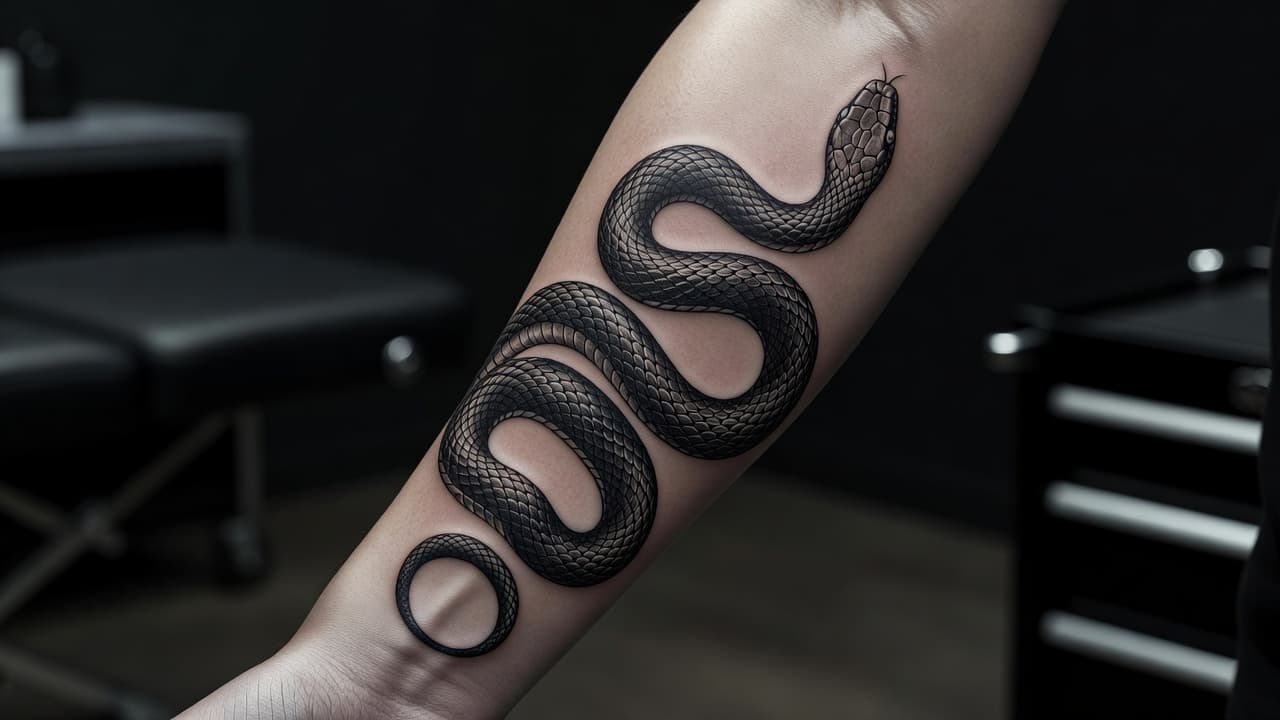
The snake tattoo meaning is one of the richest in all of tattooing. Because a serpent sheds its skin and emerges renewed, it has stood for rebirth and transformation for thousands of years — but that is only the beginning. Depending on how it is drawn and which culture it draws from, a snake can mean healing, protection, wisdom, fertility, eternity, or temptation and danger.
If you are weighing a serpent for your next piece, this guide unpacks exactly what a snake tattoo symbolizes, how the meaning shifts across cultures, what the most popular designs represent, and which styles and placements bring a snake to life. By the end you will be able to choose a serpent that says precisely what you want it to.
What Does a Snake Tattoo Mean? (Quick Answer)
A snake tattoo most commonly means rebirth, transformation, and renewal — a direct nod to the way snakes shed their old skin and emerge as something new. Layered on top of that core idea, a serpent can also symbolize healing, protection, wisdom, fertility, eternity, or temptation, with the precise meaning set by the design, the pairing, and the cultural tradition behind it. In short: it is a symbol of change and the power that comes with it.
Snake Tattoo Symbolism: The Core Meanings
Before you get into cultural specifics, it helps to know the handful of ideas that nearly every snake tattoo draws on. Most serpent designs are some combination of the following.
Rebirth and Transformation
This is the headline meaning. A snake periodically sheds its entire skin and slides out renewed, which made it an obvious emblem of starting over across countless ancient cultures. People often choose a snake tattoo to mark recovery, personal reinvention, or a hard-won fresh start. It pairs naturally with other meaningful tattoo symbols of growth and change.
Healing and Medicine
The snake is the literal symbol of medicine. The Rod of Asclepius — a single serpent coiled around a staff — is still used by medical organizations worldwide, rooted in the ancient Greek god of healing. A snake tattoo can therefore honor a caregiver, a recovery, or a life in medicine.
Protection and Guardianship
In many traditions snakes guard sacred spaces, treasure, and thresholds. A coiled, alert serpent reads as a protector — which is why snakes so often wrap around daggers, skulls, and other objects as if standing watch over them.
Wisdom and Knowledge
Quiet, watchful, and ancient, the snake has long been linked to hidden knowledge and intuition. This is the meaning that gives serpent tattoos their slightly mysterious, knowing quality.
Temptation and Danger
It would be dishonest to leave this out. In the Western Judeo-Christian tradition, the serpent of Eden cemented an association with temptation, deceit, and danger. Plenty of people deliberately lean into this darker reading — a snake can just as easily mean "do not underestimate me" as it can mean renewal.
Eternity and Cycles
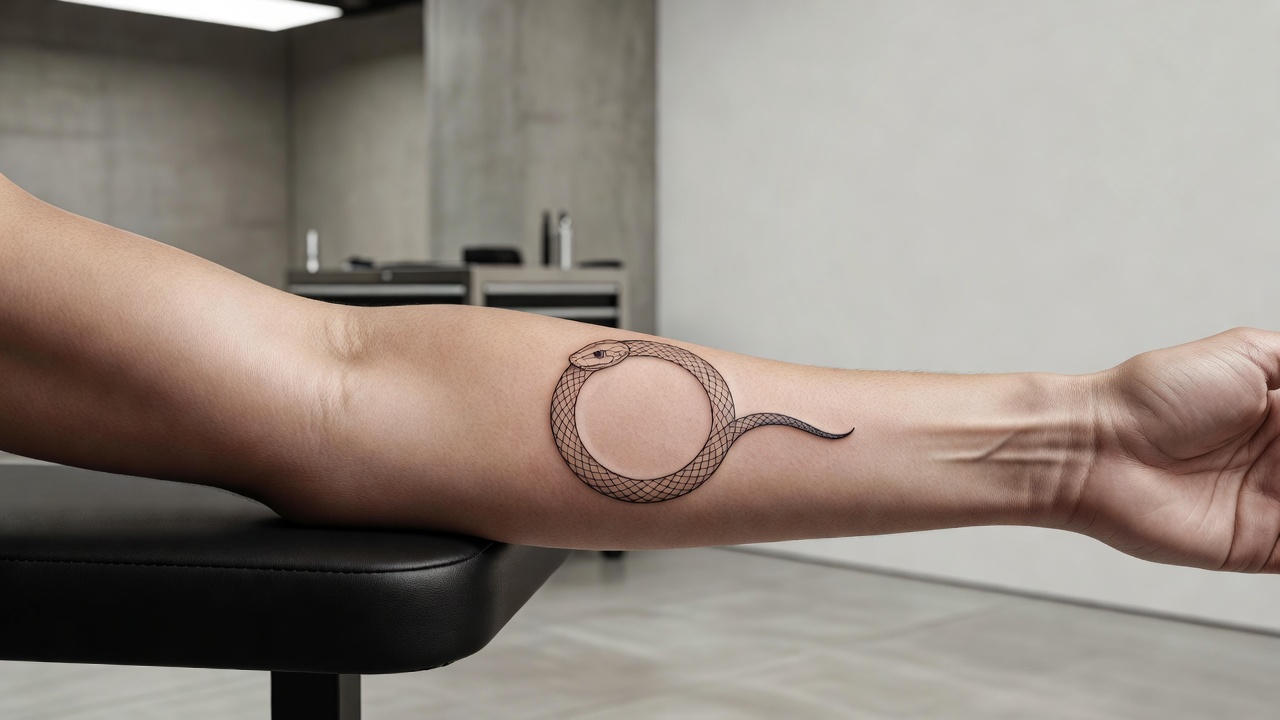
The ouroboros — a snake devouring its own tail — turns the serpent into a perfect circle representing infinity, the eternal cycle of life and death, and the unity of all things. It is one of the most enduring symbols in human history.
Snake Tattoo Meanings Across Cultures
The same animal carries strikingly different weight depending on where you look. Knowing the cultural background lets you choose a serpent that is both beautiful and meaningful.
Ancient Greece and Rome
Snakes were sacred to healing and protection — the Rod of Asclepius and the caduceus both feature serpents, and snakes were kept in temples of medicine. A Greco-Roman reading is overwhelmingly positive: health, guardianship, and renewal.
Japan (Hebi)
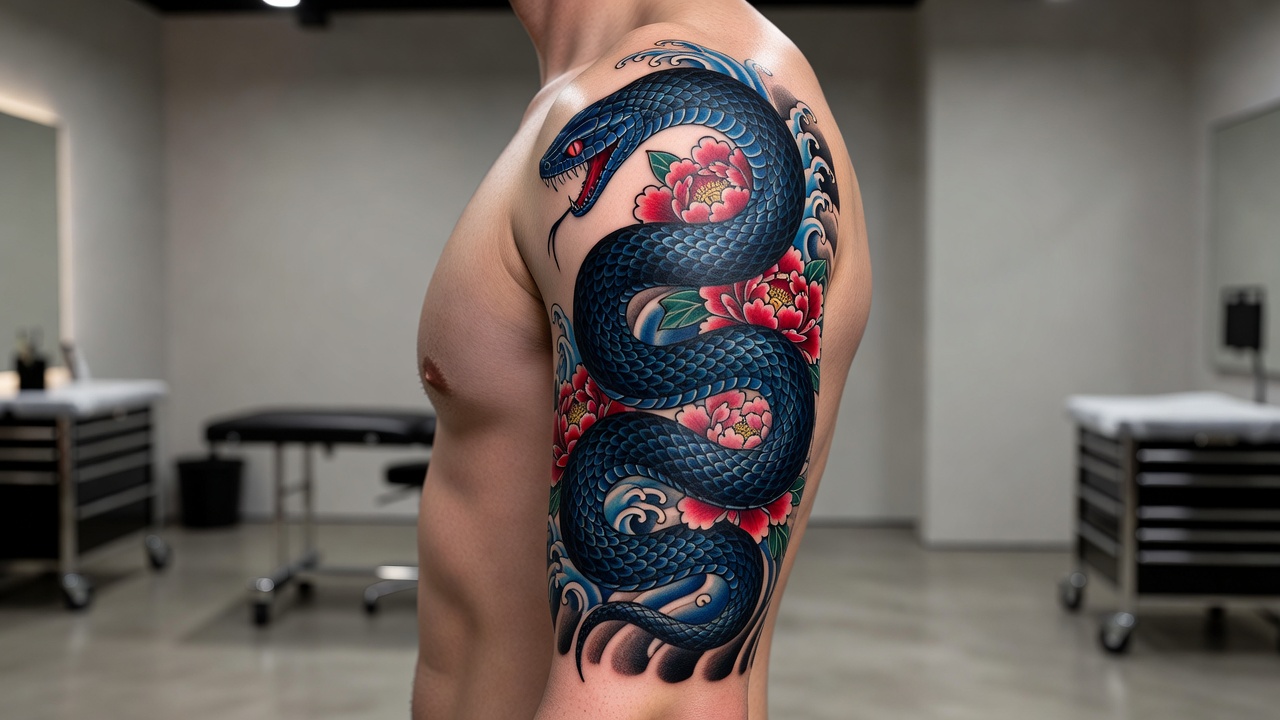
In Japanese irezumi the snake, or hebi, is protective, a guardian against illness and disaster, and a symbol of wisdom and good fortune. White snakes in particular are linked to luck and the divine. Japanese serpents are some of the most dramatic in all of tattooing — explore the wider language in our Japanese tattoo meaning guide.
Egypt
The cobra, or uraeus, sat on the pharaoh's crown as a symbol of royalty, divine authority, and protection. Egyptian snake imagery reads as power and sovereignty.
Hindu and Buddhist Traditions
The Naga — semi-divine serpent beings — are powerful protectors and guardians of water and treasure. Snakes are also associated with kundalini energy and spiritual awakening, adding a meaning of dormant power rising.
Mesoamerica
The feathered serpent Quetzalcoatl was a major deity tied to creation, wind, learning, and the boundary between earth and sky. A Mesoamerican-inspired serpent carries connotations of creation and divine knowledge.
Across most of the ancient world, the snake was a protector and a healer long before it became a symbol of temptation. Choosing your cultural lens is half of choosing your meaning.
Popular Snake Tattoo Designs and What They Mean
Most snake tattoos pair the serpent with a second element, and that pairing locks in the meaning. Here are the classics and how they read.
- Ouroboros (snake eating its tail) — eternity, infinity, the cycle of life and death, self-renewal.
- Snake and dagger — protection, danger, or triumph over a threat; a traditional-tattoo staple.
- Snake and rose — the meeting of danger and beauty, or temptation and love; one of the most popular combinations.
- Snake and skull — mortality, transformation, and the cycle of death and rebirth.
- Coiled or striking cobra — defense, power, and "do not test me" energy.
- Two intertwined snakes (caduceus) — balance, duality, and commerce or medicine depending on context.
- Snake wrapped around an arm or limb — protection and the serpent as a living, guarding presence on the body.
Best Styles for Snake Tattoos
The snake is endlessly adaptable, which is why it shows up in every major style. The style you choose shifts the mood as much as the meaning does.
Traditional / Americana
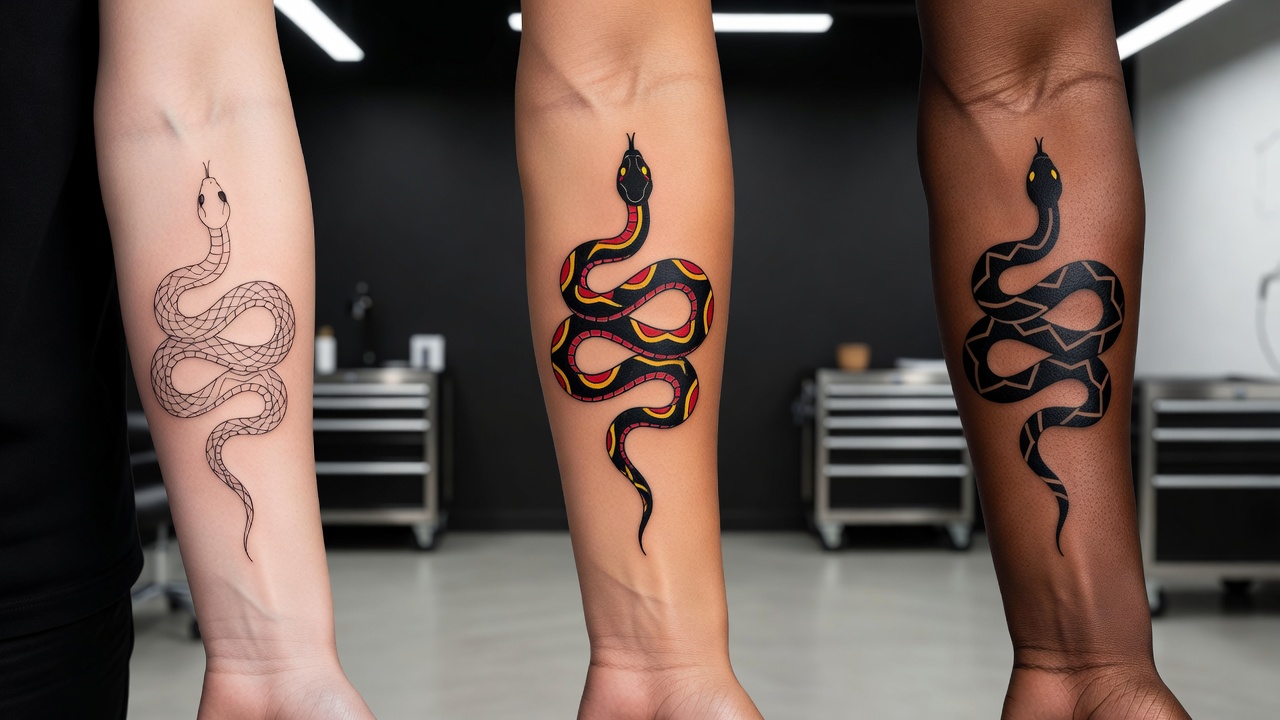
Bold outlines, a limited palette, and dramatic snake-and-dagger or snake-and-rose compositions. Ages beautifully and reads instantly. See our traditional tattoo style guide.
Japanese (Irezumi)
Large, flowing serpents with detailed scales, often integrated with peonies, waves, or wind bars. Ideal for sleeves, backs, and thighs where the snake can travel.
Fine Line and Minimalist
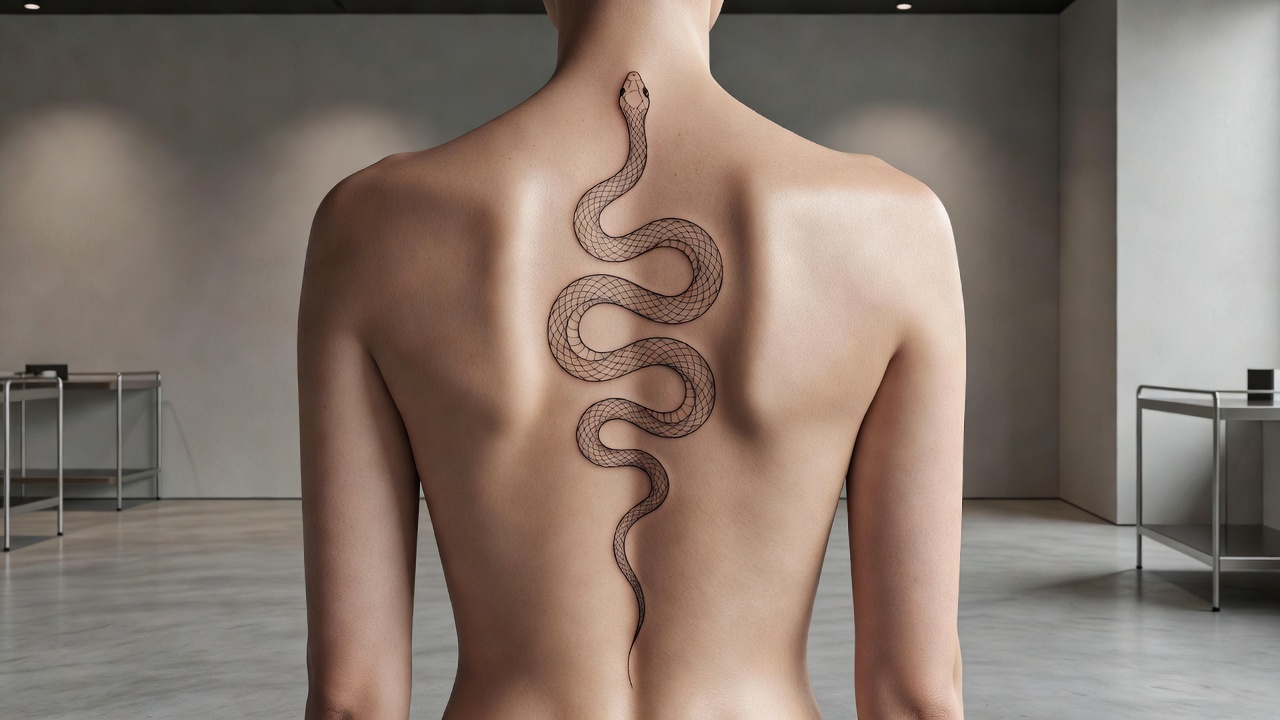
A single delicate serpent in thin, continuous linework — elegant, subtle, and modern. Perfect for smaller pieces. Our fine line tattoo guide covers how these designs age.
Blackwork and Realism
Blackwork serpents lean graphic and bold, while realism captures every scale and the glint of an eye for a striking, lifelike snake. Both make excellent statement pieces.
Best Placements for a Snake Tattoo
Because a serpent is long and naturally curved, it loves elongated placements that let it follow the lines of your body. The most flattering spots include:
- Forearm — the snake travels from wrist to elbow, highly visible and easy to design.
- Spine — a serpent descending the spine is dramatic and uses the body's natural centerline.
- Bicep / upper arm wrap — the snake coils the limb as a guardian, classic and bold.
- Thigh — a large canvas perfect for Japanese or realism serpents.
- Hand and finger — small striking snakes curl elegantly around a finger or along the side of the hand.
Placement affects pain, visibility, and how a long design ages, so it is worth planning carefully. Our guide to the best tattoo placements breaks down each spot in detail.
How to Choose a Snake Tattoo That Means What You Want
With so many possible readings, the trick is to make deliberate choices so your serpent says the right thing. Work through these decisions in order:
- Pick your core meaning — rebirth, healing, protection, temptation, or eternity. This is your anchor.
- Choose a cultural lens — a Greco-Roman healer, a Japanese guardian, an Egyptian symbol of power, or none in particular.
- Select a pairing — dagger, rose, skull, flowers, or a standalone ouroboros to sharpen the message.
- Match the style to the mood — bold traditional for power, fine line for subtlety, Japanese for grandeur.
- Plan the placement — choose a spot that fits the size and flow of your serpent.
This is exactly where an AI tattoo generator earns its keep. With INK you can describe the snake you have in mind — "a coiled cobra wrapped around a rose, fine line, for the forearm" — and see polished concepts in seconds. Swap styles, try different pairings, and AR-preview the design on your own body at real scale before you ever book an artist. It turns the long, uncertain part of designing a meaningful tattoo into something you can explore freely.
Snake Tattoo Meaning FAQ
What does a snake tattoo mean? Most often rebirth and transformation, with secondary meanings of healing, protection, wisdom, eternity, or temptation depending on the design and culture.
Is a snake tattoo good or bad luck? In most Eastern and ancient traditions it is protective and lucky; in the Western Christian tradition it can read as temptation. Your intended meaning is what counts.
What does the ouroboros mean? A snake eating its own tail symbolizes eternity, infinity, and the endless cycle of renewal.
Where do snake tattoos look best? Elongated spots that follow the body — forearm, spine, bicep, thigh, hand, and fingers.
Whatever meaning you land on, the snake rewards thought. Spend time on the design, choose your symbolism deliberately, and you will end up with a piece that carries depth for a lifetime.
Design Your Snake Tattoo Free
Describe your serpent, explore styles and pairings, and AR-preview the design on your body before you commit — all in INK. No sign-up needed.
Try INK Free →

Create Your Perfect Tattoo Design
Use AI to generate unique tattoo designs and preview them on your body before committing to ink.
Start Designing for FreeWritten by

Laura Schmitz
Tattoo Content Lead, INK
Laura Schmitz leads tattoo content at INK. She has spent years researching tattoo styles, symbolism and aftercare, and works directly with the AI tattoo generator to test how each style translates from prompt to skin — so every guide here reflects designs that are actually tattooable, not just images that look good on screen.
More about the author