
Dragon Tattoo Meaning: Symbolism, Cultures, Styles & Design Ideas
What a dragon tattoo really means — from power, wisdom and protection to good fortune and freedom — plus Eastern vs Western symbolism, popular designs, styles and placements.

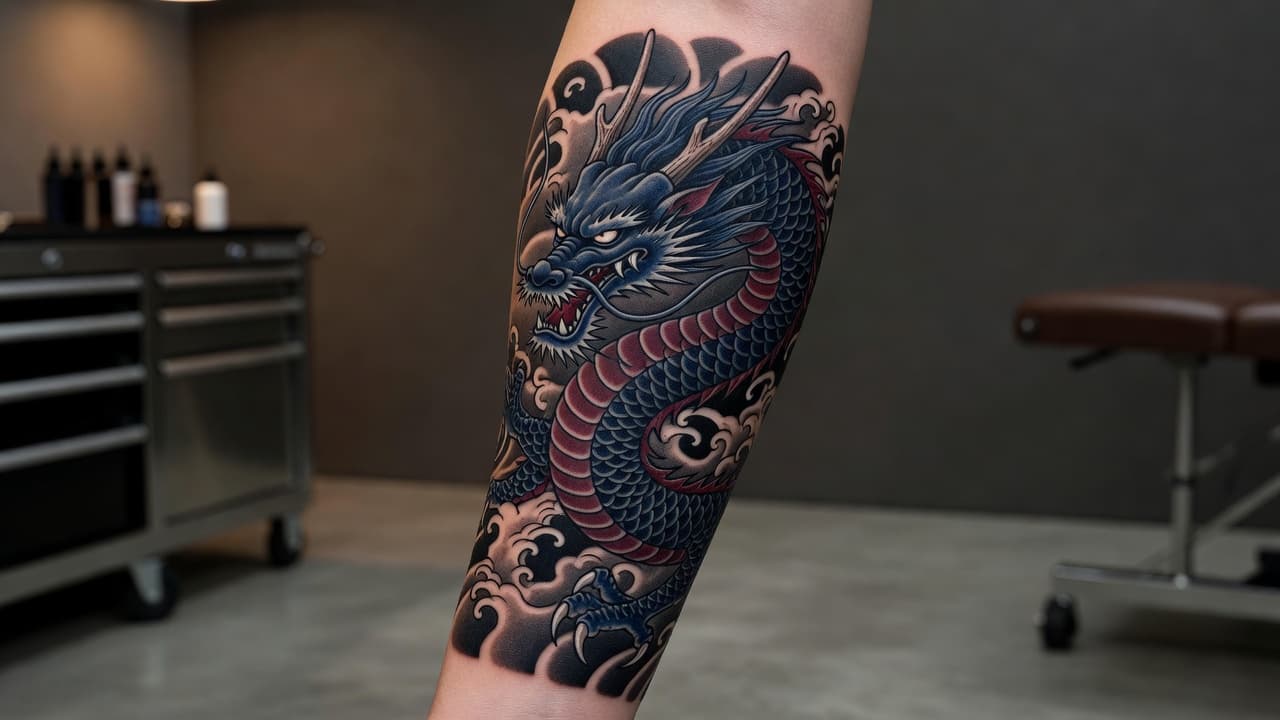
The dragon tattoo meaning is one of the most powerful in all of tattooing. Across nearly every culture on earth the dragon stands for strength, protection, and wisdom — but exactly which of those qualities it emphasizes changes dramatically depending on whether you look East or West, what color it is, and what it is doing. A coiling Japanese dragon and a winged European dragon can sit on the same arm and tell completely different stories.
If you are considering a dragon for your next piece, this guide unpacks what a dragon tattoo really symbolizes, how the meaning shifts between Eastern and Western traditions, what the colors and designs represent, and which styles and placements bring a dragon to life. By the end you will be able to choose a dragon that says exactly what you want it to.
What Does a Dragon Tattoo Mean? (Quick Answer)
A dragon tattoo most commonly means power, strength, protection, and wisdom. In Eastern cultures the dragon is a benevolent, good-luck symbol tied to water, balance, and imperial authority, while in Western cultures it represents raw, untamed power and a fierce guardian. Layered on top, the specific meaning is shaped by the dragon's color, its style, and what it is paired with — so the same animal can read as serene wisdom or unstoppable force depending on how it is drawn.
Dragon Tattoo Symbolism: The Core Meanings
Before you get into cultural specifics, it helps to know the handful of ideas that nearly every dragon tattoo draws on. Most dragon designs are some combination of the following.
Power and Strength
This is the headline meaning. A dragon is the apex creature of myth — larger, older, and stronger than anything around it — so it has always been an emblem of power, dominance, and force of will. People often choose a dragon to mark inner strength, resilience, or a hard-won sense of personal authority. It pairs naturally with other meaningful tattoo symbols of courage and growth.
Protection and Guardianship
Dragons guard treasure, temples, and thresholds in stories the world over. A coiled, watchful dragon reads as a protector, which is why dragons so often wrap around other elements — a sword, a pearl, a person's name — as if standing watch over them. A dragon tattoo can be a guardian inked permanently onto the skin.
Wisdom and Knowledge
Ancient and long-lived, the dragon has long been linked to deep wisdom and hidden knowledge, especially in Asia. This is the meaning that gives Eastern dragon tattoos their calm, knowing, almost philosophical quality rather than pure menace.
Good Fortune and Prosperity
In Chinese culture the dragon is overwhelmingly lucky — a bringer of rain, abundant harvests, and success. Far from a monster to be slain, it is a blessing. A dragon chosen for this meaning is a wish for prosperity and good fortune as much as a symbol of strength.
Freedom and the Elements
Dragons command the elements — water in the East, fire in the West — and move freely between sky, sea, and earth. That makes the dragon a natural symbol of freedom, independence, and a refusal to be contained. Many people choose a dragon precisely because it cannot be tamed.
Danger and Untamed Power
It would be dishonest to leave this out. In the Western tradition the dragon is often the threat the hero must overcome — a fire-breathing force of destruction. Plenty of people deliberately lean into this darker reading; a dragon can just as easily mean "do not test me" as it can mean wisdom or luck.
Dragon Tattoo Meanings Across Cultures
The same creature carries strikingly different weight depending on where you look. Knowing the cultural background lets you choose a dragon that is both beautiful and meaningful.
China (Long)
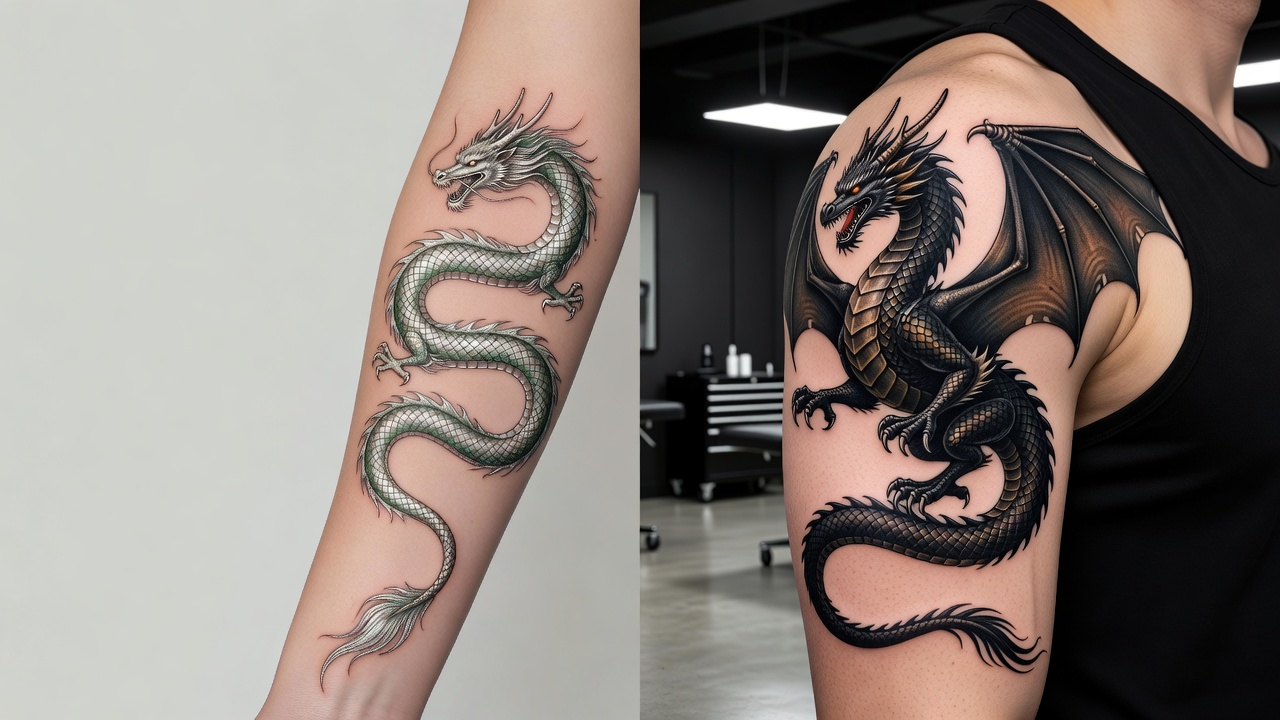
The Chinese dragon, or long, is the most benevolent dragon of all — a long, scaled, serpentine being without wings that controls water, rain, and rivers, and brings good fortune. For centuries it was the emblem of the emperor and imperial power. A Chinese dragon tattoo reads as luck, strength, and noble authority.
Japan (Ryu)
In Japanese irezumi the dragon, or ryu, is a generous and protective guardian associated with water, wisdom, and strength used for good. Japanese dragons are some of the most dramatic in all of tattooing, often paired with clouds, waves, and a flaming pearl. Explore the wider visual language in our Japanese tattoo meaning guide.
Western Europe
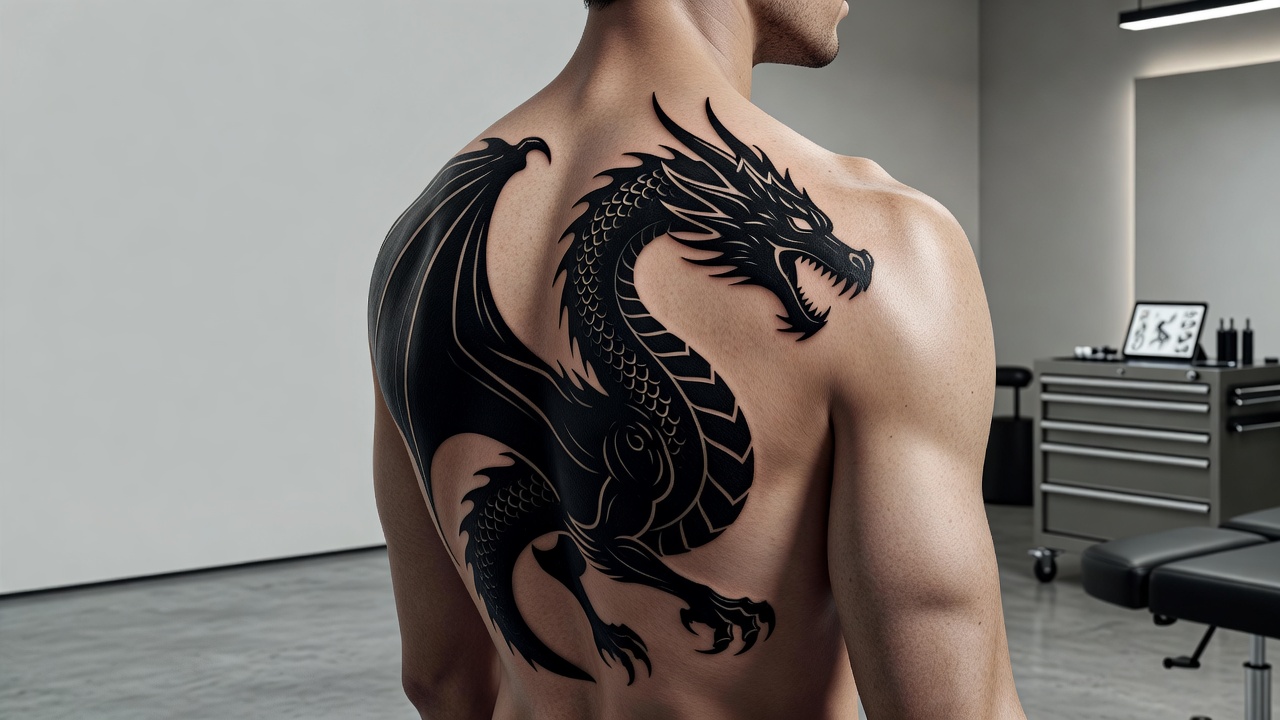
The European dragon is the bulky, winged, fire-breathing reptile of legend — a hoarder of treasure and a test of heroes. Here the dragon symbolizes raw power, danger, and guardianship, and a slain dragon stands for courage and triumph over a great trial. This is the dragon of the traditional tattoo tradition.
Celtic and Norse
Celtic dragons guard the land and represent power and the connection between earth and the spirit world, often rendered in knotwork. Norse legend gives us serpentine dragons like the world-encircling Jormungandr — closer cousins to the serpent tattoo than to the winged Western beast.
In the East the dragon is a blessing to be honored; in the West it is a power to be reckoned with. Choosing your cultural lens is half of choosing your meaning.
What Do Dragon Tattoo Colors Mean?
Especially in Chinese tradition, the color of a dragon carries its own meaning. Choosing a color is an easy way to fine-tune what your dragon says without changing the design.
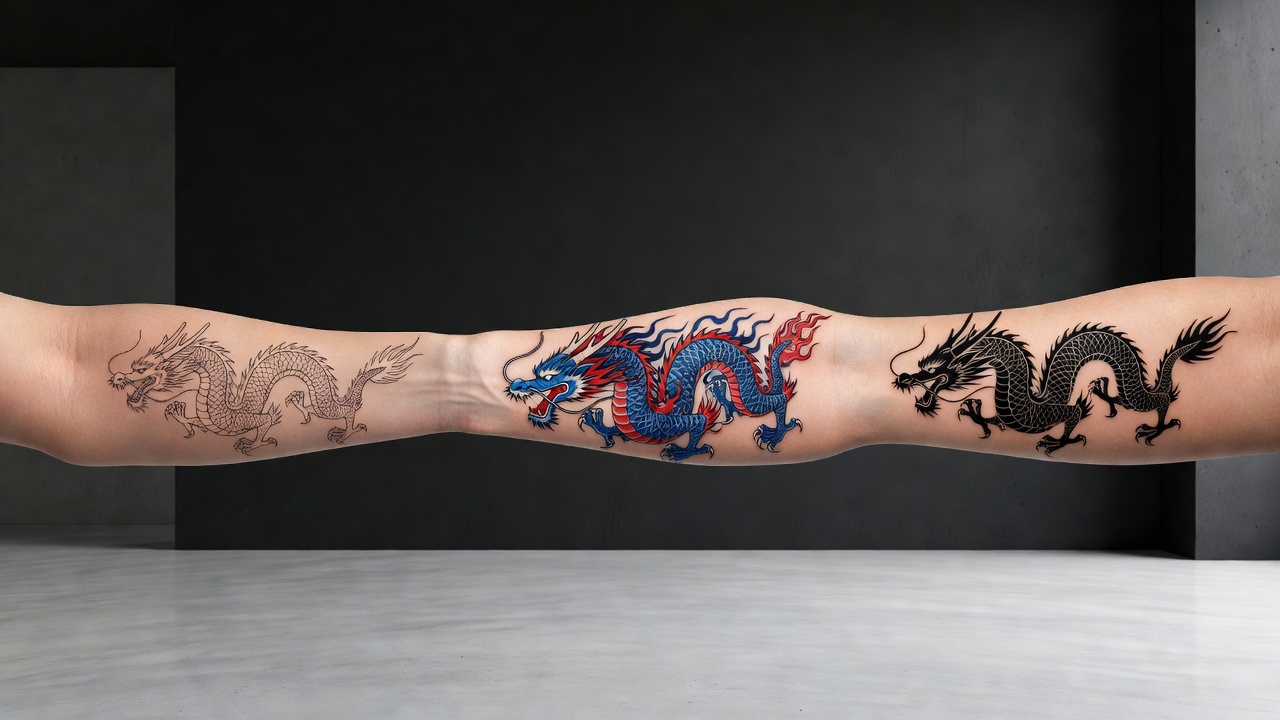
- Gold / yellow — the imperial dragon: prosperity, wealth, the highest status and honor.
- Red — passion, luck, fire, and celebration; one of the luckiest colors in Chinese culture.
- Black — experience, age, the elements, and sometimes vengeance or justice.
- Blue / green — nature, healing, growth, calm, and the renewal of spring.
- White — purity, but also mourning and the passing of life in some traditions.
Popular Dragon Tattoo Designs and What They Mean
Most dragon tattoos pair the dragon with a second element, and that pairing locks in the meaning. Here are the classics and how they read.
- Dragon and pearl (or flaming pearl) — the pursuit of wisdom, prosperity, and spiritual perfection; a staple of Japanese and Chinese designs.
- Dragon and phoenix — the balance of yin and yang, masculine and feminine, often chosen by couples as a symbol of harmony.
- Dragon and koi — perseverance and transformation, drawn from the legend of the koi that swims upstream and becomes a dragon.
- Dragon and tiger — the balance of two great forces, heaven and earth, a classic confrontation in Asian art.
- Dragon wrapped around a sword or skull — protection, power over death, and guardianship; common in Western and blackwork pieces.
Best Tattoo Styles for a Dragon
The dragon is one of the most adaptable motifs in tattooing. The style you choose changes the feeling as much as the meaning.
Japanese (Irezumi)
The definitive dragon style. Bold outlines, flowing scales, clouds and waves, and a large-scale composition that wraps the body. If you want a dragon that feels epic, this is the tradition built for it.
Blackwork and Tribal
Graphic, high-contrast dragons rendered in solid black read as bold and timeless. Celtic and tribal knotwork dragons fit naturally here, turning the creature into pure pattern and silhouette.
Fine Line and Minimalist
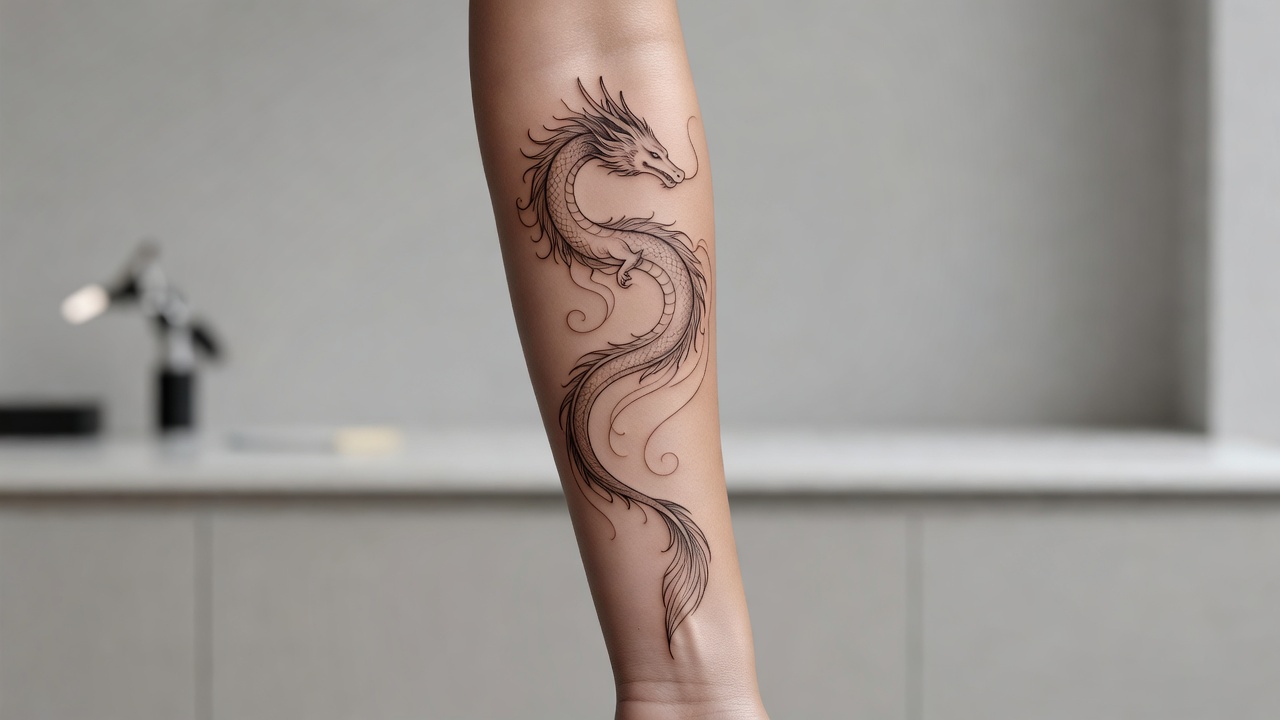
A delicate single-needle dragon proves the motif does not have to be huge to carry weight. Explore the approach in our fine line tattoo guide — perfect for a subtle, elegant dragon on the forearm or behind the ear.
Watercolor and Realism
Watercolor dragons trade hard outlines for splashes of color and energy, while realism renders the creature with dramatic depth and texture. Both turn the dragon into a centerpiece.
Where Do Dragon Tattoos Look Best?
Dragons are long, flowing, and dramatic, so they suit large, contoured placements that give them room to move. The serpentine Eastern dragon in particular is designed to follow the body's lines.
- Full or half sleeve — the classic choice; the dragon coils naturally around the arm. See our sleeve tattoo ideas for composition tips.
- Back — the largest canvas, ideal for an epic full dragon with clouds and waves.
- Chest to shoulder — lets the dragon's head sit prominently while the body flows over the shoulder.
- Thigh or calf — long vertical placements that suit the dragon's elongated form.
- Forearm — perfect for a smaller fine-line or minimalist dragon that stays visible.
Designing Your Dragon Tattoo with AI
A dragon is a big commitment — in size, meaning, and time in the chair — so it is worth getting the design exactly right before any ink is permanent. This is where designing with AI helps. With INK you can describe your dragon in plain language ("a coiling Japanese dragon chasing a flaming pearl, blue and grey, half sleeve"), explore Eastern and Western interpretations side by side, try different colors and pairings, and refine the composition until it matches the meaning you want.
Because you can iterate freely, you can compare a serene Chinese dragon against a fierce winged one, test how the design flows across your arm, and AR-preview it on your own body before committing. When you are ready, you bring a clear, considered reference to your artist instead of a vague idea. New to the process? Our first tattoo guide walks through what to expect.
Choosing Your Dragon
The dragon rewards thought more than almost any other motif. The same creature can mean serene wisdom and good fortune or untamed power and danger, and the difference comes down to the culture, color, pairing, and style you choose. Decide what you want your dragon to stand for first, then build the design around that meaning.
What does a dragon tattoo mean? Most often power, strength, protection, and wisdom, with Eastern dragons leaning toward luck and balance and Western dragons toward raw force and guardianship.
Eastern or Western? Eastern dragons are long, wingless, benevolent symbols of wisdom and fortune; Western dragons are winged, fire-breathing emblems of power and danger.
Do colors matter? Yes — gold means prosperity, red means luck, black means experience, blue and green mean nature, and white means purity or mourning.
Where does it look best? Large, flowing placements that follow the body — sleeve, back, chest, thigh, or calf.
Whatever meaning you land on, take your time with the design. Choose your culture and color deliberately, and you will end up with a dragon that carries depth for a lifetime.
Design Your Dragon Tattoo Free
Describe your dragon, explore Eastern and Western styles, colors and pairings, and AR-preview the design on your body before you commit — all in INK. No sign-up needed.
Try INK Free →

Create Your Perfect Tattoo Design
Use AI to generate unique tattoo designs and preview them on your body before committing to ink.
Start Designing for FreeWritten by

Laura Schmitz
Tattoo Content Lead, INK
Laura Schmitz leads tattoo content at INK. She has spent years researching tattoo styles, symbolism and aftercare, and works directly with the AI tattoo generator to test how each style translates from prompt to skin — so every guide here reflects designs that are actually tattooable, not just images that look good on screen.
More about the author