
Cross Tattoo Meaning: Symbolism, Faith & Design Ideas
What a cross tattoo really means — faith, sacrifice and redemption in Christian tradition, Celtic symbolism, and personal remembrance — plus the best styles and placements.

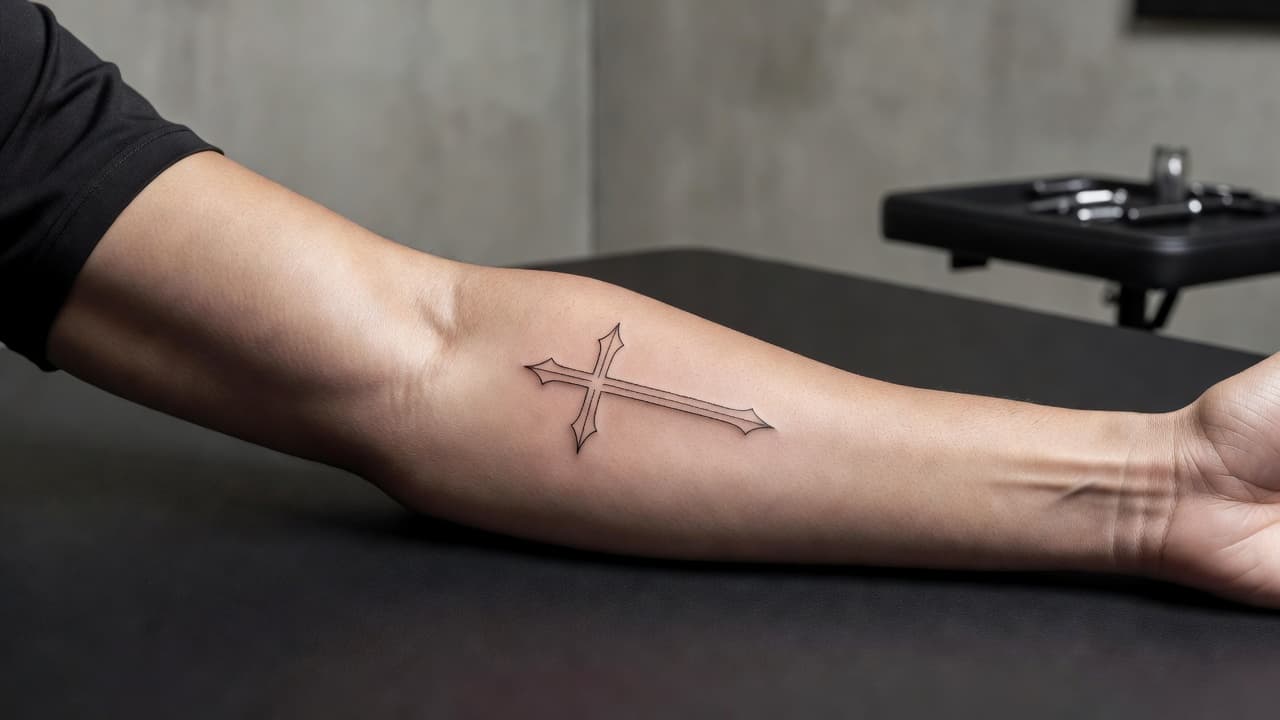
Cross tattoo meaning is rooted in one of the oldest and most recognizable symbols in human history — a shape that has represented faith, sacrifice, and hope across nearly every culture that has adopted it. Long before it became a tattoo staple, the cross marked graves, crowned churches, and appeared on flags and coats of arms, and that centuries-deep weight is exactly why it remains one of the most requested tattoo designs today.
In short: a cross tattoo most commonly symbolizes faith, sacrifice, and hope, though the specific meaning depends heavily on context. Worn as a Christian symbol, it points to the crucifixion and redemption. Worn as a Celtic cross, it leans toward heritage, eternity, and the balance of the four directions. Worn as a memorial piece, it becomes a deeply personal marker of loss and remembrance rather than a religious statement at all. This guide walks through where each of those meanings comes from, how styles and placement change the read, and how to design a cross tattoo that carries the specific meaning you want.
What Does a Cross Tattoo Symbolize? (Quick Answer)
At its core, a cross tattoo symbolizes belief in something larger than yourself — faith, sacrifice, redemption, or hope, depending on the wearer. Because the cross has been adopted by so many traditions over so many centuries, it rarely reads as a single fixed meaning; instead, the surrounding details do the work of narrowing it down. A plain crucifix leans religious. A ringed Celtic cross leans toward heritage. A cross with a name and date leans toward memorial. Understanding those distinctions helps you choose a design that says exactly what you mean it to say.
Cross Tattoo Meaning in Christianity
The cross is the central symbol of Christianity, representing the crucifixion of Jesus Christ and, through it, sacrifice, redemption, and salvation by faith. It has held that role for roughly seventeen centuries, since the Christian cross became widely adopted as an emblem of the faith in the 4th century CE, eventually appearing on everything from church architecture to national flags.
For wearers drawing on this meaning, a cross tattoo is usually a personal declaration — a permanent statement of belief, gratitude, or commitment to faith rather than a purely decorative choice. Many people place a cross tattoo somewhere visible, like the wrist or forearm, specifically so the symbol stays in view as a daily reminder. Others choose a more private placement, treating the meaning as something held close rather than displayed. Either way, the simplicity of the shape is part of its power: it doesn't need companion imagery to communicate what it stands for.

Celtic Cross Tattoo Meaning
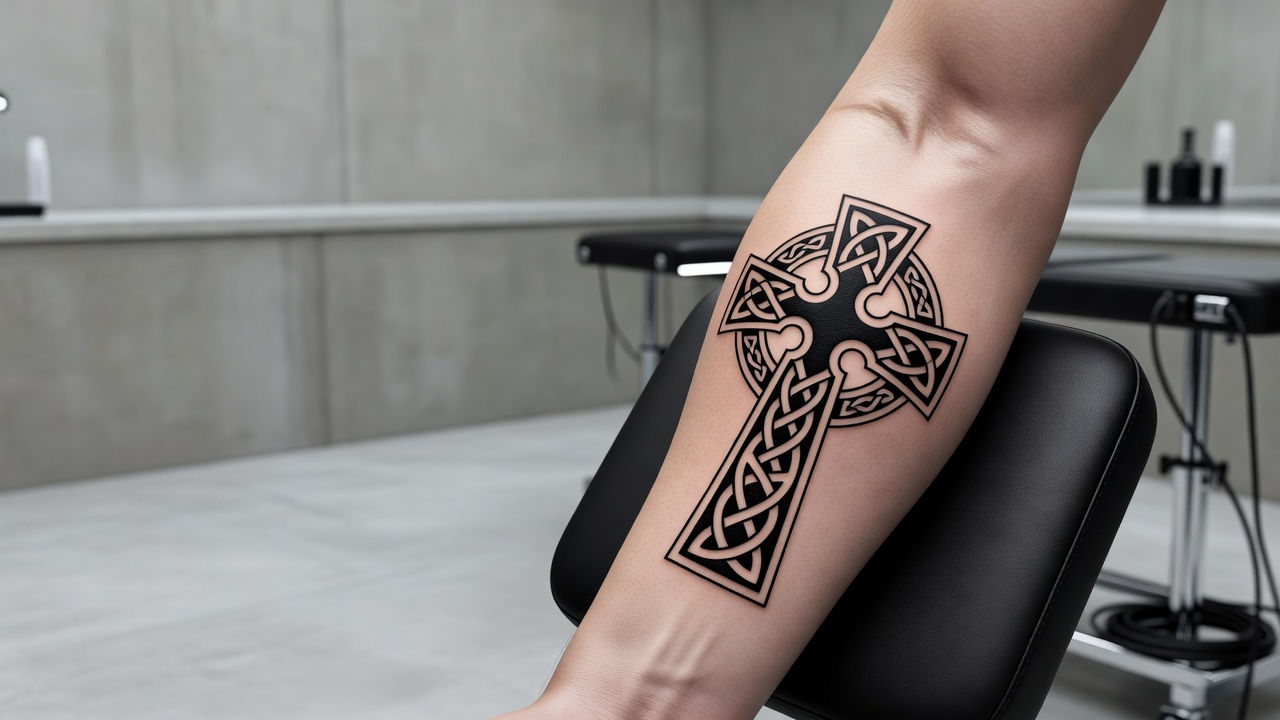
Add a ring where the arms of the cross intersect and the meaning shifts toward heritage. The Celtic cross traces back to early medieval Ireland and Britain, where high stone crosses combined Christian faith with older Celtic visual traditions. The ring itself has been interpreted several ways over time — as a halo, as a symbol of eternity with no beginning or end, as the sun, or as a representation of the four cardinal directions and the four classical elements.
Today, a Celtic cross tattoo usually carries a dual meaning: faith, layered with a specific nod to Irish, Scottish, or Welsh ancestry. The design lends itself naturally to intricate knotwork along the arms and ring, which is part of why it remains popular as a larger, more detailed piece rather than a minimal one. If heritage matters as much to you as faith does, this is typically the version to choose over a plain crucifix.
The ring on a Celtic cross is what separates it from a standard crucifix — and it's also what carries most of its extra meaning, standing in for eternity, the sun, or the balance of the four directions.
Memorial & Personal Cross Tattoo Meaning
Beyond religion and heritage, the cross is one of the most common shapes chosen for memorial tattoos, honoring a loved one who has died. Paired with a name, initials, or a short date range, a memorial cross signals that the loss is held with reverence and hope rather than grief alone — which is a large part of why the shape endures even among wearers who don't practice a specific faith. Our memorial tattoo ideas guide covers other ways to honor someone with ink if you're weighing your options.
For non-religious wearers more broadly, a cross tattoo can also stand in for personal strength, protection, or a private values system — honesty, resilience, or simply "doing the right thing" — without any specific religious claim attached. Because the shape is so universally recognized, it communicates that kind of meaning clearly even without extra symbolism layered on top, similar to how our anchor tattoo meaning guide shows a single simple shape carrying multiple, sometimes overlapping, interpretations.
Popular Cross Tattoo Styles
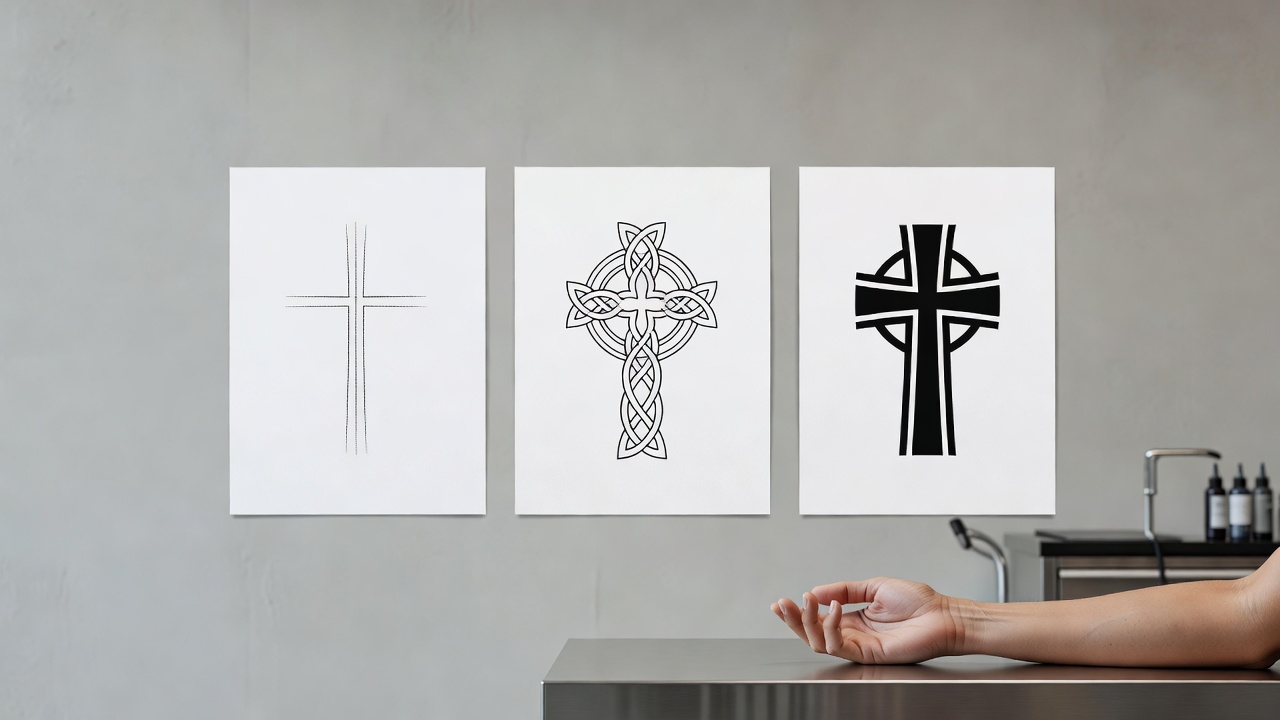
The cross adapts cleanly to nearly every tattoo style, which is part of why it stays popular across generations of wearers:
- Fine-line minimalist — a single clean outline with no shading, the most popular choice for a small wrist, finger, or behind-the-ear cross. See our fine-line tattoo guide for more on this approach.
- Celtic knotwork — a ringed cross with interlacing linework along the arms, usually sized larger to leave room for the detail to read clearly.
- Blackwork / geometric — solid fills or angular geometric patterns replacing traditional shading, often paired with dot-work or sacred-geometry accents.
- Gothic or ornate — a heavier cross with decorative flourishes, sometimes combined with roses, wings, or scripture text for a larger memorial or devotional piece.
Best Placements for a Cross Tattoo
Placement mostly comes down to how much detail the design carries and whether you want it visible day to day:
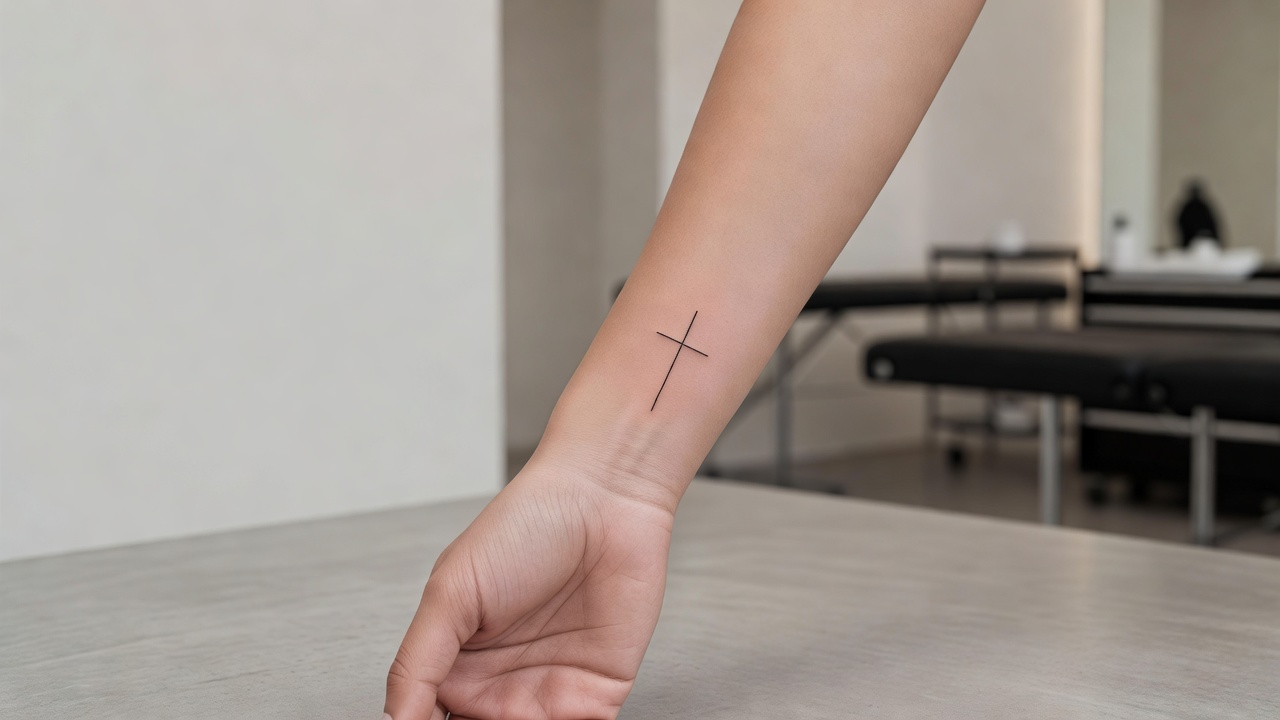
- Wrist or forearm — the most popular spot for a small, simple cross that stays visible as a daily reminder.
- Finger or behind the ear — good for a very minimal, single-line cross outline.
- Chest, over the heart — a common choice for faith or memorial pieces meant to feel close and personal rather than public.
- Back or upper arm — better suited to larger, more detailed Celtic or gothic crosses with knotwork or added imagery. Check our best tattoo placements guide for pain levels and sizing at each spot.
Designing Your Cross Tattoo with AI
Because so much of a cross tattoo's meaning comes from its details — the ring, the knotwork, a name or date, the overall weight of the lines — it helps to compare several versions before deciding. With INK you can describe the cross you have in mind ("a fine-line cross with a small ring, sized for the wrist") and generate multiple takes in seconds, comparing a minimal crucifix against a more ornate Celtic version without committing to either.
You can also test how adding a name, a date, or knotwork changes the overall feel, and use AR try-on to see the design at true scale on your own wrist, forearm, or chest before you ever sit down with an artist. If this is your first tattoo, our first tattoo guide and our broader meaningful tattoo symbols guide are both useful next stops for narrowing down what you want the piece to say.
Choosing Your Cross
A cross tattoo carries centuries of meaning inside one of the simplest shapes in tattoo art, and that simplicity is exactly why it still works: whether you're drawing on Christian faith, Celtic heritage, or a personal need to honor someone you've lost, the core idea of belief and reverence translates cleanly into ink. Decide which layer of that meaning matters most to you, then let the style, ring, and any personal details follow from there.
What does a cross tattoo mean? Most commonly faith, sacrifice, and hope — belief in something larger than yourself.
Does a Celtic cross mean something different? Yes — the ring adds heritage and eternity to the base meaning of faith.
Can it be a memorial piece? Yes — paired with a name or date, a cross is one of the most common ways to honor a loved one who has died.
Where does it look best? Wrist and finger for something small and simple, chest for a personal faith piece, back or upper arm for a larger, more detailed Celtic or gothic cross.
Design Your Cross Tattoo Free
Describe your cross, test Celtic knotwork or memorial details, and AR-preview the design on your body before you commit — all in INK. No sign-up needed.
Try INK Free →

Create Your Perfect Tattoo Design
Use AI to generate unique tattoo designs and preview them on your body before committing to ink.
Start Designing for FreeWritten by

Laura Schmitz
Tattoo Content Lead, INK
Laura Schmitz leads tattoo content at INK. She has spent years researching tattoo styles, symbolism and aftercare, and works directly with the AI tattoo generator to test how each style translates from prompt to skin — so every guide here reflects designs that are actually tattooable, not just images that look good on screen.
More about the author