
Anchor Tattoo Meaning: Symbolism, History & Design Ideas
What an anchor tattoo really means — steadfastness, hope, and being safely grounded — its roots in sailor tradition and Christian symbolism, plus the best styles and placements.

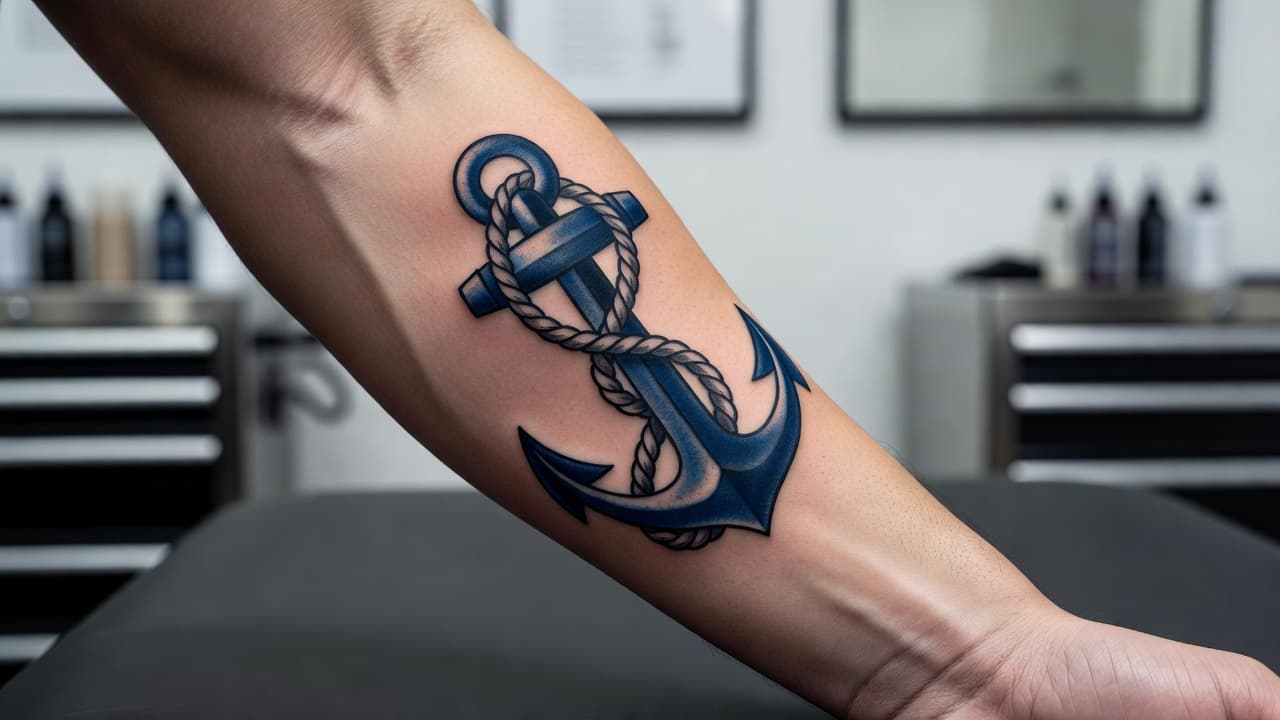
Anchor tattoo meaning comes down to one simple image doing a lot of symbolic work: a shape whose entire job is to keep something steady when the water gets rough. That single function is why the anchor has stayed one of the most requested tattoo designs for centuries, worn by sailors marking their voyages, Christians marking their faith, and, today, anyone who wants a permanent reminder to stay grounded.
In short: an anchor tattoo most often symbolizes strength, stability, and hope — the idea of holding steady through difficulty instead of drifting. The specific shade of that meaning shifts depending on where the tradition comes from: nautical culture reads it as survival and loyalty at sea, Christian symbolism reads it as hope and faith, and modern wearers often use it to represent family, sobriety, or simply being well-grounded. This guide walks through where each of those meanings comes from, what a rope or chain adds to the design, and how to choose a style and placement that fits the meaning you want to carry.
What Does an Anchor Tattoo Symbolize? (Quick Answer)
At its core, an anchor tattoo symbolizes steadfastness, security, and the strength to hold your ground. A ship's anchor exists for one reason — to keep a vessel from being pulled off course by wind and current — and that function maps cleanly onto human experience: staying committed when life gets turbulent, remaining loyal to people and places that matter, and finding a sense of calm even under pressure. Everything else — sailor tradition, Christian symbolism, family meaning — builds on that same base idea of being anchored rather than adrift.
Anchor Tattoo Meaning in Sailor & Naval Tradition
The anchor's tattoo history is inseparable from maritime life. Sailors have been among the most heavily tattooed groups since at least the 18th century, and by the 19th and early 20th centuries, port cities like New York, Boston, and San Francisco were full of naval and merchant sailors marking their time at sea with ink. An anchor was one of the most common choices because it did double duty: it signaled a real occupation and lifestyle, and it carried a wish for safe passage on dangerous water.
Within that tradition, small details carried real meaning. A single anchor often indicated that the wearer had crossed the Atlantic or served in the merchant marine, the fleet of civilian ships that has historically carried military cargo alongside commercial goods. Two crossed anchors could mark rank or a boatswain's role in some naval traditions. Even now, an anchor tattoo often nods to this history — a way of claiming a connection to the sea, to military or maritime service, or simply to the resilience that lifestyle demanded.
Anchor Tattoo Meaning in Christianity
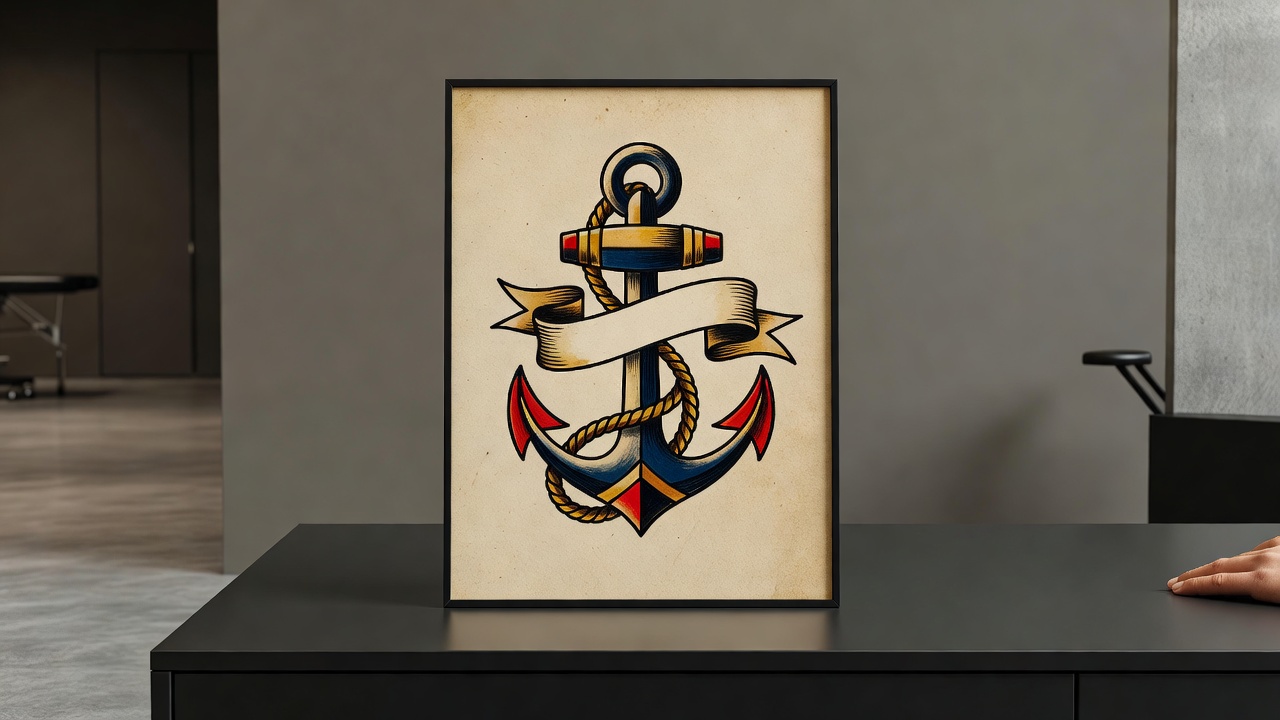
Long before it was a sailor's mark, the anchor was a Christian symbol of hope. The association comes from Hebrews 6:19, which describes hope as "an anchor for the soul, firm and secure." Early Christians in Rome leaned on that verse heavily, and the anchored cross became one of the oldest Christian symbols on record, appearing in catacomb inscriptions dating back close to the 1st century CE.
Part of what made the anchor useful during that period was its disguise: its shape could pass as a simple nautical mark while quietly doubling as a cross, letting Christians identify their faith to one another during times when displaying a cross openly could bring persecution. For anyone drawing on this meaning today, an anchor tattoo can represent hope, faith, and a steady spiritual foundation rather than — or alongside — its nautical roots.
What Does an Anchor with a Rope or Chain Mean?
Rope is the most common addition to an anchor tattoo, and it usually reinforces the core meaning: something is deliberately tied down rather than left to drift. People often use a roped anchor to represent a marriage, a family, a hard-won recovery, or a home they feel grounded by — the rope stands for the connection that keeps them steady. Some wearers add a name, a date, or a set of coordinates along the rope itself to make that connection explicit rather than symbolic.
Chain links complicate that reading. A chain can still mean commitment, but heavier or broken chain imagery is sometimes used to represent the flip side of being anchored — feeling held back, restricted, or weighed down by an obligation. Neither reading is more "correct" than the other; the rest of the design usually makes the intended meaning clear. A neatly coiled rope with a rose or a name banner leans toward devotion, while a rusted anchor dragging broken chain leans toward struggle or a hardship that was overcome. If you want the design to read unambiguously as hope rather than restriction, lean on clean rope and a bright, intact anchor rather than rust and heavy links.
The anchor's meaning has always depended on context — what it's tied to, and why. A rope means something different than a chain, and a bare anchor means something different than one wrapped in a banner with a name on it.
Popular Anchor Tattoo Styles
The anchor has been reinterpreted across nearly every major tattoo style without losing its core shape:
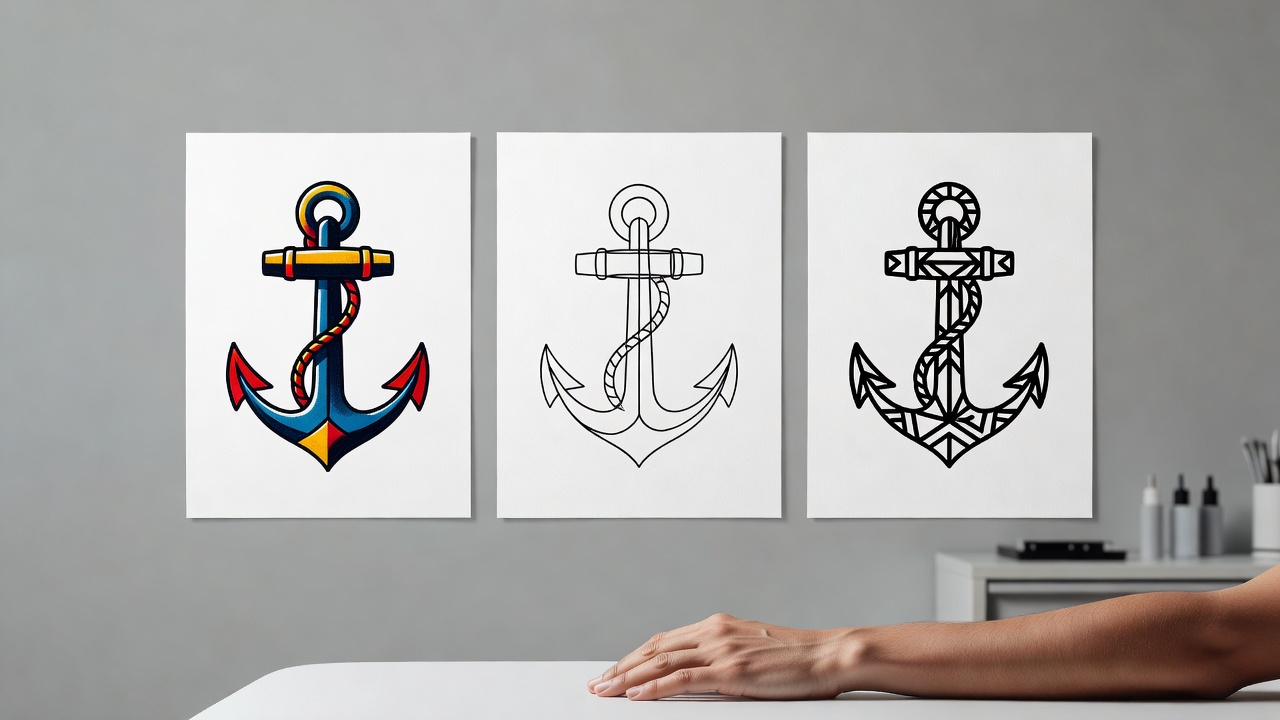
- Traditional Americana — bold black outlines, solid color fills (often navy, red, and gold), and companion imagery like roses, swallows, or banners. This is the classic sailor-style anchor. Our traditional tattoo style guide covers the broader look.
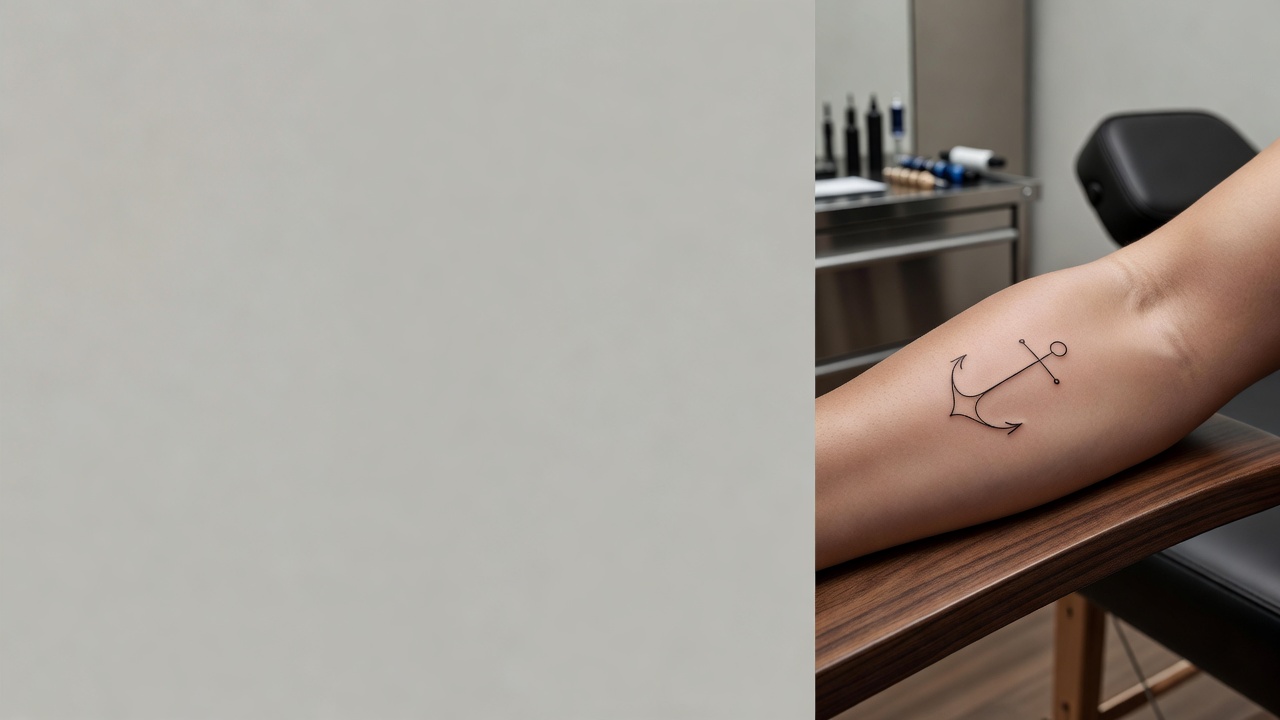
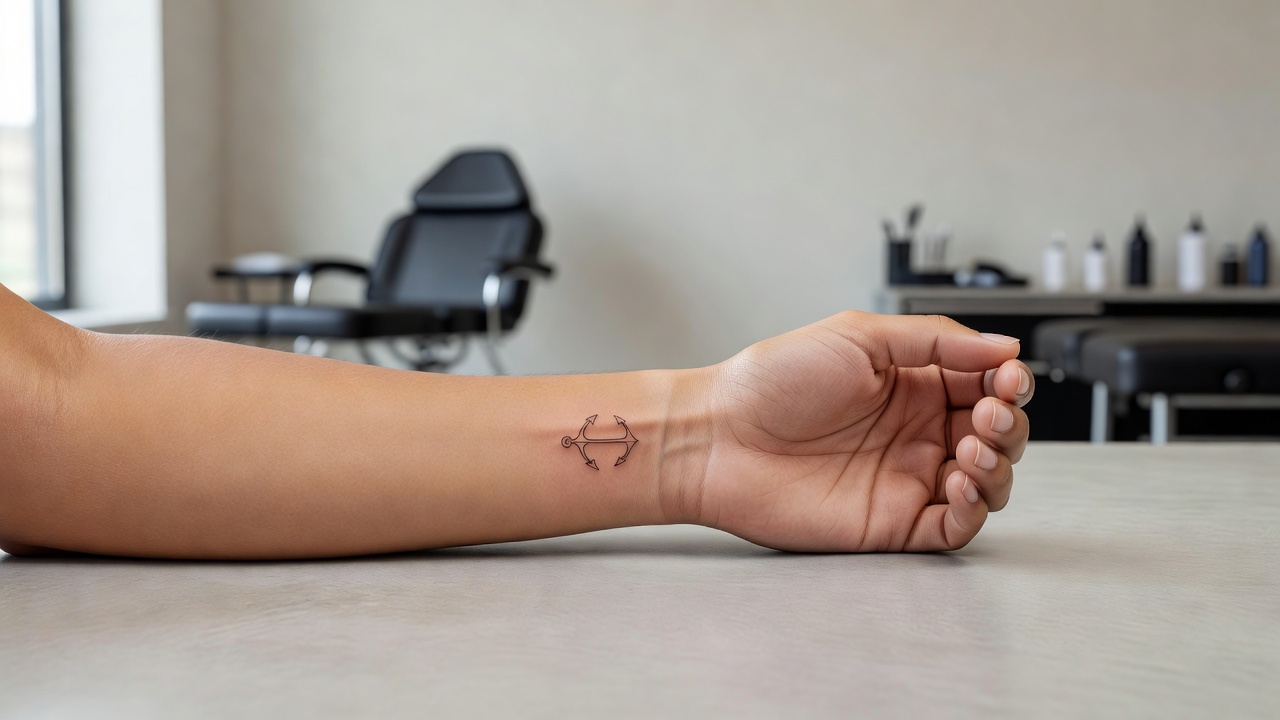
- Fine-line minimalist — a single clean outline with no shading, popular for small wrist or ankle pieces. See our fine-line tattoo guide for more on this approach.
- Blackwork / geometric — solid fills or geometric linework replacing traditional shading, often paired with sacred-geometry patterns or a compass.
- Nautical scene — the anchor combined with a ship's wheel, waves, a lighthouse, or a compass to build a fuller maritime story across a larger piece like a forearm or calf.
Best Placements for an Anchor Tattoo
Placement mostly comes down to how much detail the design carries and how visible you want it to be:
- Wrist or forearm — the most popular spot; a small anchor reads clearly here, and a larger one has room to add rope or a banner.
- Ankle or calf — a natural fit for the nautical theme and easy to keep visible or covered.
- Behind the ear or on a finger — good for a very small, minimal anchor outline.
- Chest or upper arm — better suited to larger, more detailed nautical scenes with multiple elements. Check our best tattoo placements guide for pain levels and sizing at each spot.
Designing Your Anchor Tattoo with AI
Because so much of an anchor's meaning comes from its details — the rope, the companion symbols, the exact style — it helps to see several versions side by side before deciding. With INK, you can describe the anchor you have in mind ("a fine-line anchor with a thin rope loop, small enough for the wrist") and generate multiple takes in seconds, comparing a bold traditional version against a minimalist one without committing to either.
You can also test how adding a rose, a compass, or a name banner changes the overall feel, and use AR try-on to see the design at true scale on your own wrist, forearm, or calf before you ever sit down with an artist. If this is your first tattoo, our AI tattoo generator from text guide and our first tattoo guide both walk through what to expect.
Choosing Your Anchor
An anchor tattoo carries centuries of meaning packed into a simple shape, and that is exactly why it still works: whether you're drawing on sailor tradition, Christian symbolism, or a personal sense of being grounded by family, the core idea of holding steady through hard water translates cleanly into ink. Decide which layer of that meaning matters most to you, then let the rope, companion symbols, and style follow from there.
What does an anchor tattoo mean? Most commonly strength, stability, and hope — staying grounded rather than adrift.
Does it have religious meaning? Yes — in Christianity the anchor represents hope, drawn from Hebrews 6:19 and used as a disguised cross by early Christians.
What does rope or chain add? Usually a sense of deliberate connection — family, commitment, sobriety — though heavier chain imagery can also read as restriction.
Where does it look best? Wrist and ankle for something small and simple, forearm, calf, or chest for a larger, more detailed nautical piece.
Design Your Anchor Tattoo Free
Describe your anchor, test rope and banner details, and AR-preview the design on your body before you commit — all in INK. No sign-up needed.
Try INK Free →

Create Your Perfect Tattoo Design
Use AI to generate unique tattoo designs and preview them on your body before committing to ink.
Start Designing for FreeWritten by

Laura Schmitz
Tattoo Content Lead, INK
Laura Schmitz leads tattoo content at INK. She has spent years researching tattoo styles, symbolism and aftercare, and works directly with the AI tattoo generator to test how each style translates from prompt to skin — so every guide here reflects designs that are actually tattooable, not just images that look good on screen.
More about the author