
Skull Tattoo Meaning: Symbolism, Styles, Placement & Design Ideas
What a skull tattoo really means — mortality, rebirth, protection and remembrance — plus how rose, snake, sugar skull and gothic designs shift the message, and the best styles and placements.

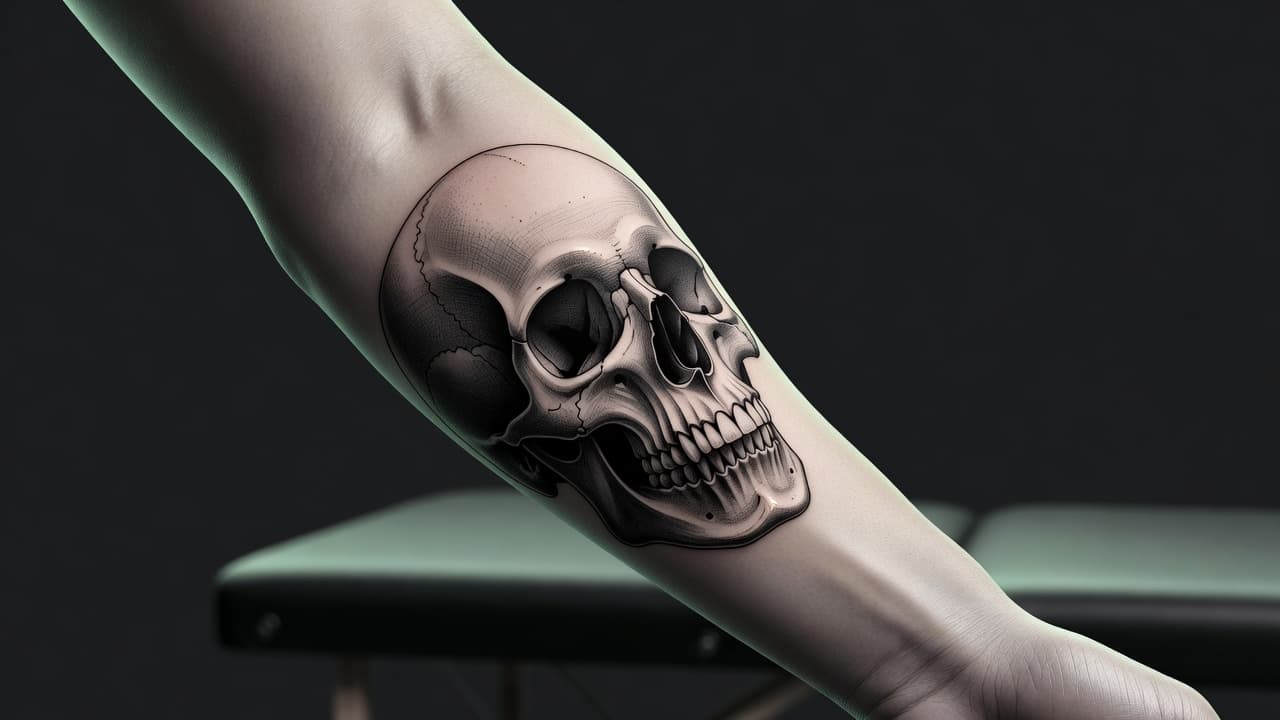
The skull tattoo meaning centers on mortality, rebirth, protection, and remembrance — a message humans have carved into art for thousands of years. Few symbols carry as much history as the skull: it has marked pirate flags, decorated Día de los Muertos altars, reminded medieval scholars of memento mori, and represented spiritual awakening in Buddhist art. That long, layered history is exactly why the skull remains one of the most requested tattoo motifs today, worn as often by people honoring a loss as by people simply drawn to its bold, graphic shape.
If you are considering a skull for your next piece, this guide breaks down what a skull tattoo really symbolizes, how pairings like a rose, a snake, or a sugar skull design shift the message, and which styles and placements let the design shine. By the end you will know exactly which skull says what you want it to.
What Does a Skull Tattoo Mean? (Quick Answer)
A skull tattoo most commonly means mortality, rebirth, protection, and remembrance, along with rebellion, danger, or celebration depending on the design. As a near-universal symbol across cultures, the skull's core message stays the same — that life is temporary — but its emotional tone shifts entirely based on what surrounds it. A skull with a rose leans toward memorial and love, a sugar skull toward celebration and remembrance, and a bare, weathered skull toward mortality and grit.
Skull Tattoo Symbolism: The Core Meanings
Before choosing a specific design, it helps to know the handful of ideas nearly every skull tattoo draws on. Most skull designs combine some mix of the following.
Mortality and Memento Mori
The skull is the classic memento mori — Latin for "remember that you have to die." Since medieval times, artists have used the skull as a reminder that life is short and time matters, a message that reads less as morbid and more as a nudge to live with intention.
Rebirth and Transformation
Paradoxically, a symbol of death is also one of the strongest symbols of renewal. In many traditions, confronting mortality is the first step toward transformation, which is why skulls often appear alongside flowers, snakes, or light imagery to represent something ending so something new can begin.
Protection and Danger
From pirate flags to biker culture, the skull has long served as a warning sign meant to intimidate or protect. Worn as a tattoo, it can represent toughness, a guarded heart, or a life that has weathered real hardship and come out the other side.
Rebellion and Freedom
The skull has been a countercultural symbol for over a century, adopted by outlaws, rock musicians, and anyone pushing back against convention. As a tattoo, it often signals independence, nonconformity, and a refusal to live by anyone else's rules.
Remembrance and Memorial
Far from being purely dark, the skull is one of the most common motifs chosen to honor someone who has died. Combined with a name, date, or a paired symbol like a rose, it becomes a lasting tribute rather than a warning — one of the reasons it shows up so often alongside other meaningful tattoo symbols chosen for memorial pieces.
What Do Different Skull Tattoo Designs Mean?
The skull is one of the most adaptable motifs in tattooing, and small changes to the pairing or decoration can shift the message considerably. Choosing the right variation is the fastest way to fine-tune what your skull communicates.
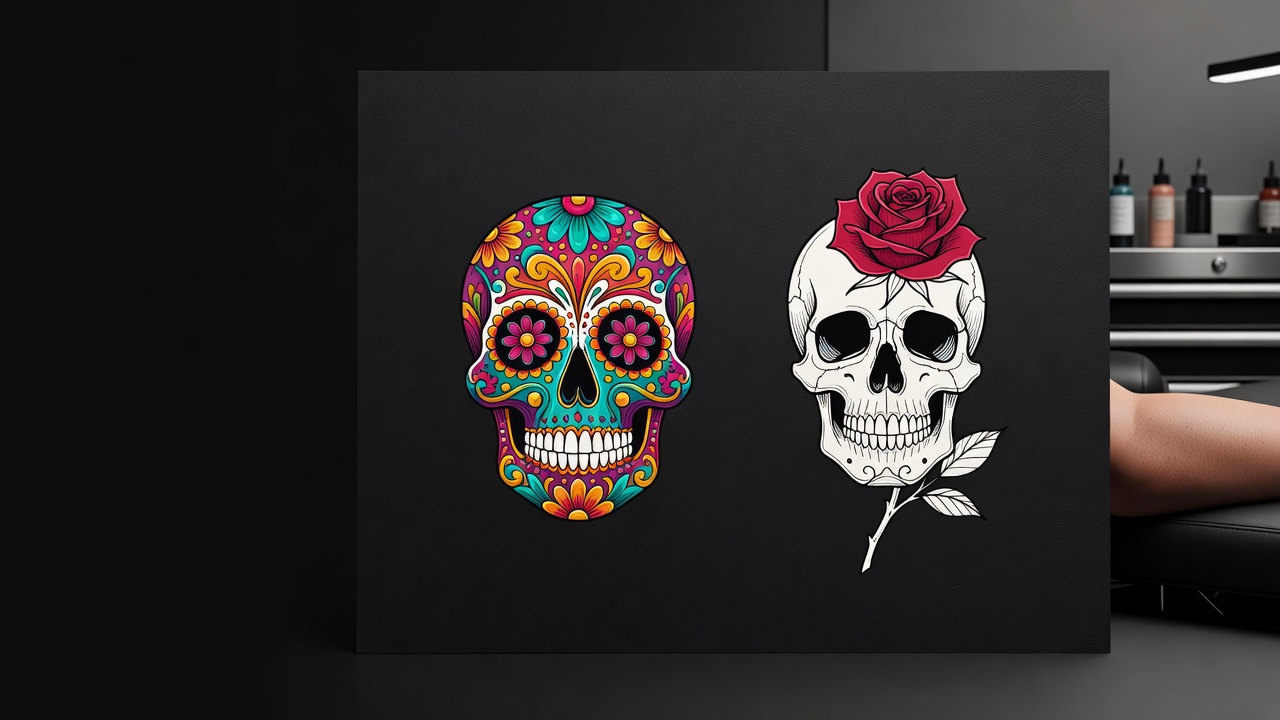
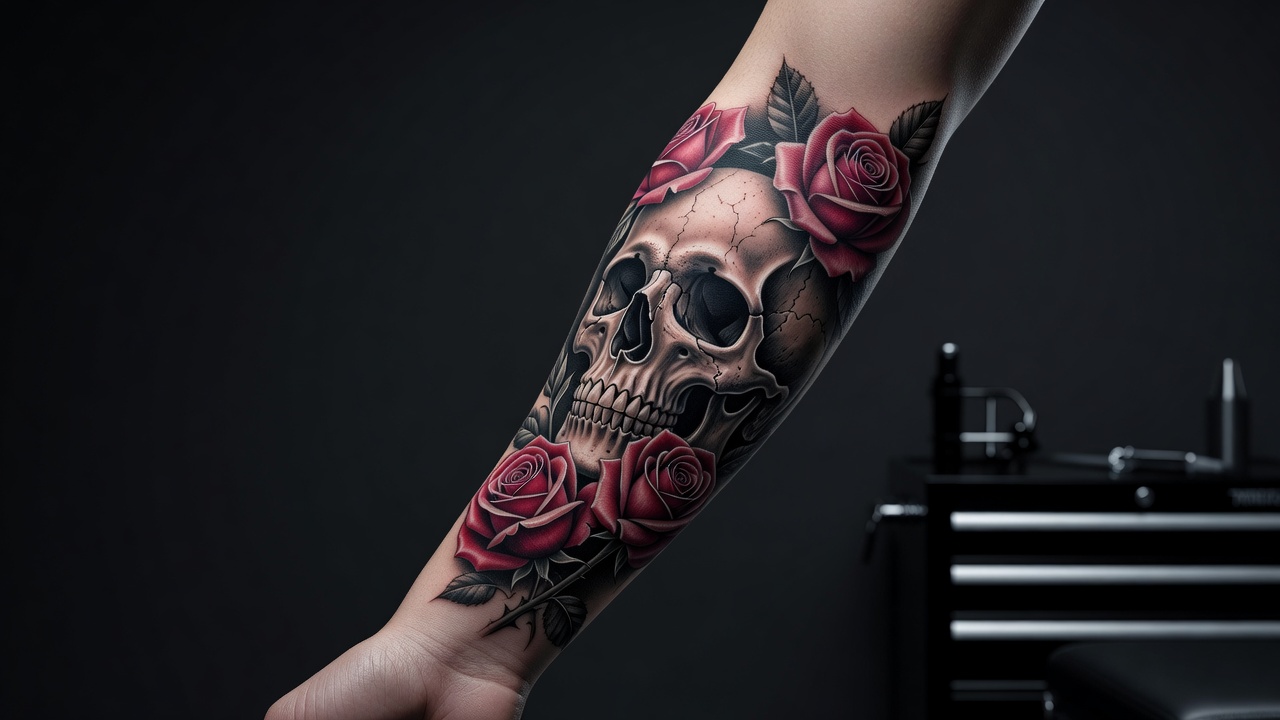
- Skull and rose — love, beauty, and mortality intertwined; a common memorial choice.
- Skull and snake — transformation, temptation, and the cycle of death and rebirth.
- Sugar skull (calavera) — remembrance and celebration, rooted in Día de los Muertos tradition.
- Skull with crown — power, legacy, and the idea that death comes for everyone equally.
- Flaming skull — intensity, danger, and a rebellious, larger-than-life energy.
- Skull with clock or hourglass — the passage of time and the urgency of living fully.
- Geometric or mandala skull — mortality expressed through modern, precise, symmetrical linework.
- Skull and dagger — danger, loyalty, and a warning not to be crossed, popular in traditional tattooing.
Cultural and Historical Skull Meanings
Part of the skull tattoo meaning comes from how consistently — and how differently — cultures around the world have treated this symbol. Leaning into one of these readings can add a more personal layer to your design.
- Western art history — the skull has served as a memento mori in European painting and jewelry since the medieval period, a direct reminder of life's impermanence.
- Mexico — Día de los Muertos — the sugar skull is a joyful symbol of remembrance rather than fear; you can read more about the holiday's history and traditions from the Smithsonian.
- Buddhism and Tibetan art — skull imagery (kapala) represents the impermanence of the physical body and serves as a meditation aid on the path to spiritual awakening, not a symbol of doom.
- Maritime and outlaw culture — the skull and crossbones marked pirate flags as a warning, a meaning later adopted by biker and rock culture as a symbol of danger and rebellion.
- Gothic and rock subculture — the modern West often embraces the skull as an aesthetic of nonconformity, independence, and a refusal to sugarcoat mortality.
A skull on its own says mortality. Add a rose, a snake, or sugar-skull detailing, and it starts telling your story instead of a generic one.
The Best Tattoo Styles for a Skull
The skull suits a wide range of styles, and the one you choose changes the feel of the piece as much as the meaning. Because a skull's power comes from strong shape and contrast, it tends to read clearly across nearly every technique.
Black-and-Grey Realism
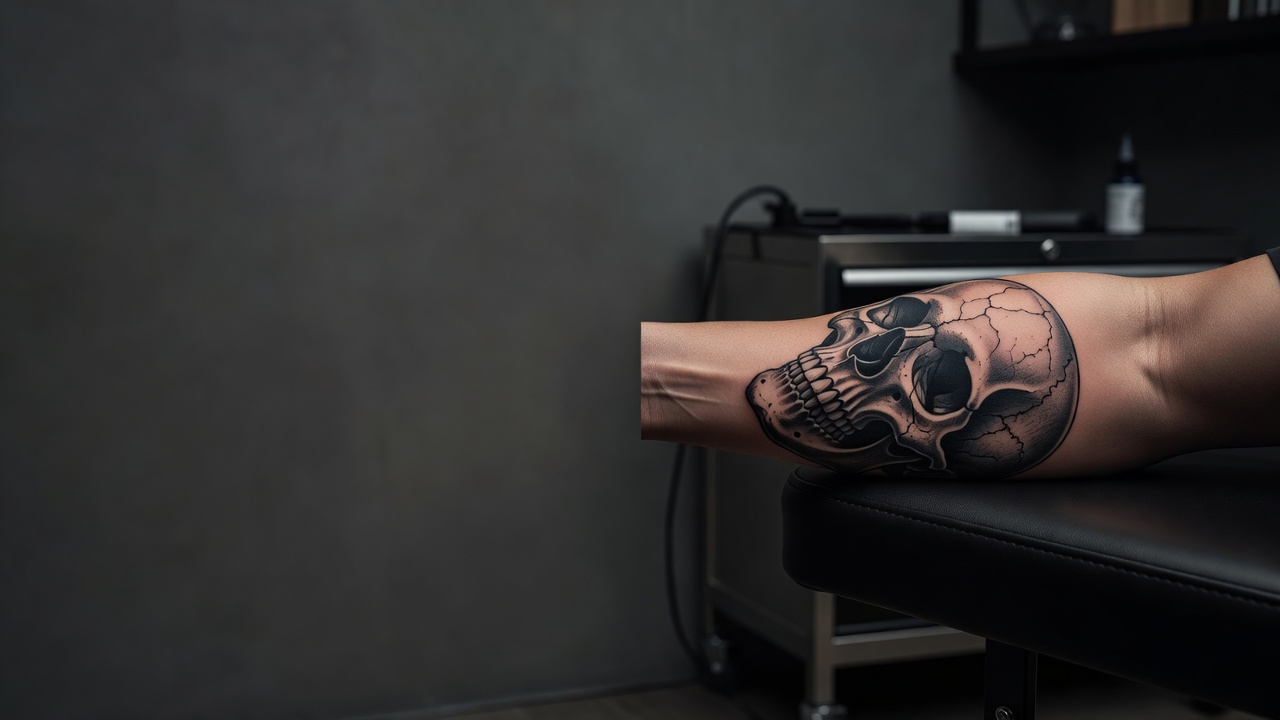
This is the most popular approach for skulls, and for good reason. Soft shading captures the texture of bone, shadowed eye sockets, and cracked detail, turning the design into a striking, lifelike centerpiece. Our realism tattoo style guide covers what it takes to get this kind of detail right.
Traditional American
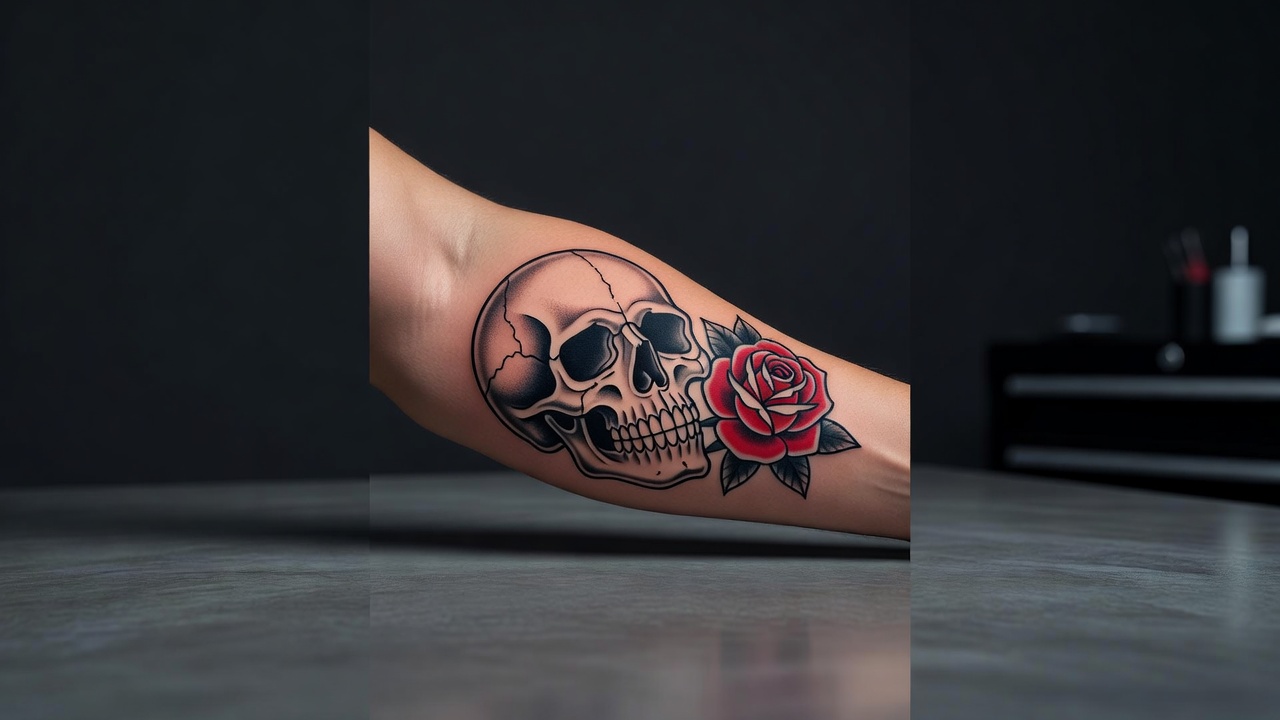
Bold outlines, a limited color palette, and a punchy graphic style define the traditional skull — often paired with a rose or dagger. Our traditional tattoo style guide shows how this classic approach holds up over decades.
Watercolor and Illustrative
Soft washes of color and painterly texture give a skull an unexpectedly vibrant, artistic quality that pairs beautifully with flowers or splashed color. Our watercolor tattoo designs guide shows a more vivid take on the motif.
Fine Line and Minimalist
A delicate single-needle skull proves the motif does not need to be large or heavy to carry meaning. Check our fine-line tattoo guide for a subtle skull outline suited to the wrist, ankle, or behind the ear.
Where Do Skull Tattoos Look Best?
Skulls have a bold, graphic shape, which means they read clearly at nearly any size — a rare quality that makes placement more flexible than with many other motifs.
- Forearm — one of the most popular spots; a skull in profile or facing forward stays easy to see.
- Upper arm and sleeve — room for a fully detailed skull or as the centerpiece of a dark, thematic sleeve.
- Chest and back — large, uninterrupted space for the most detailed pieces, including a skull with wings or flames.
- Calf — a strong, visible canvas well suited to a bold traditional skull.
- Hand and knuckles — a striking, high-visibility option for a simplified or graphic skull design.
- Wrist or behind the ear (small) — simplified, geometric, or fine-line skulls that stay readable at a smaller scale.
Still deciding where to commit? Our best tattoo placements guide covers pain levels and visibility for every area of the body.
Designing Your Skull Tattoo with AI
A skull might be a familiar motif, but a great skull tattoo is never generic — the pairing, the style, and the placement all need to work together to say something that is genuinely yours. This is where designing with AI helps. With INK you can describe your skull in plain language ("a black-and-grey realistic skull with a single rose across the jaw, forearm placement"), compare a traditional skull-and-dagger against a sugar skull design or a geometric skull against a watercolor one side by side, and refine the composition until it matches the meaning you are going for.
Because you can iterate freely, you can test a bold, front-facing skull against a subtle profile silhouette, see how roses or flames flow around your arm, and AR-preview the design on your own skin before committing to anything. When you are ready, you bring your artist a clear, considered reference instead of a vague description. New to the process? Our first tattoo guide walks through what to expect from start to finish.
Choosing Your Skull
The skull rewards a bit of thought before you commit. The same shape can mean raw mortality, quiet remembrance, or joyful celebration, and the difference comes down to the pairing, the culture, and the style you choose. Decide what you want your skull to stand for first, then build the design around that meaning.
What does a skull tattoo mean? Most often mortality, rebirth, protection, and remembrance — with the design shifting it toward love, danger, or celebration.
Does the pairing matter? Yes — a rose leans toward love and memorial, a snake toward transformation, and sugar skull detailing toward remembrance and celebration.
Which style suits a skull? Black-and-grey realism for drama, traditional American for a bold graphic look, watercolor for unexpected vibrance, and fine line for subtlety.
Where does it look best? Forearm, upper arm, chest, back, calf, or hand — the skull's strong shape reads clearly at almost any size.
Whatever meaning you land on, take your time with the design. Choose your pairing, culture, and style deliberately, and you will end up with a skull that carries real depth for a lifetime.
Design Your Skull Tattoo Free
Describe your skull, explore pairings, cultures and styles, and AR-preview the design on your body before you commit — all in INK. No sign-up needed.
Try INK Free →

Create Your Perfect Tattoo Design
Use AI to generate unique tattoo designs and preview them on your body before committing to ink.
Start Designing for FreeWritten by

Laura Schmitz
Tattoo Content Lead, INK
Laura Schmitz leads tattoo content at INK. She has spent years researching tattoo styles, symbolism and aftercare, and works directly with the AI tattoo generator to test how each style translates from prompt to skin — so every guide here reflects designs that are actually tattooable, not just images that look good on screen.
More about the author