
Heart Tattoo Meaning: Symbolism, Sacred Heart & Design Ideas
What a heart tattoo really means — love, loss, faith and devotion — its roots in Sacred Heart imagery and sailor Americana, plus the styles and placements that carry each meaning best.

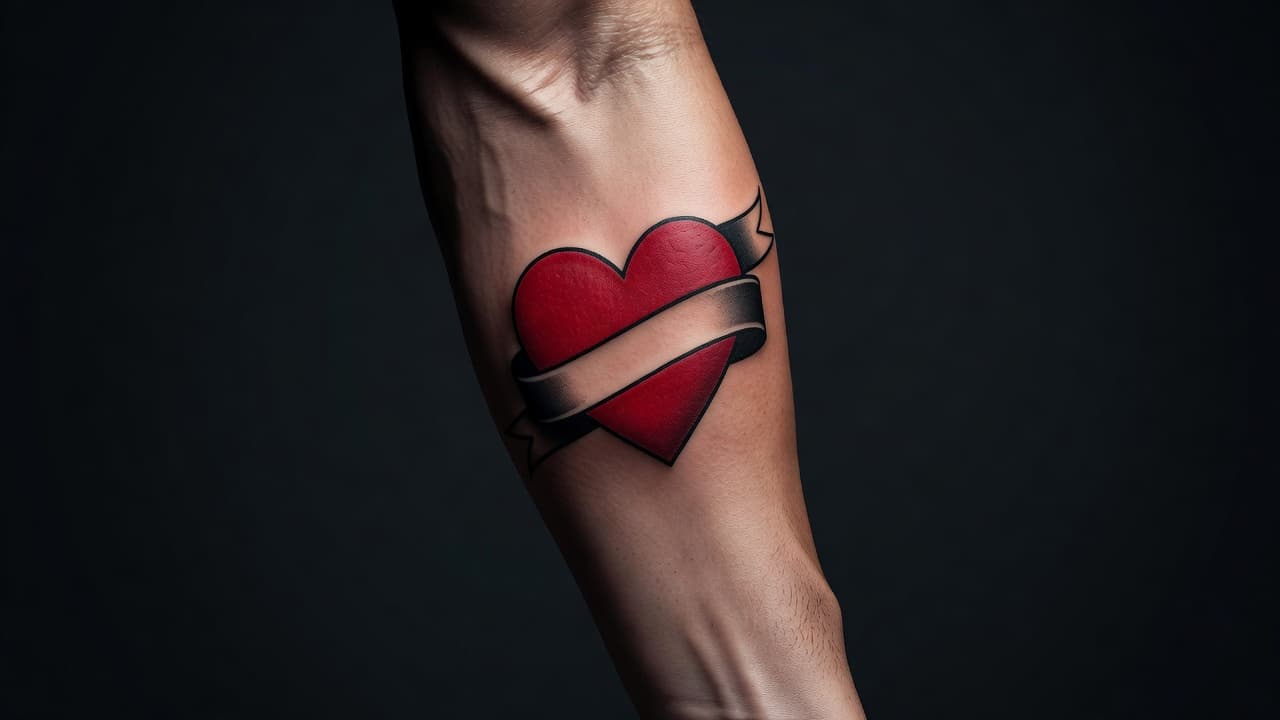
Heart tattoo meaning sounds obvious at first glance — love, right? — but the symbol carries a lot more range than that single word suggests. The same simple shape has marked religious devotion on Catholic saints, mourning on sailors' forearms, and a mother's name inside a banner, long before it became one of the most requested tattoo designs in the world.
In short: a heart tattoo most often symbolizes love, passion, and devotion, but the specific meaning shifts significantly depending on what surrounds it — a dagger reads as heartbreak, a crown of thorns reads as sacred devotion, and a banner with a name reads as a dedication to a specific person. This guide walks through where those different meanings come from, what the most common heart tattoo pairings represent, and which styles and placements suit each version of the symbol.
What Does a Heart Tattoo Symbolize? (Quick Answer)
At its core, a heart tattoo symbolizes love, passion, and emotional devotion — the same association the shape has carried since it first appeared in medieval European art as shorthand for the seat of feeling. From that single root, the symbolism branches in a few clear directions depending on the details: a plain, open heart usually reads as romantic love or affection; a heart wrapped in thorns or flame leans religious and devotional; a heart pierced by a dagger reads as heartbreak or loss; and a heart wrapped in a banner with a name becomes a direct dedication to a specific person. Everything else in this guide builds on that same base idea of the heart standing in for whatever a person feels most deeply.
A Short History of the Heart Tattoo
The heart shape itself predates tattooing by centuries, showing up in medieval and Renaissance European art as a stylized symbol for love and devotion long before anyone tattooed it onto skin. When tattooing became widespread in Western sailor culture during the 19th and early 20th centuries, the heart was a natural fit for a group of people spending long stretches away from home — a compact, universally understood way to carry a loved one's memory on your body.
That sailor-era tradition is where the classic "MOM" heart and dagger-pierced heart both come from, popularized by tattooers working in port cities and later codified by pioneers of what's now called American traditional tattooing. Around the same period, the heart was already carrying deep religious weight through Catholic Sacred Heart devotion, a tradition that would go on to shape tattoo imagery in its own right, covered in the next section.
Sacred Heart Tattoo Meaning
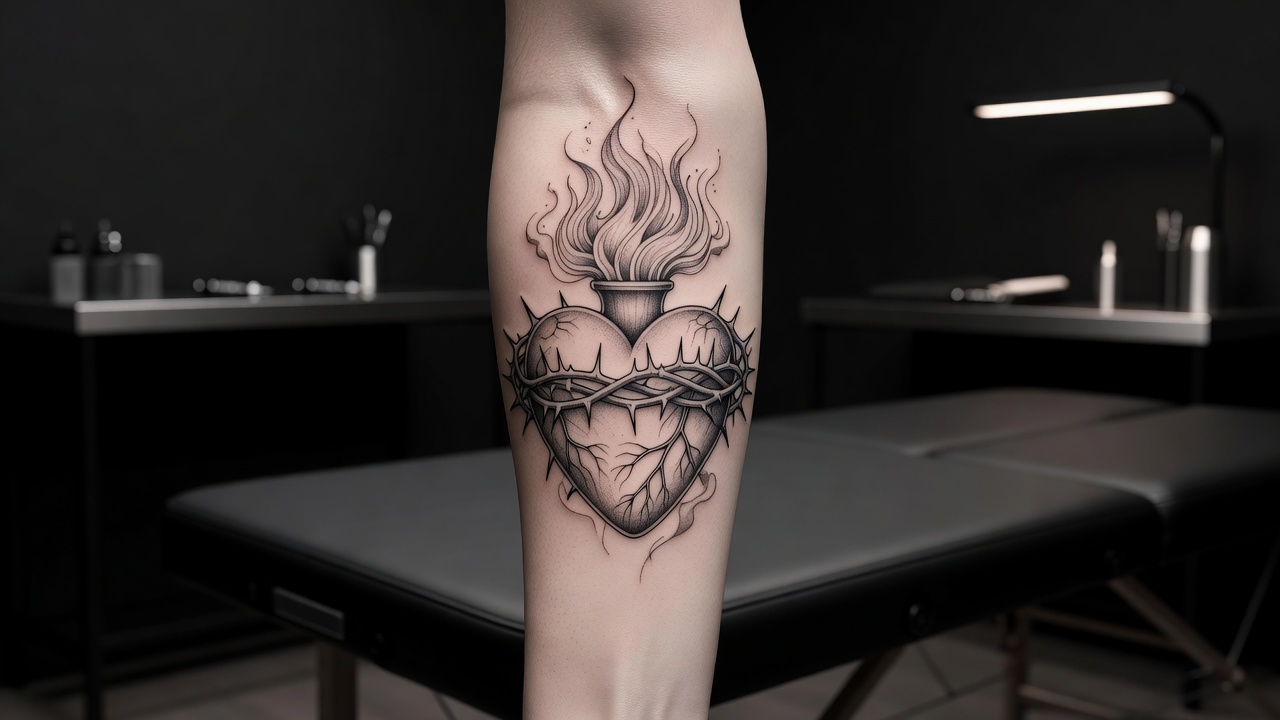
A Sacred Heart tattoo depicts the heart of Jesus, typically shown wrapped in a crown of thorns, wreathed in flame or radiant light, and topped with a small cross. In Catholic devotional tradition, the Sacred Heart represents Christ's love for humanity and his suffering on their behalf — the thorns for pain endured, the flame for burning divine love, and the heart itself for a love so total it is offered up completely.
The image spread well beyond strictly religious use through Chicano tattoo culture in the American Southwest, where it became one of the most recognizable and requested tattoo designs of the 20th century, often rendered in bold black-and-grey fine-line work. Worn today, a Sacred Heart can carry its original Catholic meaning, a broader sense of faith and protection, or simply an appreciation for the imagery's history and craftsmanship — the context and company you keep it in usually makes the intended reading clear.
Heart with a Dagger, and Broken Heart Meaning
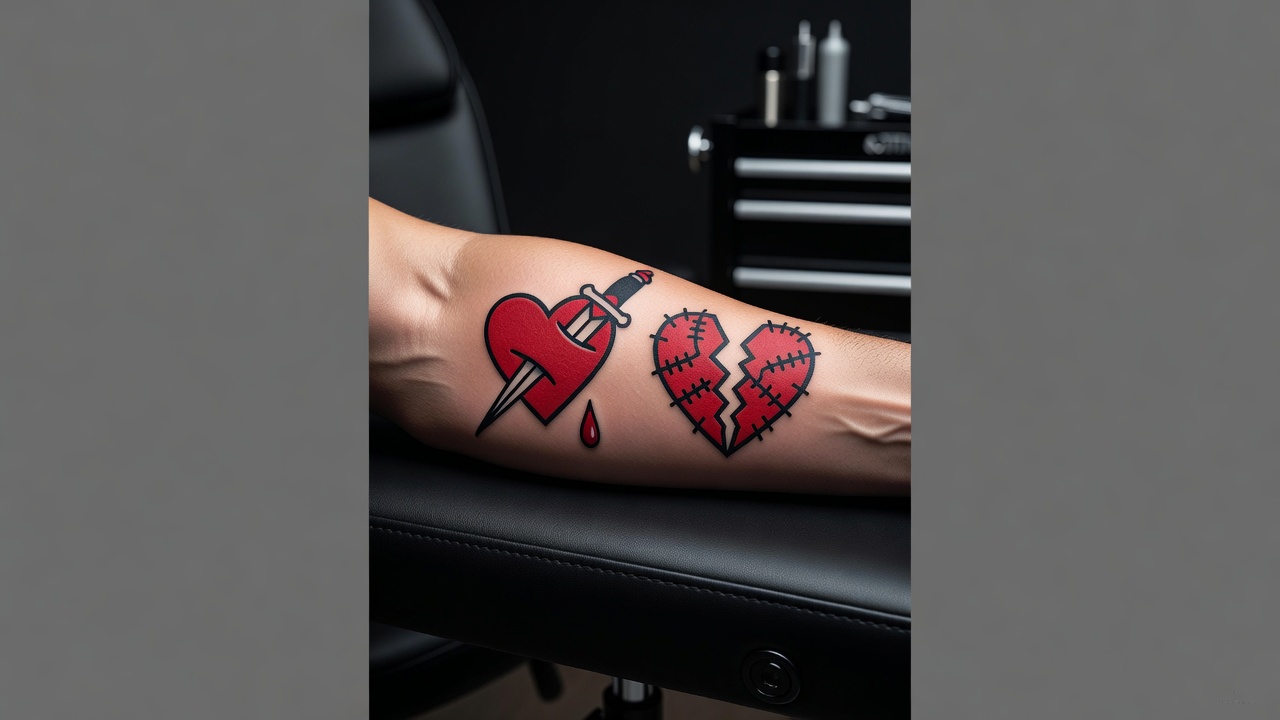
A heart pierced by a dagger is one of the oldest traditional tattoo images, and it is almost always read as heartbreak, betrayal, or pain that has already been survived rather than pain still being felt in the moment. In sailor tradition it could mark a lost love or a hard chapter at sea; in modern traditional tattooing it is often chosen simply for how graphically striking the composition is, sitting alongside anchors, roses, and banners on the same flash sheets.
A broken or cracked heart carries a closely related but slightly different meaning — grief, loss, or a wound that has left a visible mark. For many people it is specifically a memorial piece, chosen after the death of someone close to them; our memorial tattoo ideas guide covers this direction in more depth. Some designs soften the message by adding a stitched seam across the crack instead of an open break, shifting the story from "broken" to "healed" — a small detail that changes the entire meaning of the piece.
The heart itself rarely carries the whole story. It's the dagger, the crown of thorns, or the name in the banner that tells you whether the piece is about love still being lived, or love that had to be survived.
Hearts with Banners, Names & Other Companions
Adding a banner, ribbon, or name is the most direct way to turn a general symbol of love into a dedication for one specific person. The classic version — a heart with "MOM" lettered across a scroll — was popularized by sailor and traditional Americana tattooing as a way to carry a mother's memory while away from home, and the same format has since expanded to partners, children, and lost loved ones.
- Heart with a name banner — the clearest possible dedication to a specific person, living or passed.
- Heart with roses — layers romantic love with beauty and, depending on the rose's color and openness, deeper meanings covered in our rose tattoo meaning guide.
- Heart with wings — freedom or a loved one's spirit, common in memorial pieces.
- Anatomical heart — trades the stylized shape for a realistic depiction of the organ itself, often chosen for its unsentimental, medical-illustration look.
- Heart with a compass or arrow — direction and purpose guided by love, a popular pairing with our compass tattoo meaning guide.
Popular Heart Tattoo Styles
The heart has been reinterpreted across nearly every major tattoo style without losing its core shape:
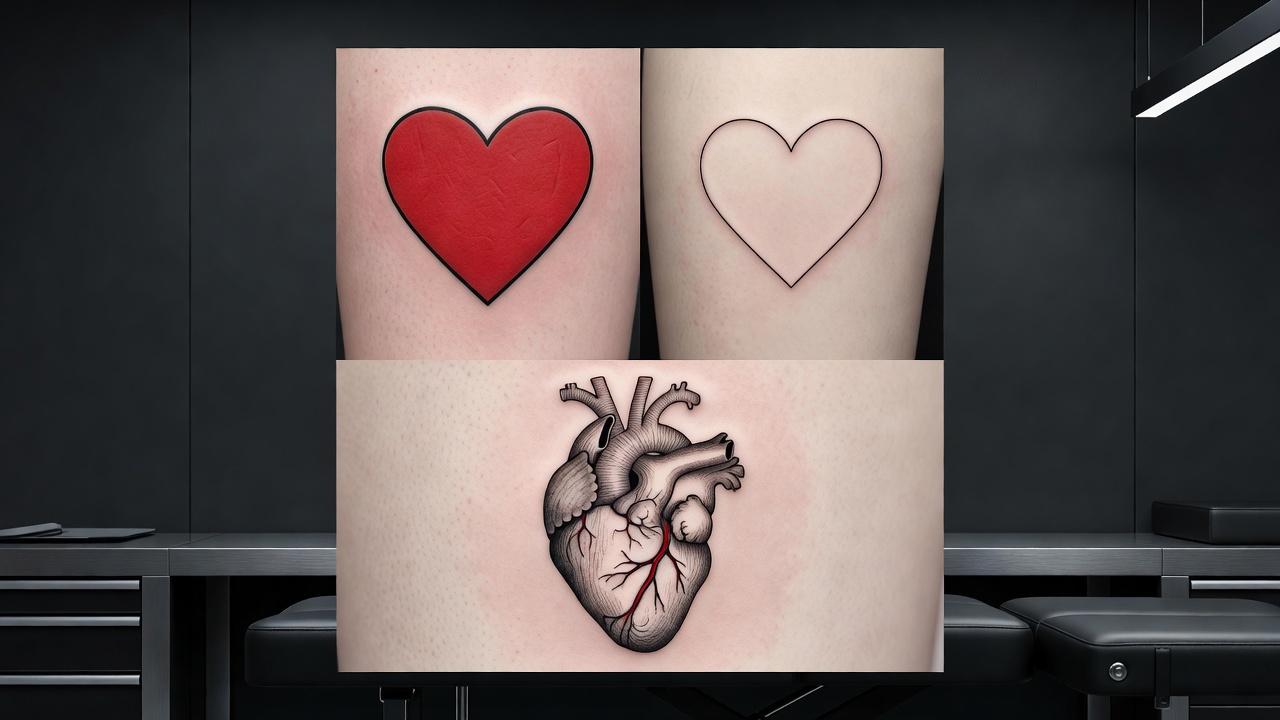
- Traditional Americana — bold black outlines, solid color fills (often red, black, and gold), and companion imagery like daggers, banners, or roses. Our traditional tattoo style guide covers the broader look.
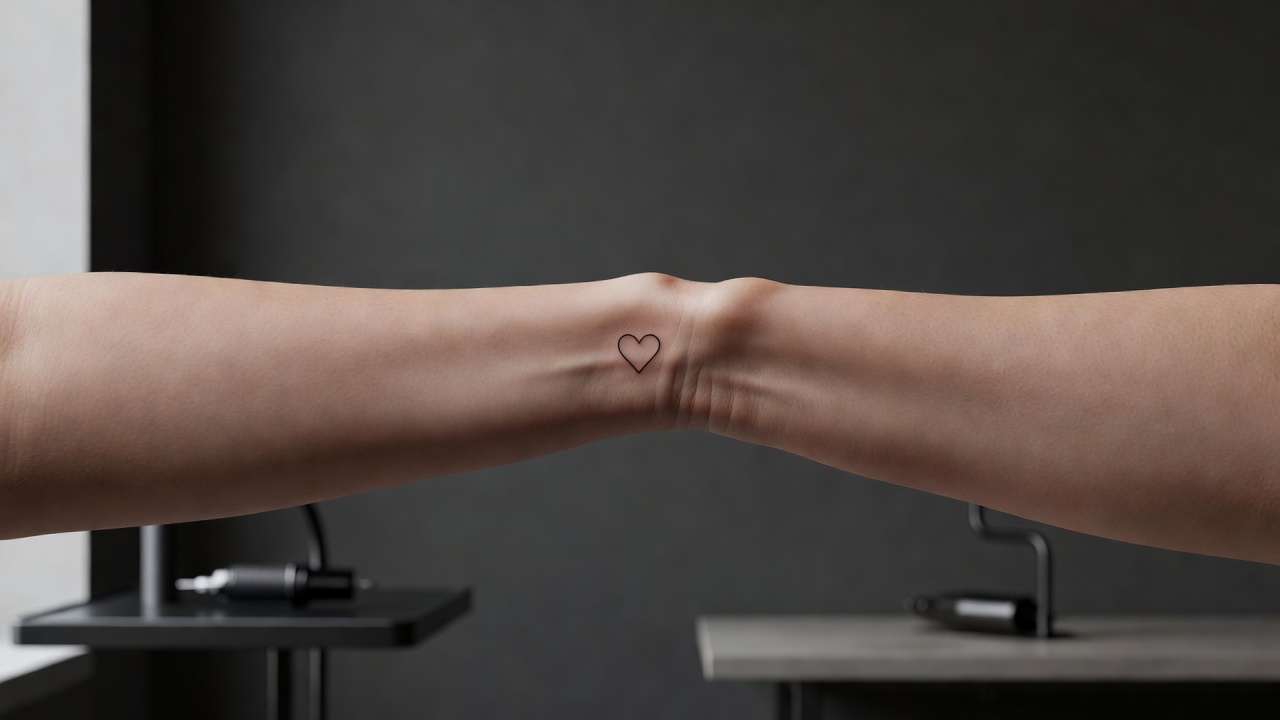
- Fine-line minimalist — a single clean outline with no shading, popular for small wrist or finger pieces. See our fine-line tattoo guide for more on this approach.
- Sacred Heart religious — detailed black-and-grey work with thorns, flame, and a cross, rooted in Chicano and Catholic devotional tattooing.
- Anatomical realism — a medically accurate rendering of the heart itself, often used to represent resilience or a health journey rather than romance.
Best Placements for a Heart Tattoo
Placement mostly comes down to how much detail the design carries and how visible you want it to be:
- Wrist or forearm — the most popular spot; a small heart reads clearly here, and a larger one has room to add a banner or dagger.
- Chest, over the actual heart — a symbolically direct placement favored for Sacred Heart and memorial pieces.
- Finger or behind the ear — good for a very small, minimal heart outline.
- Upper arm or shoulder — better suited to larger, more detailed pieces with multiple companion elements. Check our best tattoo placements guide for pain levels and sizing at each spot.
Designing Your Heart Tattoo with AI
Because so much of a heart tattoo's meaning comes from its details — the banner, the companion symbols, the exact style — it helps to see several versions side by side before deciding. With INK, you can describe the heart you have in mind ("a fine-line heart with a thin banner reading a name, small enough for the wrist") and generate multiple takes in seconds, comparing a bold traditional version against a Sacred Heart or minimalist take without committing to any of them.
You can also test how adding roses, a dagger, or a name banner changes the overall feel, and use AR try-on to see the design at true scale on your own wrist, chest, or forearm before you ever sit down with an artist. If this is your first tattoo, our AI tattoo generator from text guide and our first tattoo guide both walk through what to expect.
Choosing Your Heart
A heart tattoo carries centuries of meaning packed into a simple shape, and that is exactly why it still works: whether you're drawing on Sacred Heart devotion, sailor tradition, or a personal dedication to someone you love, the core idea of the heart standing in for what you feel most deeply translates cleanly into ink. Decide which layer of that meaning matters most to you, then let the companion symbols, style, and placement follow from there.
What does a heart tattoo mean? Most commonly love, passion, and devotion, with the exact meaning shifting based on companion symbols like a dagger, banner, or crown of thorns.
Does it have religious meaning? Yes — the Sacred Heart represents Christ's love and sacrifice in Catholic tradition, and it spread widely through Chicano tattoo culture.
What does a dagger or break add? Usually heartbreak, loss, or grief already survived, rather than pain still being felt in the moment.
Where does it look best? Wrist and finger for something small and simple, chest or upper arm for a larger, more detailed piece.
Design Your Heart Tattoo Free
Describe your heart, test banner and companion details, and AR-preview the design on your body before you commit — all in INK. No sign-up needed.
Try INK Free →

Create Your Perfect Tattoo Design
Use AI to generate unique tattoo designs and preview them on your body before committing to ink.
Start Designing for FreeWritten by

Laura Schmitz
Tattoo Content Lead, INK
Laura Schmitz leads tattoo content at INK. She has spent years researching tattoo styles, symbolism and aftercare, and works directly with the AI tattoo generator to test how each style translates from prompt to skin — so every guide here reflects designs that are actually tattooable, not just images that look good on screen.
More about the author