
What Is Tattoo Ink Made Of? A Complete Breakdown
What tattoo ink is actually made of, how pigments and carriers work, and what to ask your artist before you sit down.

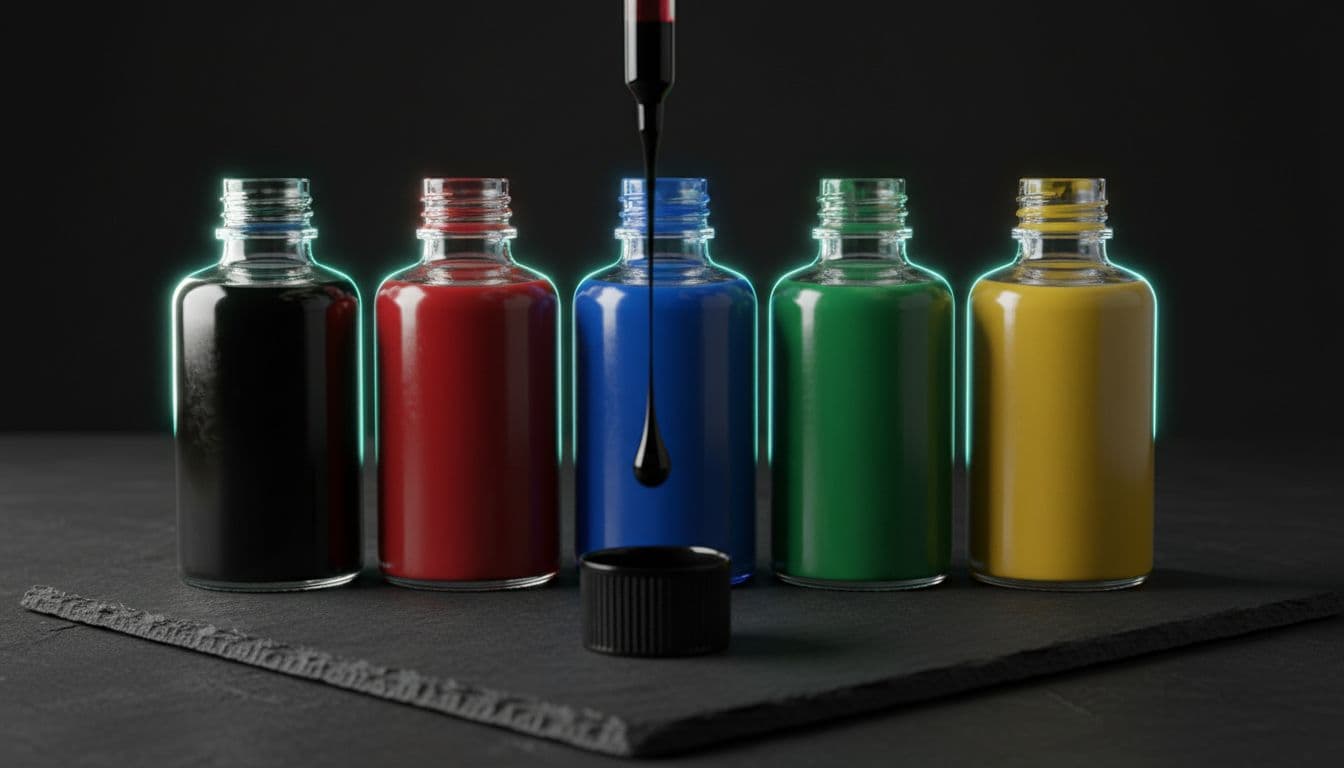
If you're about to get tattooed, the question of what is tattoo ink actually made of is worth thinking about — that ink is staying in your body for the rest of your life. The good news: modern tattoo ink is way better understood than it used to be. The honest news: regulation is patchy, and not all bottles on the shelf are created equal.
This guide breaks down exactly what's inside tattoo ink, how different colors get their hue, what to ask your artist about ink quality, and how to make smart choices about pigments before you sit down for a session.
The Quick Answer: What's Inside Tattoo Ink
Tattoo ink is essentially two things: pigment (the color particles) suspended in a carrier solution (the liquid that keeps everything stable and lets the artist work). That's the core formula behind every tattoo on every body.
The complexity comes from which pigments and which carriers. Pigments can be inorganic minerals, organic compounds, or synthetic colorants. Carriers can be water, alcohol, glycerin, witch hazel, or some blend. Reputable manufacturers also include preservatives and pH stabilizers to keep the ink sterile and shelf-stable.
The Pigments: Where Color Comes From
Pigments are tiny solid particles that give ink its color. When deposited in the dermis, they get trapped between skin cells where the immune system can't easily clear them — which is what makes a tattoo permanent.
Black Ink
The most common color in tattooing. Modern black is usually carbon-based, made from purified carbon black or bone char. High-quality black ink uses ultra-fine carbon particles for crisp lines and deep saturation. Black is also the most stable color over time — it ages better than almost any other pigment.
White Ink
Almost always titanium dioxide. White is essential for highlights and lightening other colors but tends to fade or yellow over time, especially with sun exposure.
Red Ink
Historically the most allergy-prone color. Old red inks used cinnabar (mercury sulfide), but modern reds use safer organic pigments like naphthol-based compounds. Red is still the most common color to cause a delayed reaction — months or years after healing.
Blue and Green
Usually copper-based pigments (like phthalocyanine blue and green) for vivid, stable color. These hold up well long-term and rarely cause reactions in most people.
Yellow and Orange
Modern yellows often use cadmium-free organic pigments. Older formulations sometimes included cadmium sulfide, which is now avoided. Yellows can be sun-sensitive and may need refreshing over time.
Purple, Brown, and Specialty Colors
Usually blends — mixing red and blue pigments for purple, mixing reds and yellows for brown, etc. UV-reactive and white-glow inks exist but are far less proven long-term.
The Carrier Solution
Carriers do a few jobs at once: they keep pigment particles evenly distributed, they sterilize the ink, they help the ink flow through the needle, and they make it easier for the body to tolerate the foreign material.
Common carrier ingredients include:
- Distilled water: The base for most carriers
- Glycerin: Adds viscosity and helps the ink stay in place during application
- Isopropyl alcohol or ethanol: Sterilizes and helps the ink dry on the skin surface
- Witch hazel: A natural astringent in some formulations
- Propylene glycol: A solvent that helps stabilize pigment
The exact ratio is part of what separates premium inks from cheap knockoffs. Better carriers mean smoother lines, better color saturation, and less skin irritation.
Ink Safety: What's Regulated, What Isn't
Here's something most people don't realize: in the United States, the FDA classifies tattoo inks as cosmetics but has historically not pre-approved individual ink formulations. That changed slightly in recent years with the MoCRA (Modernization of Cosmetics Regulation Act), which gave the FDA more oversight, but the practical effect is still limited.
The European Union is much stricter. In 2022, the EU restricted thousands of chemicals used in tattoo inks under REACH regulations, banning specific pigments commonly used in bright blues and greens. This forced manufacturers to reformulate, and many now make EU-compliant inks that are also sold globally.
The takeaway: in the US, the burden of choosing safe ink falls on your artist — and on you, if you ask. Reputable studios use professional-grade inks from known manufacturers with full ingredient disclosure.
Vegan and Organic Tattoo Inks
Traditional black ink sometimes used bone char or animal-derived glycerin. Modern vegan inks substitute synthetic carbon and plant-derived glycerin. Many premium ink brands are now certified vegan by default.
"Organic" is a trickier label. In tattoo ink, "organic" usually refers to the chemistry — organic pigments are carbon-based molecules, as opposed to inorganic (mineral) pigments. It does not necessarily mean "natural" or "chemical-free." Both organic and inorganic pigments can be perfectly safe; both can cause reactions. The label alone doesn't tell you much.
Allergic Reactions: What to Watch For
True ink allergies are uncommon but real. Symptoms can include:
- Persistent itching localized to one specific color
- Raised, bumpy, or scaly texture on the tattooed area
- Redness or swelling that doesn't resolve weeks after healing
- Delayed reactions appearing months or years after the tattoo
Red and yellow inks cause the most reactions. If you have a history of metal allergies (especially nickel or chromium), tell your artist — some pigments can trigger cross-reactions.
For a fresh tattoo causing flu-like symptoms, that's usually tattoo flu — a normal immune response, not an ink allergy. Real ink allergies almost always show up in the skin itself, not as systemic symptoms.
How Ink Behaves in Skin Over Time
Tattoo ink isn't perfectly inert. Once deposited, your immune system gradually breaks down the smallest particles, which is why all tattoos fade slightly over years. Larger pigment particles stay locked in place much longer.
Sun exposure is the biggest enemy of ink longevity. UV light breaks down pigment molecules, fading bright colors first (yellows, then reds, then blues). Black ink lasts the longest because carbon is exceptionally UV-stable.
If you want a tattoo that ages gracefully, lean toward bold designs with strong black or dark outlines, avoid heavy reliance on the most fade-prone colors as the primary visual element, and protect your tattoos with SPF for life.
What to Ask Your Artist About Ink
Before you sit down for a session, it's reasonable to ask:
- What brand of ink do you use?
- Is it vegan, and EU-compliant?
- Are individual ink caps used (not refilled between clients)?
- How is the ink stored, and what's the shelf life?
- Have you had clients react to any of these specific colors?
A good artist will answer all five immediately and probably appreciate that you cared enough to ask.
Use AI to Pick Designs That Age Well
Knowing what's in tattoo ink also informs what to design. Heavy reliance on bright color in tiny details often fades fastest. Bold, well-defined designs with strong contrast last decades looking great.
This is one of the underrated strengths of AI tattoo design: you can generate the same concept in 20 different styles and color schemes, then pick the one that will age the best. Try minimalist, blackwork, fine line, and full color versions side-by-side before you commit.
For the full breakdown of how to use AI for design choices, see our complete AI tattoo generator guide.
Tattoo ink has come a long way from the homemade soot-and-water mixtures of a hundred years ago. Modern formulations are safer, more consistent, and more beautiful than ever — and a little knowledge about what's going into your skin makes every tattoo decision a smarter one.
Design a Tattoo That Ages Beautifully
Try your concept in 20 styles and color schemes before you commit. INK helps you pick designs that look great today and decades from now.
Try INK Free →

Create Your Perfect Tattoo Design
Use AI to generate unique tattoo designs and preview them on your body before committing to ink.
Start Designing for FreeWritten by

Laura Schmitz
Tattoo Content Lead, INK
Laura Schmitz leads tattoo content at INK. She has spent years researching tattoo styles, symbolism and aftercare, and works directly with the AI tattoo generator to test how each style translates from prompt to skin — so every guide here reflects designs that are actually tattooable, not just images that look good on screen.
More about the author