
AI Tattoo Removal: Can AI Help You Erase Old Ink?
How AI is changing tattoo removal—from cover-up planning to previewing clean skin. What AI can and cannot do for old ink.

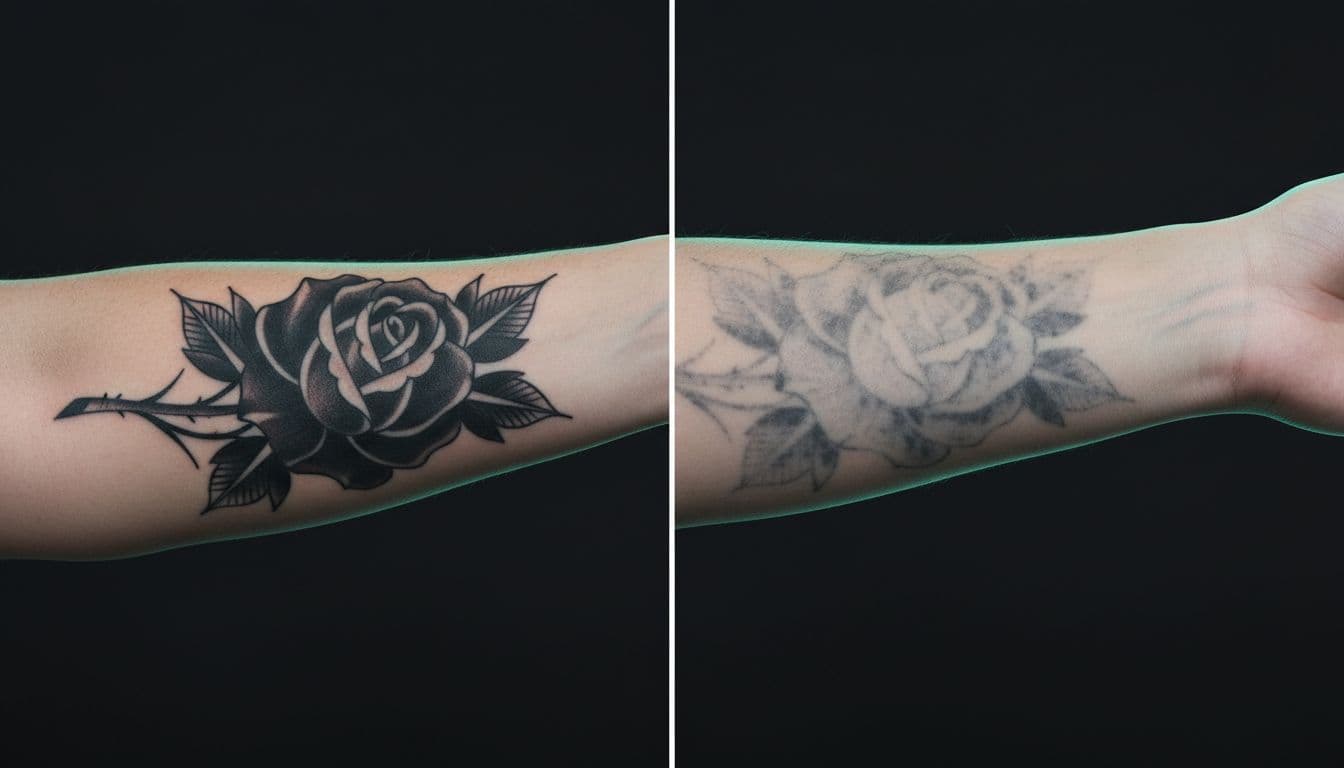
Got a tattoo you regret? You're not alone. Surveys suggest roughly one in four people with tattoos have at least one they wish they could erase—and AI is starting to change how that conversation goes.
Let's get one thing out of the way upfront: AI tattoo removal isn't a magic eraser that beams away ink with your phone. The actual ink-removal still happens with lasers, surgery, or time. But AI has quietly become one of the most useful tools in the entire removal process—helping you visualize results, plan cover-ups, set realistic expectations, and avoid future regrets in the first place.
This guide walks through exactly what AI can (and can't) do for unwanted ink, the real removal methods that work, and how to use AI to make smarter decisions before you book your first laser session.
What Does "AI Tattoo Removal" Actually Mean?
When people search for ai tattoo removal, they're usually thinking of one of three things:
- AI-powered planning tools that show what your skin might look like after removal
- AI cover-up design that generates new tattoos engineered to disguise old ink
- AI photo editing that digitally erases tattoos from images for try-on or social media
All three are real, and all three are useful in different ways. None of them physically remove ink from your skin—that part still requires medical procedures. But they do something almost as valuable: they help you make a clear-eyed decision before you spend thousands of dollars and months of healing time on the wrong choice.
Can AI Physically Remove a Tattoo?
No—and any tool claiming otherwise is overselling. Tattoo ink sits in your dermis, the second layer of skin, where particles are too large for your immune system to clear naturally. Removing them requires either breaking those particles into smaller pieces (laser) or physically removing the skin (excision or dermabrasion).
What AI can do is everything around the actual removal: planning, visualization, cover-up design, and decision-making. Used well, it can save you from spending $3,000 on laser sessions only to realize you would have been happier with a clever cover-up for $400.
How AI Helps With the Tattoo Removal Journey
Visualizing Post-Removal Skin
One of the hardest parts of laser removal is the long timeline. You're committing to 8–12 sessions spread over 12–18 months, and progress is gradual. AI tools can simulate what your tattoo will look like at different stages of fading—giving you a much more realistic picture than the dramatic before/afters you see in marketing photos.
This matters because expectations drive satisfaction. People who understand removal is a slow fade rather than an instant erase tend to be much happier with their results.
Designing the Perfect Cover-Up
For most regret tattoos, a cover-up is the smarter path. It's faster, cheaper, and you walk away with art you actually want instead of a faint shadow of art you didn't. The challenge has always been imagining what could realistically cover your specific tattoo.
That's where AI shines. With a photo of your existing piece, AI can generate dozens of cover-up concepts in seconds—designs intentionally built around your old tattoo's shape, size, and ink density. Our AI cover-up generator guide walks through this process in detail.
Partial Removal Plus Cover-Up
This is where AI really earns its keep. Many of the best cover-up artists prefer working with a tattoo that's been partially faded by laser—usually three to four sessions—rather than fully removed. Lighter ink means more design freedom for the new piece. AI lets you preview how a partially faded tattoo could be reimagined as something completely new before you commit to a single laser session.
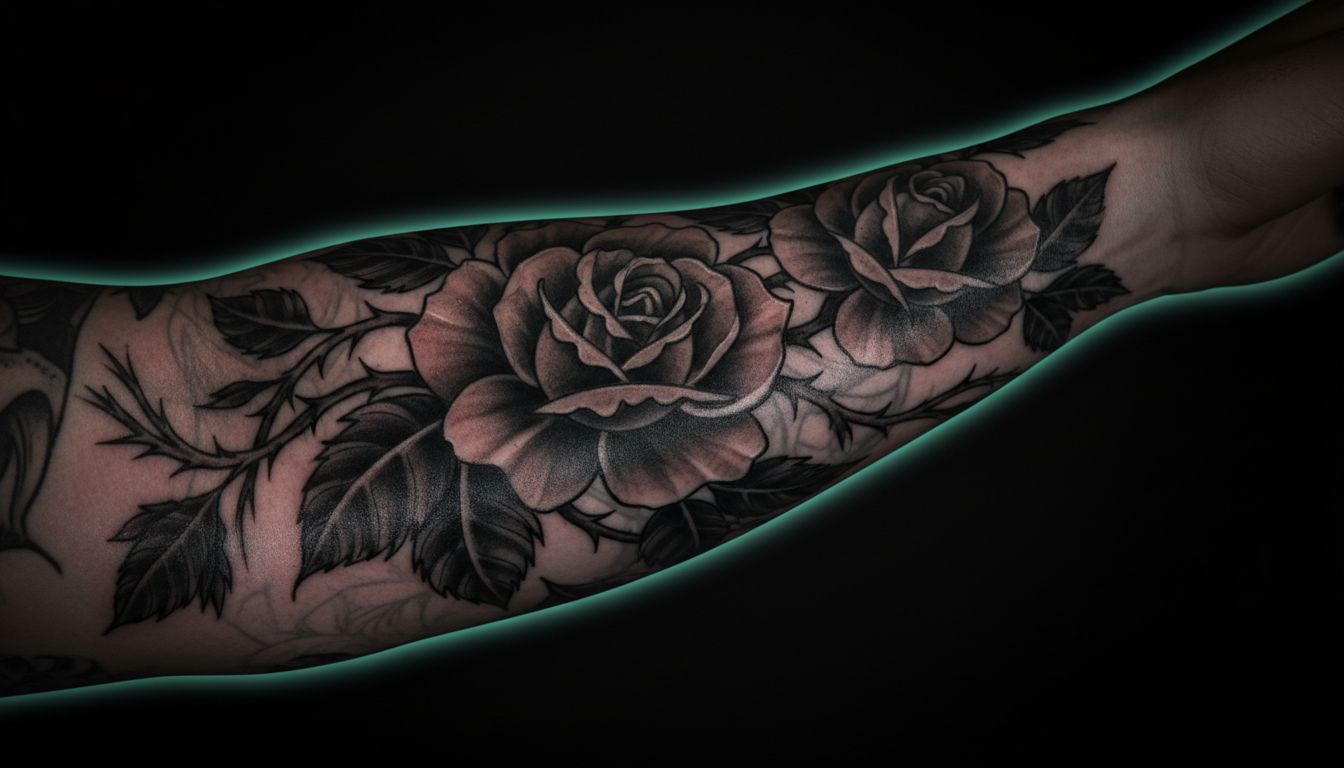
Real Tattoo Removal Methods (and How They Work)
While AI handles the planning, here's what actually pulls ink out of your skin. According to the American Academy of Dermatology, there are a few proven approaches.
Q-Switched and Picosecond Lasers
The gold standard. These lasers fire ultra-short pulses of light that shatter ink particles into pieces small enough for your body to flush out naturally. Picosecond lasers are newer and generally faster, but Q-switched lasers still work well for most colors. Black ink responds best; greens, blues, and yellows are notoriously stubborn.
Expect 6–12 sessions spaced 6–8 weeks apart. Most tattoos fade significantly but rarely disappear completely.
Surgical Excision
For small tattoos, a dermatologist can simply cut the tattoo out and stitch the skin back together. It's fast and complete, but you trade ink for a scar. Best for small pieces in areas with loose skin.
Dermabrasion
An older method that essentially sands the tattoo off. Less common today because lasers produce better results with less scarring, but still used in select cases.
Removal Creams
Skip these. Despite the marketing, no topical cream can reach the dermis where tattoo ink lives. At best they fade the surface a little; at worst they cause chemical burns and worse scarring than the original tattoo.
How Many Sessions and How Much Does It Cost?
Tattoo removal pricing varies by location, but typical 2026 ranges look like this:
- Small tattoo (under 2 inches): $75–$200 per session × 6–10 sessions = $450–$2,000 total
- Medium tattoo (palm-sized): $200–$400 per session × 8–12 sessions = $1,600–$4,800 total
- Large tattoo (sleeve or back): $400–$800 per session × 10–15 sessions = $4,000–$12,000 total
For comparison, a quality cover-up tattoo typically runs $300–$1,500 depending on size and artist—often a fraction of full removal. See our complete tattoo pricing guide for more on cover-up costs specifically.
Cover-Up or Removal: Which Is Right for You?
This is the decision AI helps with most. Some general guidelines:
Lean toward removal if:
- You don't want any tattoo in that location
- The existing piece is small and lightly inked
- You have time and budget for the full process
- Your skin is suitable for laser (lighter skin tones generally have better outcomes)
Lean toward cover-up if:
- You like having a tattoo there—just not that tattoo
- The existing piece is dark and heavily saturated
- You want a faster, cheaper solution
- You're open to the new piece being noticeably larger than the original
Generate cover-up concepts in the INK app with a photo of your existing tattoo—you'll get a clearer sense of what's possible in five minutes than you would in an hour-long consultation.
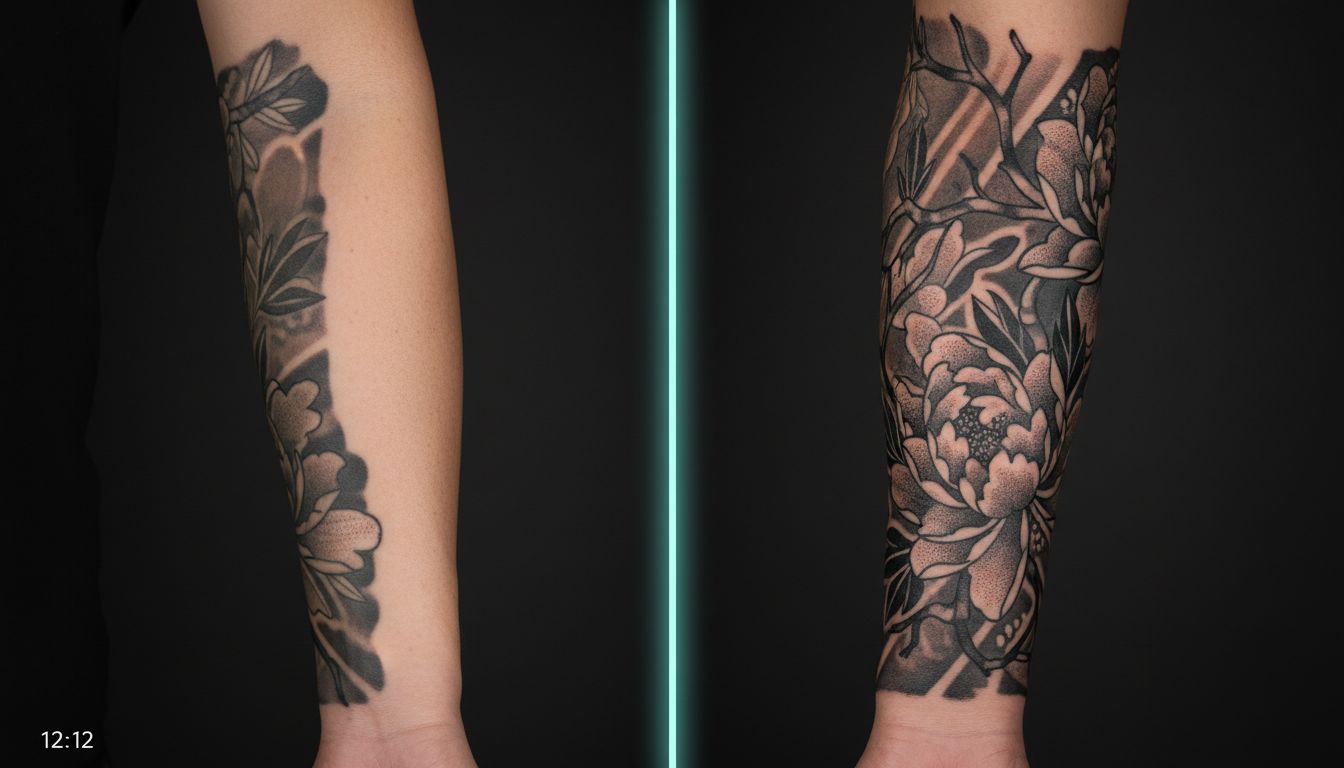
Recovery, Risks, and Aftercare
Whichever path you choose, be ready for healing. Laser removal causes blistering, scabbing, and temporary skin lightening or darkening. Each session needs roughly 6 weeks of careful aftercare before the next.
Cover-ups follow standard tattoo aftercare—our tattoo aftercare guide covers exactly what to expect during the 2–4 week healing window.
Possible complications from removal include scarring, pigment changes, incomplete clearance of the ink, and rare allergic reactions to released ink particles. Choose a board-certified dermatologist or a reputable medi-spa with laser-trained staff. Skipping that step is the single biggest cause of bad outcomes.
Use AI to Avoid Removal in the First Place
The best removal plan is the one you never need. Most regret tattoos come from impulse decisions—a vacation flash piece, a late-night idea, a design that "felt right" without much consideration. AI flips that calculus by letting you live with a design before committing.
Here's how to use AI as a regret-prevention tool:
- Generate the concept — Describe your idea, get unlimited variations
- Try it on your body — Use AR preview to see it on your actual skin in the actual placement
- Sit with it for two weeks — Check it daily; if you still love it after 14 days, you've cleared the impulse threshold
- Refine before booking — Bring the final design to your artist as a polished reference
The two-week rule alone would prevent the majority of removals. Combined with photo-based AR preview, AI tattoo design tools have become one of the best regret-prevention tools tattoo culture has ever seen.
Your Next Step
If you have a tattoo you regret, start with three things: get a consultation with a board-certified dermatologist for honest removal expectations, generate cover-up concepts with AI to see what's possible without removal, and price out both paths before committing to either.
Tattoo removal isn't about erasing the past—it's about making space for what comes next. Whether that's clean skin or a cover-up you love, AI can help you get there with fewer surprises and smaller bills along the way.
Plan Your Removal or Cover-Up
Upload a photo of your existing tattoo and let INK generate dozens of cover-up concepts in seconds. Free to try, no signup required.
Generate Cover-Up Free →

Create Your Perfect Tattoo Design
Use AI to generate unique tattoo designs and preview them on your body before committing to ink.
Start Designing for FreeWritten by

Laura Schmitz
Tattoo Content Lead, INK
Laura Schmitz leads tattoo content at INK. She has spent years researching tattoo styles, symbolism and aftercare, and works directly with the AI tattoo generator to test how each style translates from prompt to skin — so every guide here reflects designs that are actually tattooable, not just images that look good on screen.
More about the author