
How Much Do Tattoos Cost? Complete Pricing Guide for 2026
Everything you need to know about tattoo pricing in 2026. From small designs to full sleeves, understand what affects cost and how to budget for your ink.

"How much is this going to cost me?" It's the question everyone asks before getting a tattoo—and honestly, the answer is frustratingly complicated. I've seen people pay $50 for a tattoo and others pay $5,000, and both walked away happy. The difference? Understanding what you're actually paying for.
Let me break down everything that goes into tattoo pricing so you can walk into any shop with realistic expectations and avoid that awkward moment of sticker shock.
Average Tattoo Prices in 2026
Let's start with the numbers everyone wants to know. Keep in mind these are averages—your specific tattoo could cost more or less depending on factors we'll discuss.
The Quick Reference:
- Tiny tattoos (under 2 inches): $50 - $150
- Small tattoos (2-4 inches): $150 - $300
- Medium tattoos (4-6 inches): $300 - $600
- Large tattoos (6+ inches): $600 - $1,500+
- Half sleeve: $1,500 - $4,000
- Full sleeve: $3,000 - $10,000+
- Full back piece: $5,000 - $15,000+
If those ranges seem wide, that's because they are. A "medium tattoo" from a first-year apprentice in a small town costs very differently than the same size piece from a renowned artist in Los Angeles. Let's break down why.
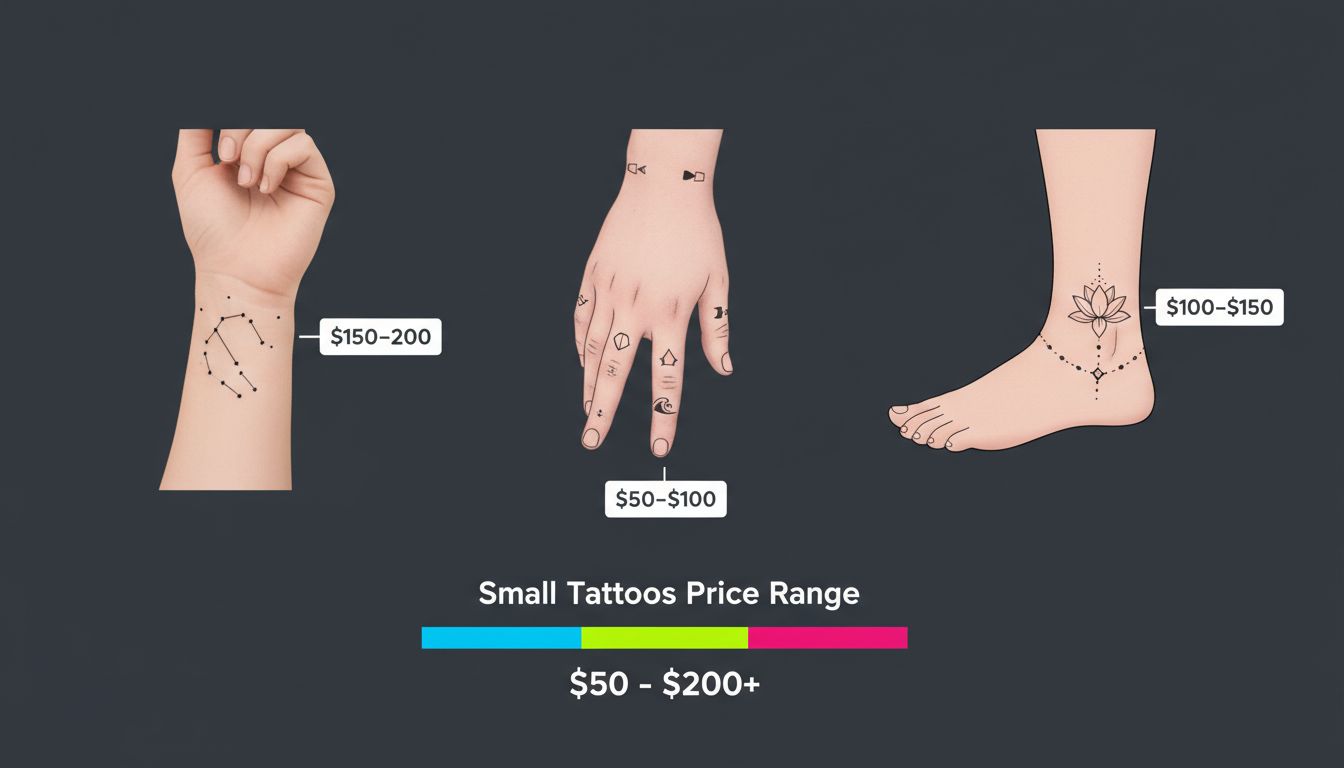
Small Tattoos: $50 - $200
Thinking about how much are small tattoos? This is where most first-timers start, and it's actually where pricing gets trickiest.
Most shops have a minimum charge—usually between $50 and $100—regardless of how small your tattoo is. Why? Because the artist still needs to:
- Set up their station with fresh equipment
- Sterilize and prepare everything
- Create or customize your design
- Apply the stencil and position it perfectly
- Actually tattoo you
- Clean up and break down their station
That's a lot of work even for a tiny heart on your wrist. The actual tattooing might take 15 minutes, but the whole process takes over an hour. That's why "it's just a small one" doesn't mean a cheap price.
What $50-$200 typically gets you:
- Simple symbols (hearts, stars, infinity signs)
- Small text (one word or short phrase)
- Tiny minimalist designs
- Basic flash designs from the wall
- Single small elements (tiny flower, small geometric shape)
Medium Tattoos: $200 - $500
This is the sweet spot for many people—substantial enough to have real detail, but not a massive commitment. Medium tattoos typically take 2-4 hours to complete.
What $200-$500 typically gets you:
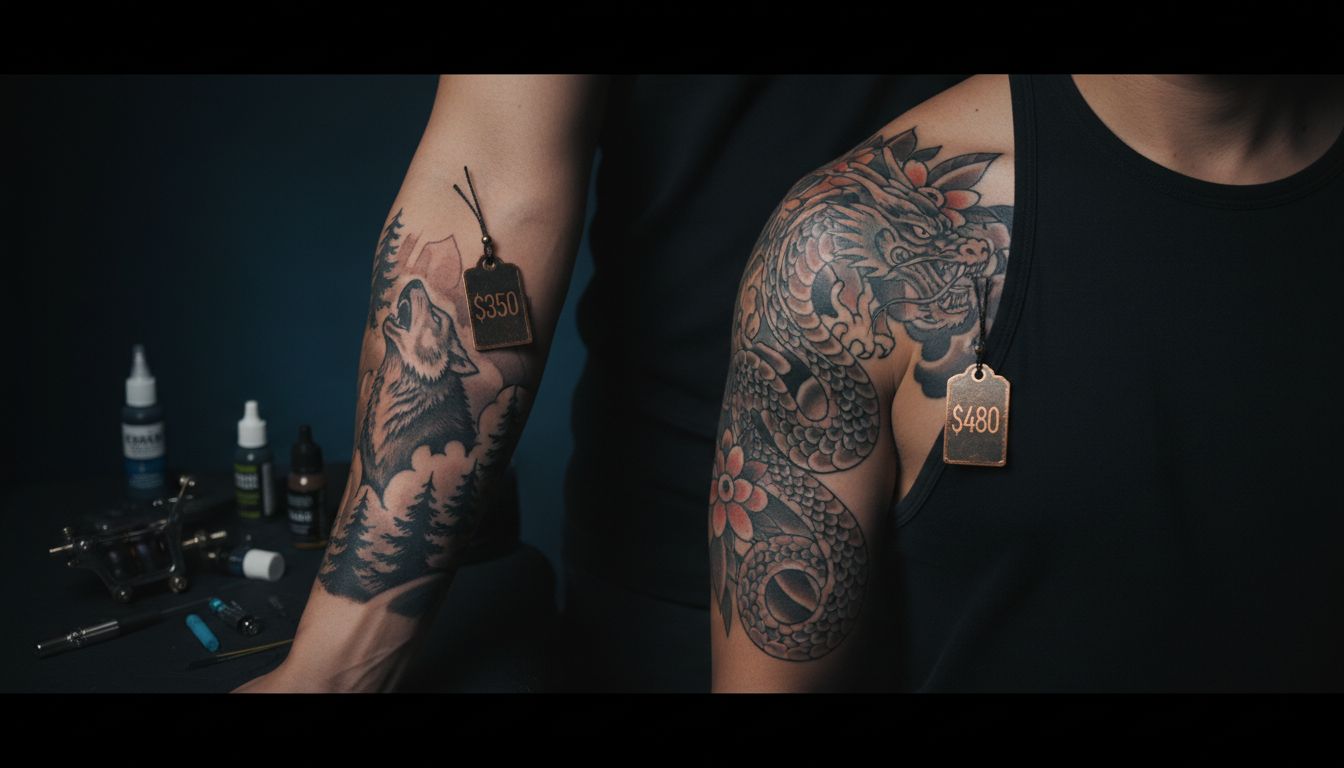
- Forearm pieces (roses, snakes, animals)
- Detailed small-to-medium designs
- Custom artwork with shading
- Bicep or shoulder designs
- Calf or thigh pieces
- Detailed traditional or neo-traditional work
At this price point, you're getting into custom work territory. The artist is creating something specifically for you, not just pulling flash off the wall. This takes time both in the design phase and execution.
Large Tattoos & Sleeves: $500 - $5,000+
Now we're talking serious commitment—both in terms of time and money. Large tattoos require multiple sessions, and each session can run 3-6 hours.
Half Sleeve: $1,500 - $4,000
Typically requires 3-6 sessions over several months. You're looking at 10-20+ hours of work total. The wide price range reflects artist experience, complexity of design, and regional pricing differences.
Full Sleeve: $3,000 - $10,000+
A full sleeve is a major undertaking—usually 6-15+ sessions and 25-50+ hours of work. You're essentially commissioning a wearable masterpiece. At the upper end, you're paying for elite artists whose work is in high demand.
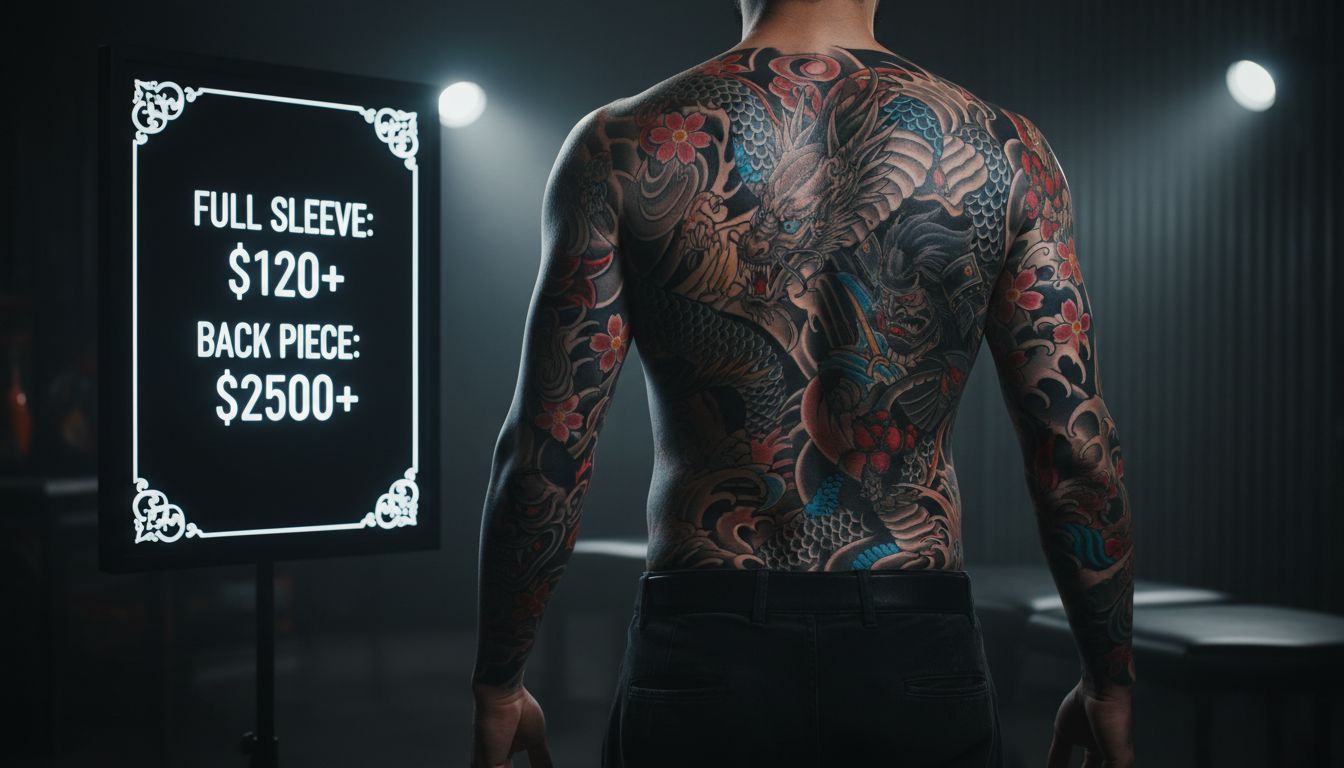
Full Back Piece: $5,000 - $15,000+
The ultimate canvas. Back pieces can take a year or more to complete, with sessions spaced out for healing. These are statement pieces that command statement prices.
According to data from the Bureau of Labor Statistics, tattoo artists are classified under personal appearance workers, with experienced artists earning significantly above average wages—which reflects in their pricing.
Factors That Affect Tattoo Pricing
Understanding these factors helps you make sense of quotes you receive:
1. Artist Experience & Reputation
This is the biggest factor. A tattoo from a world-renowned artist with a year-long waitlist costs dramatically more than the same design from a new apprentice. Both might technically be the same size, but you're paying for:
- Years of refined technique
- Proven track record of quality work
- Artistic vision and creativity
- Higher demand = higher prices
2. Geographic Location
A tattoo in New York City, Los Angeles, or London costs more than the same piece in a smaller city or rural area. This reflects cost of living, shop rent, and local market rates. Expect to pay 20-50% more in major metropolitan areas.
3. Design Complexity
A simple black outline takes less time than a fully shaded, multi-color piece with intricate details. Styles like realism, geometric, and Japanese typically command higher prices due to the skill and time required.
4. Color vs. Black and Grey
Color tattoos often cost more because they require more passes, more time, and more supplies. However, highly detailed black and grey work (like realism) can be just as expensive due to the skill involved.
5. Placement on Body
Some body parts are harder to tattoo and may cost more:
- Difficult areas: Ribs, feet, hands, neck, elbows—these are painful and technically challenging
- Easier areas: Outer arm, thigh, upper back—more forgiving canvas
6. Custom vs. Flash
Flash designs (pre-drawn art on the shop walls) are usually cheaper because the design work is already done. Custom pieces created specifically for you cost more because of the additional design time.
Hourly Rate vs. Flat Rate: How Artists Charge
Artists typically use one of two pricing models:
Hourly Rate
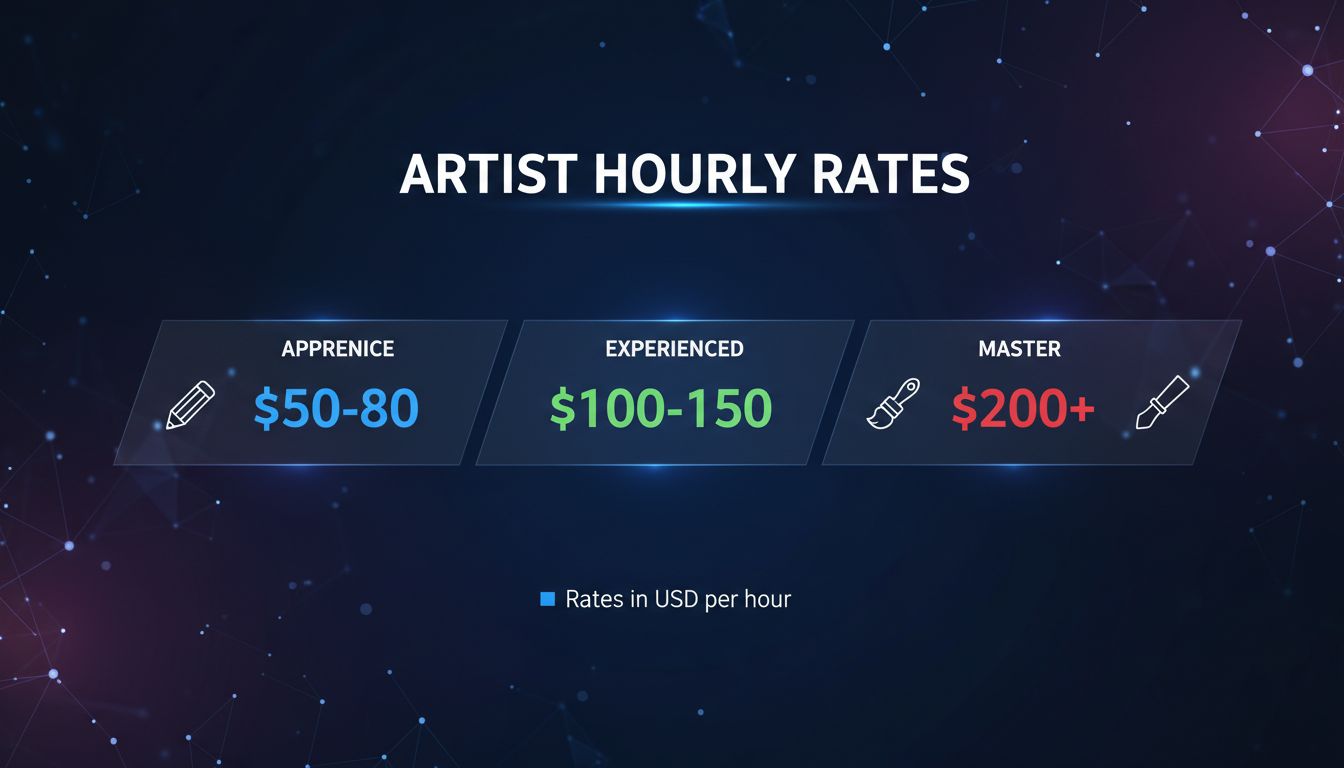
Common for larger pieces. Typical hourly rates in 2026:
- Apprentice/Junior: $80 - $120/hour
- Experienced Artist: $150 - $250/hour
- Established/Known Artist: $250 - $400/hour
- Celebrity/Elite Artist: $400 - $1,000+/hour
Hourly rates make sense for large, complex pieces where it's hard to predict exact time. You'll usually get an estimate range.
Flat Rate
Common for smaller, more predictable pieces. The artist quotes a fixed price for the complete tattoo. This gives you cost certainty but means the artist is estimating their time.
Pro tip: Always ask which pricing method the shop uses before committing. Get a written estimate if possible.
Hidden Costs to Consider
The quoted price isn't always the final number. Budget for these additional costs:
Tips
Tipping your tattoo artist is customary in the US. Standard is 15-25% of the total cost. For exceptional work or a particularly painful session, 25-30% is appreciated. On a $500 tattoo, that's an additional $75-$150.
Touch-ups
Some artists include one free touch-up; others charge. Ask about their policy. Touch-ups are often needed for areas that heal unevenly or where ink didn't take properly.
Aftercare Products
Budget $20-$50 for proper aftercare supplies: specialized tattoo lotion, unscented soap, bandages. Some shops sell aftercare kits; others expect you to source your own.
Multiple Sessions
Large pieces require multiple sessions with healing time between. Each session is a separate charge, and you might need to take time off work or travel to the shop repeatedly.
The design stage has its own price tag now, and it is a small fraction of the above. See how much AI tattoo generator apps cost for what the design tools charge and where a free tier is genuinely enough.
How to Save Money on Custom Designs
Want great ink without breaking the bank? Here are legitimate ways to save:
Design with AI First
Use INK's AI tattoo generator to create your design before your appointment. Walking in with a clear visual reference means less design time for the artist—and design time is billable time. You might save an hour or more of consultation.
Choose Flash Over Custom
Pre-designed flash is usually cheaper than custom work. Many artists have beautiful flash designs, and getting one doesn't mean getting something generic—it means getting something the artist was inspired to create.
Consider Location
Willing to travel? A two-hour drive to a smaller city could save you hundreds on a large piece. Just make sure you're not sacrificing quality for price—research the artist thoroughly.
Book an Apprentice
Apprentices charge less because they're still learning, but many are incredibly talented. Look at their portfolio carefully—some apprentices are ready for prime time at reduced prices.
Simplify the Design
More detail = more time = more money. A clean, simple design can be just as impactful as an intricate one. Sometimes less really is more, both aesthetically and financially.
Plan for Off-Peak Times
Some shops offer discounts during slow periods (typically January-February and weekday mornings). Ask if they have any special pricing for flexible scheduling.
For more ways to prepare, check out our guide to AI tattoo apps that can help you design before your appointment.
Red Flags: When Price Indicates a Problem
Sometimes a low price is a warning sign, not a bargain:
- Way below market rate: If someone's charging $50/hour when everyone else charges $150+, ask why
- No shop or license: "Kitchen" tattooers might be cheap, but infections are expensive
- Pressure to decide immediately: Legitimate artists don't push hard sells
- Unwillingness to show healed work: Fresh tattoos look great; healed work shows real skill
- Sketchy sanitation practices: Cheap artists cut costs somewhere—often on hygiene
Remember: this is permanent. A $100 savings on a bad tattoo turns into $3,000 for removal or cover-up. According to Healthline's medical guidance, tattoo infections can lead to serious health complications—never worth saving a few dollars.
Preview Before You Pay
One of the best ways to ensure you're happy with your investment is to see it on your body first. AI try-on technology lets you preview exactly how a design will look on your skin before committing any money.
This helps you:
- Confirm the size is right (avoiding expensive size changes)
- Test placement options
- Share with friends and get feedback
- Walk into your appointment confident in your decision
No more "I wish I'd gotten it bigger" or "I should have put it somewhere else"—both of which lead to expensive cover-ups or removal down the road.
Design Your Tattoo Before Your Appointment
Walk into your tattoo appointment with exactly what you want. Generate designs, preview them on your body, and save money on consultation time. Free to try.
Start Designing Free →

Create Your Perfect Tattoo Design
Use AI to generate unique tattoo designs and preview them on your body before committing to ink.
Start Designing for FreeWritten by

Laura Schmitz
Tattoo Content Lead, INK
Laura Schmitz leads tattoo content at INK. She has spent years researching tattoo styles, symbolism and aftercare, and works directly with the AI tattoo generator to test how each style translates from prompt to skin — so every guide here reflects designs that are actually tattooable, not just images that look good on screen.
More about the author